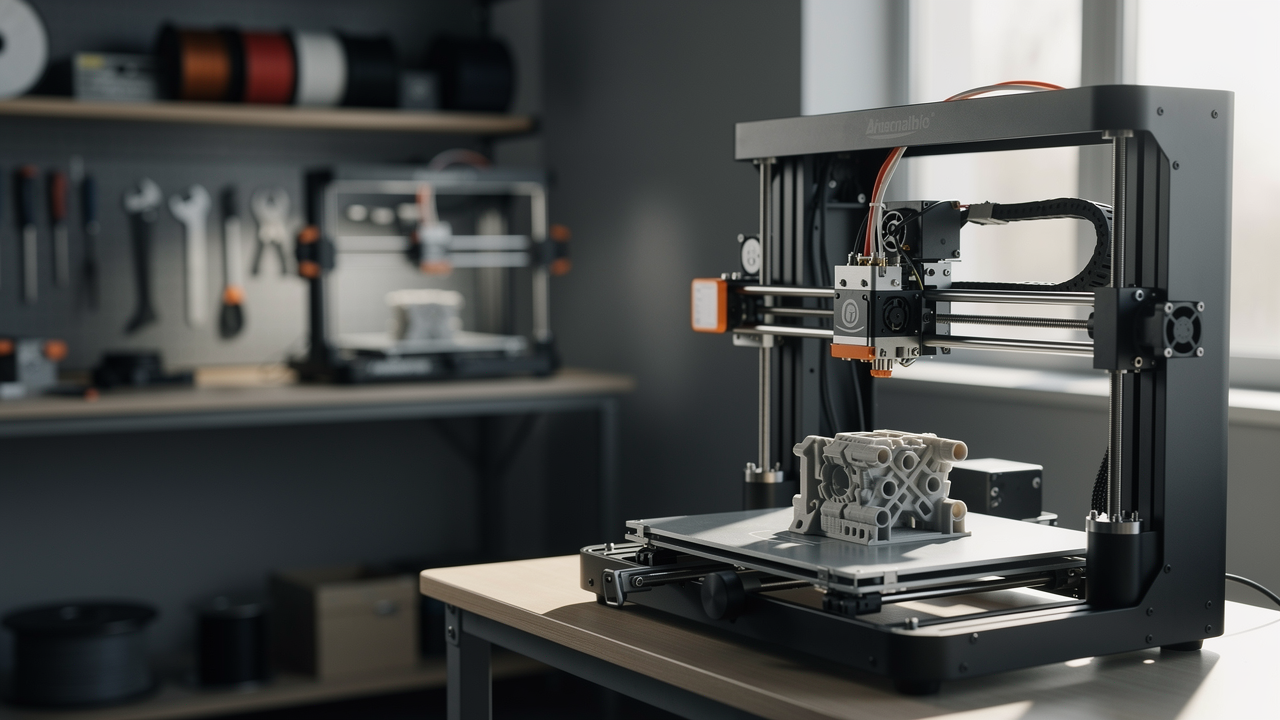

Why the Prusa XL+ and CORE One+ Refresh Matters: Cleaner Starts, Faster First Layers, and an Upgradeable FDM Workflow
In its official announcement dated August 13, 2026, Prusa Research unveiled a major product refresh that directly concerns the desktop FDM ecosystem: the Prusa XL+, CORE One L+, and CORE One+ (Gen 2). This is not just about new model names. What really stands out is how it combines print quality, first-layer preparation, ease of maintenance, and an upgrade path for existing users in one package. Source: Prusa Research blog, August 13, 2026.
For Ucuz3D readers, the significance of this development is clear: competition on the FDM side is no longer driven only by higher speed or larger build volume. Manufacturers are investing more in details that improve the daily workflow, from the first minutes of a print to part surface quality. This shows that when deciding on prototypes, fixtures, short-run parts, and functional production, it is no longer enough to look only at the machine label; the overall user experience matters too.
What is the key change?
According to Prusa, the shared goal of the refreshed lineup is a cleaner print start, less waiting, and more consistent surface quality. One of the most visible examples is the use of an integrated nozzle wiper on all three models. This part is designed to remove excess filament left on the tip before printing begins, reducing the risk of marks, small blobs, or stringy residue being carried into the first layer. Especially in multi-part jobs or prints with visible surfaces, small improvements like this can have a serious impact on perceived quality.
In addition, the move to GT1.5 belts is intended to make fine repeating surface artifacts less visible. Technically, this may not push every part into “a new category,” but in practice it is a valuable improvement for users who care about visual quality in large prints with broad flat surfaces.
Why does the XL+ deserve special attention?
The Prusa XL+ keeps its 360 × 360 × 360 mm build volume while being repositioned with a more up-to-date user experience. One of the most important technical highlights is the 360-degree cooling system. The company says this especially improves overhang, bridge, and small-detail performance. Another important point is the Tool Offset Sensor. In systems that use multiple toolheads, this approach can significantly shorten alignment time and may accelerate operational workflow in multicolor prints or jobs using different nozzle combinations.
Prusa is also making high-flow nozzles standard on the XL+ and preparing to use chamber temperature in a more controlled way. The announcement states that the new enclosed structure and planned chamber heater are intended to create a hotter and more stable environment. This is especially important for PC Blend, carbon-fiber-reinforced engineering-grade materials, or large PETG parts, because managing geometric deviation and edge stress at larger build volumes remains a critical issue in FDM. For this kind of work, it is important to correctly evaluate the options on the engineering materials side.
Where is the real gain on the CORE One+ side?
On the CORE One+ (Gen 2) side, one of the most practical innovations is the claim of reaching the first layer faster. Prusa says that thanks to the update in the bed structure, it has reduced extra waiting steps especially for materials such as PLA and PETG that run at lower bed temperatures. For teams handling short-cycle prototype work in the workshop, this may seem like a small difference, but in repeated prints throughout the day, the time savings can become meaningful.
The removable top panel and easier maintenance approach also matter. In desktop FDM, real efficiency is often hidden not only in print time, but in how long the operator has to deal with the machine. Less adjustment, less cleaning, and faster preparation increase overall output efficiency.
Why could this news affect purchasing and production decisions?
The strongest aspect of this announcement is that it does not leave existing users behind while trying to sell new models. Prusa openly emphasizes its upgrade kit plan for current owners. This approach brings the question of “Should we replace the machine entirely or upgrade it?” back to the forefront in FDM investments. Especially in in-house prototyping, maintenance tool production, or short-run fixture work, ecosystems that extend device life can offer an advantage in total cost of ownership.
If you are also evaluating the right production path for your own part, it is important to first clarify the need. For a one-off prototype, a low-volume technical part, or an appearance-focused model, using a 3d printing service can often make more sense than investing in your own machine. On the cost side, instead of relying on fixed rule-of-thumb figures, understanding the logic of price per gram provides a healthier framework when comparing different materials. If your file is ready, getting a quick quote through the online 3d printing workflow can also shorten the decision process.
Conclusion
Prusa’s August 2026 update can be read as a good summary of maturing competition in the FDM world: cleaner starts, less manual effort, better surfaces, and a clearer upgrade path. On its own, this may not be a “game-changing” revolution, but in real production workflows, improvements that reduce small points of friction often create the difference users feel most. That is why this news sends a signal worth watching closely not only for Prusa users, but for anyone using desktop FDM for everything from prototypes to functional parts.


 Türkçe
 العربية
 Русский
 فارسی
فارسی Deutsch