
3D Printing with Engineering Materials: Carbon Fiber, Nylon, PC and ASA
Durable, functional parts with carbon fiber reinforced filament, nylon (PA), polycarbonate and ASA. Transparent gram-based pricing, instant in-browser calculation.
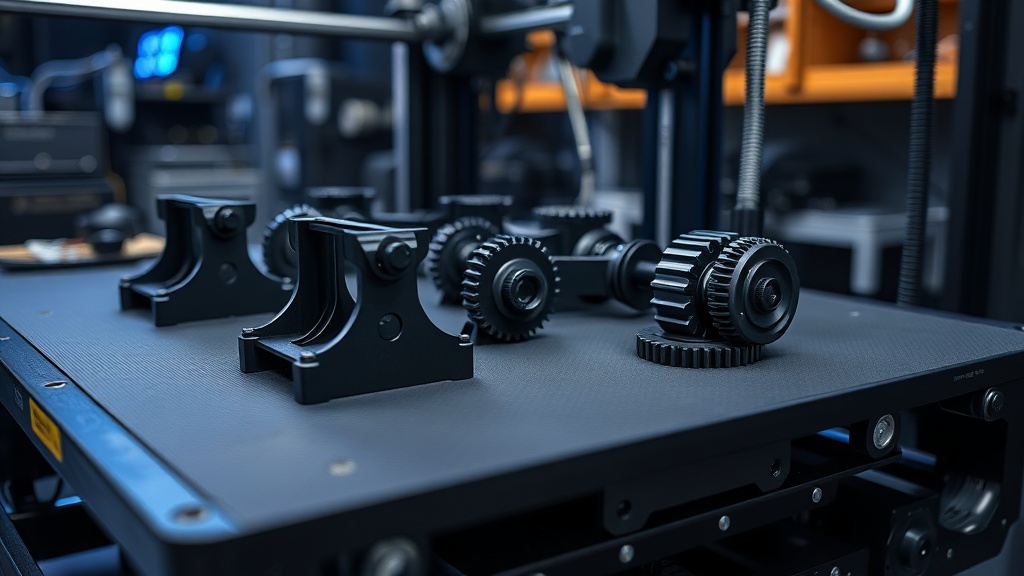
Choosing the right filament for a functional part
There is a big difference between a part that looks nice on a desk and a part that works under load in the field. PLA is more than enough for most visual and prototype jobs; but if the part will be exposed to real force, heat, sunlight or vibration, you need to move to an engineering-grade material. At ucuz3d.com we produce exclusively with the FDM (filament) method, and for durable parts this method gives us a broad technical material library: carbon fiber reinforced filaments, nylon (PA), polycarbonate (PC), ASA, and TPU for flexible parts.
The request we encounter most often here is carbon fiber 3D printing; but at this point honesty matters. Carbon fiber on the FDM side is not woven carbon composite in sheet form. It is a reinforced filament in which short, chopped carbon fiber particles are added into a carrier plastic (PLA, PETG or nylon). In other words, the body of the part is still thermoplastic; the carbon fiber makes that matrix more rigid and more dimensionally stable. This is a genuine engineering gain, but it is not a metal or full composite part. We state this clearly up front so your expectations are set correctly.
One more important limit: ucuz3d only provides FDM service. We do not offer SLA/resin, SLS powder or metal laser printing. Therefore all the materials on this page are filament-based; if you are looking for a real metal or resin part, FDM will not cover that job, and we want to make that clear.
Carbon fiber reinforced filament (PLA-CF / PETG-CF / PA-CF)
Carbon fiber reinforced filaments produce parts that are noticeably more rigid (resistant to deflection), more dimensionally stable and warp less during printing than their standard counterparts. Their surfaces look matte, slightly textured and elegant. We select the three main variants according to the intended use:
We decide together which one to choose by looking at the conditions in which the part will operate. If you only want rigidity and a nice surface, PLA-CF; if you also need some toughness and heat resistance, PETG-CF; if real engineering load and heat are involved, PA-CF is the right address.
- PLA-CF: The most economical reinforced option. It adds the rigidity of carbon fiber to the easy printing of PLA. It is ideal for primarily visual parts that need to resist deflection but are not greatly exposed to heat (models, body panels, handles).
- PETG-CF: Tougher and more heat resistant than PLA-CF. It is a balanced choice for functional parts that take light impact, stay outdoors for a short time, or need a bit of flex.
- PA-CF (carbon reinforced nylon): The engineering champion of this family. The toughness and wear resistance of nylon combine with the rigidity of carbon fiber; it dampens vibration and holds its dimensions through temperature changes. It is preferred for load-bearing brackets, robot end-of-arm tooling (EOAT/gripper), jigs and fixtures.
Nylon (PA): parts that need toughness and wear resistance
Nylon (polyamide, PA) is the material for moving and rubbing parts. Thanks to its high toughness it does not break easily; it withstands repeated bending, fitting and removing, and impact. Thanks to its low coefficient of friction and wear resistance, it stands out for gears, pulleys, hinges, sliding bearings and continuously running mechanism parts.
Nylon’s one known sensitivity is moisture; it draws moisture from the air and this can affect print quality. We manage this issue by processing the filament in a dried state, so the part comes out without compromising on strength. When extra rigidity is needed, it is also possible to switch to the carbon reinforced version of nylon (PA-CF).
Polycarbonate (PC): the most resistant to heat and impact
Polycarbonate is one of the materials in our FDM library with the highest heat resistance and the highest impact toughness. At temperatures where other filaments begin to soften, PC holds its shape; that is why it is chosen for parts in hot-running areas such as power regulators, near motor compartments and lamp housings. It is also very hard and resists rather than breaks under impact.
The price of these advantages is that PC is more demanding to print; it requires high temperature and is prone to warping. For this reason we run PC jobs with the right printing environment and settings. If your part must withstand both heat and impact, polycarbonate printing service is the solution you are looking for.
ASA: the right choice for outdoors and sun
ASA is the outdoor-oriented relative of ABS: it offers similar mechanical strength and heat tolerance, but its biggest plus is UV (sunlight) resistance. While standard filaments yellow and become brittle over time in the sun, ASA keeps its color and strength for a long time. That is why ASA is the first choice for any part that will stay outdoors.
Typical ASA filament printing jobs include automotive exterior trim parts, antenna and sensor housings, garden/terrace fixtures, signage and outdoor enclosures. It has a nice, matte finish on the visible surface and can be machined if desired.
TPU (Flex) for flexible parts
Some parts exist not to be durable but to flex and spring back. TPU (flexible filament) has a rubber-like texture and withstands bending, compression and repeated deformation. Vibration-isolating mounts, gaskets, bumpers and shock absorbers, non-slip gripping surfaces, belts and flexible hinges are the classic use areas of TPU.
We choose the hardness grade suited to your part’s purpose; talking through how soft or firm it needs to be usually gives the best result.
Which material when? Quick comparison
Putting the part’s most critical requirement first makes the decision easier. The short guide below gives the right starting point for most engineering jobs; if you are not sure, share your file and let’s map the need to the material together.
- Maximum rigidity + nice surface, low heat → PLA-CF (carbon reinforced)
- Load-bearing, tough, engineering part → PA-CF (carbon reinforced nylon)
- Wear, friction, moving mechanism (gear, bearing) → Nylon (PA)
- High heat + high impact → Polycarbonate (PC)
- Outdoors, sun, UV resistance → ASA
- Flex, vibration damping, gasket → TPU (Flex)
- Economical prototype / visual model → PLA or PETG (standard)
How to order a print with ucuz3d: transparent pricing, instant calculation
The process is simple and free of surprises. You upload your STL, OBJ or STEP file to our in-browser calculator and see the price instantly based on the part weight and the material you select. Since engineering materials cost more than standard filaments, we share each material’s per-gram price clearly and up front; there are no hidden items or surprise costs. No machine runs without your approval, and payment comes after approval.
We ship Turkey-wide from our workshop in Şile/Istanbul (Anatolian side). Approved jobs are mostly put into printing within 1 business day. You choose the infill ratio, the material and the quantity, see the exact figure from the calculator and proceed to order. If needed, we also support you on the design side with suggestions to make the geometry manufacturable and durable.
Related: calculate an instant price from your STL file · review all our FDM printing materials · 3D printing for robot and automation parts
Frequently Asked Questions
Is carbon fiber 3D printing a real carbon composite part?
No. Carbon fiber in FDM is a reinforced filament in which short, chopped carbon fiber is added into a carrier plastic (PLA, PETG or nylon). It makes the part more rigid and more dimensionally stable; but it is not a woven carbon sheet or metal. We state this clearly up front so you set your expectations correctly.
How do I choose between nylon (PA) and polycarbonate (PC)?
If the part is exposed to wear, friction and continuous motion (gear, bearing, hinge), nylon is the right choice. If it needs to withstand high temperature and hard impact, polycarbonate stands out. If you need both, we can consider carbon reinforced nylon (PA-CF); if you are not sure, share the part’s operating conditions and let’s decide together.
Which material for a part that will stay outdoors in the sun?
ASA is the most correct choice. It offers strength close to ABS while its UV (sun) resistance is much better; standard filaments yellow and become brittle in the sun, whereas ASA keeps its color and strength for a long time. It is ideal for automotive exterior trim, sensor housings and outdoor enclosures.
Can I find out the price of engineering materials in advance?
Yes. Upload your STL, OBJ or STEP file to our in-browser calculator; see the price instantly based on the part weight and the material you select. Each material’s per-gram price is transparent, there are no surprise costs, and payment is only taken after you approve.
Can you print metal or resin parts?
No, ucuz3d only provides FDM (filament) printing service. We do not offer SLA/resin, SLS powder or metal laser printing. ‘Metal-filled’ filament is not real metal, but a metal-look FDM filament. Real metal or resin production is outside the scope of FDM.
 Türkçe
 العربية
 Русский
 فارسی
فارسی Deutsch