
TPU Flexible 3D Printing Service
We print flexible, rubber-like parts such as gaskets, bumpers, vibration mounts and non-slip grips from TPU filament using FDM. Send us your dimensions and we will print them with transparent, per-gram pricing in 1 business day.
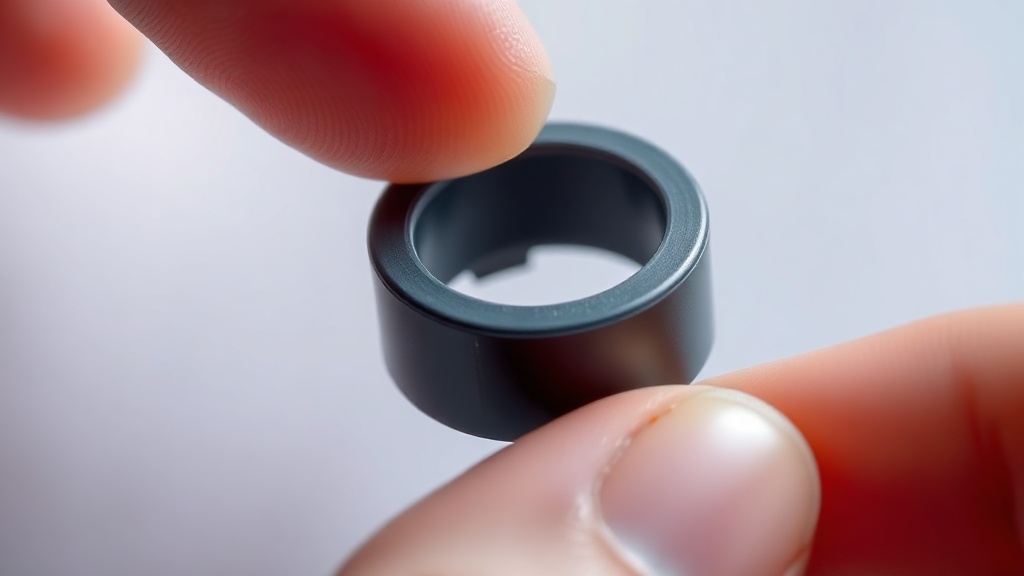
What is the TPU flexible 3D printing service?
The TPU flexible printing service is the production of parts that bend, flex and spring back like rubber on an FDM 3D printer, instead of rigid plastic. TPU (thermoplastic polyurethane) is a filament you can bend and twist by hand after printing, and that returns to its original shape when compressed. Where rigid PLA or PETG stays brittle, TPU lets a part flex, or seal a surface softly and tightly.
We do not sell ready-made products on this page. You send us your dimensions, technical drawing or even a simple photo; we print the part from TPU filament custom-made for you. You might need just a single gasket, a small batch of bumpers, or a non-slip foot.
Which parts are printed with TPU?
Anywhere you need flex, compression or sealing, TPU is a good choice. The TPU part types we print most often:
- Gaskets and sealing rings (lids, boxes, enclosure seals)
- Bumpers and shock-absorbing pads
- Vibration mounts and machine feet (vibration damping)
- Non-slip grips, grip sleeves and non-slip feet/pads
- Belts, flexible couplings and flexible hinges
- Phone, device and tool cases; flexible protective covers
- Holders, clips and snap-fit clamps
When is TPU the right choice?
We recommend TPU for three core needs: flexing, damping and sealing. If your part needs to bend, spring back or be flexed open and closed again and again (a belt, hinge or clip), TPU is the right choice. If it needs to soften a vibration or impact (a mount, bumper or foot pad), TPU’s flexible structure absorbs the energy. If it needs to sit softly against a surface and close a gap (a gasket or seal), TPU provides the tight contact that rigid plastic cannot.
By contrast, if the part is a rigid, dimensionally precise, load-bearing body, then PLA, PETG or engineering filaments are more suitable than TPU. If you are not sure what you need, just describe your intended use and we will choose the best material for the part together.
Shore hardness options: from soft to firm
TPU does not come in a single hardness. Hardness is expressed on the Shore A scale: the lower the value, the softer and more elastic the part; the higher the value, the firmer it is and the better it holds its shape. Softer TPU suits gaskets and grip sleeves that need to deform easily when compressed; firmer TPU suits clips, holders and hinges that need to keep their shape.
Tell us how you want the part to feel in your hand or how much it needs to flex, and we will recommend the hardness closest to your goal from our available TPU options. Because the hardness choice affects both how the part is used and how it prints, settling it up front makes the job easier.
TPU printing with FDM and transparent pricing
We do TPU printing with FDM (filament) technology; we do not offer resin, laser or metal processes. Because of its flexible structure, TPU is a material printed at controlled speeds; with the right settings the layers fuse together well and you get a flexible, strong part. Since print orientation and infill affect how much the part will bend, we adjust them according to your intended use.
Our pricing is per gram and clear from the start; there are no surprise line items. Upload your STL, OBJ or STEP file and see your TPU printing price within seconds using our instant online calculator. After your approval we take payment and produce your part in 1 business day for most jobs. If you do not have a file, come with dimensions and a photo; we are with you on the modeling side too.
Related: Instant 3D printing price calculation · Our 3D printing materials · 3D printing with engineering materials
Frequently Asked Questions
How much does a TPU print flex?
The amount of flex depends on the TPU hardness you choose (Shore A), the wall thickness of the part and the infill ratio. Softer TPU and thinner/low-infill parts bend more; firmer TPU and solid parts hold their shape better. Tell us your intended use and we will tune the flex accordingly.
Can you print a gasket or sealing part?
Yes. Gaskets, sealing rings and lid seals are among the TPU parts we print most often. TPU sits softly against the surface and closes the gap. Send us your dimensions or a drawing of the surface to be sealed, and we will print it custom for you.
I do not know whether I need TPU or another material, can you help?
Of course. If the part needs flex, vibration damping or sealing, we recommend TPU; for rigid, load-bearing bodies we point you to PLA, PETG or engineering filaments. Describe your intended use and we will choose the best material together.
How do I find out the TPU printing price?
Upload your STL, OBJ or STEP file to our 3D printing price calculator page; your transparent, per-gram price appears instantly in your browser. If you do not have a file, get in touch with dimensions and a photo and we will work out the price together.
When will my TPU part be delivered?
After approval and payment, we produce most TPU printing jobs in 1 business day. For very large, dense or batch jobs the time may vary; we share the exact delivery time at the quote stage.
 Türkçe
 العربية
 Русский
 فارسی
فارسی Deutsch