
Our 3D Printing Materials
From PLA to carbon fiber, 17 different materials — the right choice for every project
The right material is half of a successful print
Every part serves a different purpose, which is why we work with a wide range of materials. If you're not sure which material suits you best, just describe your project — and we'll recommend one.
Our material range
- PLA / PLA+: Easy printing, sharp detail; prototypes, models and decorative parts.
- ABS / ABS+: Heat and impact resistance; functional parts.
- PETG: Durability and ease of printing; outdoor and mechanical parts.
- TPU / TPC / TPE: Flexible, rubber-like; gaskets, cases and bumpers.
- Nylon (PA) and PC: High strength and heat resistance; engineering parts.
- HIPS / PVA: Dissolvable support materials.
- Carbon Fiber, Wood PLA, Copper PLA: Rigid or decorative special textures.
For our current material prices, check out the Our Printing Prices page or request a quote directly.
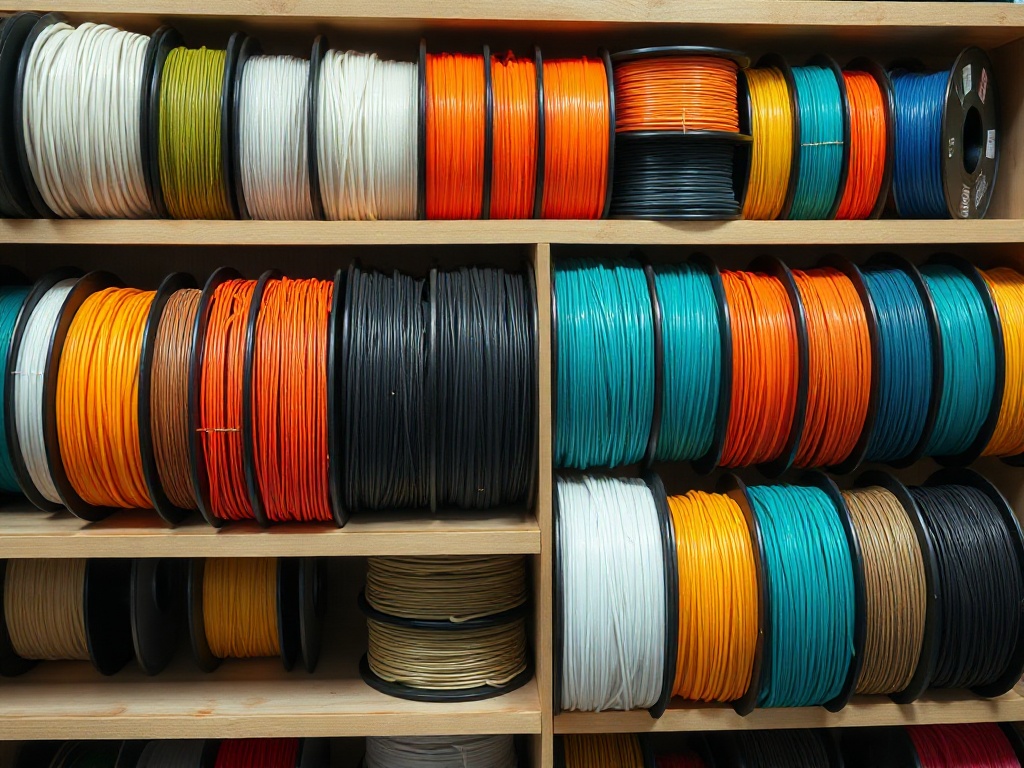
Which Material for Which Job?
Choosing the right material directly affects the cost as much as the durability of the part. From our 17 filament options, we assess the conditions your part will operate under (temperature, load, outdoor exposure, flexibility requirements) and recommend the most suitable one for you.
- PLA: An economical and easy-to-print option for models, prototypes, decorative and visual parts.
- PETG: A general-purpose material that balances mechanical strength with ease of use and is moderately resistant to moisture and impact.
- ABS / ASA: For functional and technical parts that need to withstand high temperatures and outdoor conditions.
- TPU: For flexible, bendable and shock-absorbing gaskets, bumpers and cases.
- Nylon (PA) and PC: For high strength, wear resistance and engineering applications.
- Carbon / glass fiber reinforced: For structural parts that resist bending, where lightness and stiffness are required together.
If You're Not Sure About the Material
Tell us where and how your part will be used; we recommend the most sensible material and print settings based on your intended use. Whichever material you choose, pricing is transparent per gram and payment is collected after approval. For a detailed comparison you can review our production prices, or request a quote directly.
Frequently Asked Questions
I don't know which material to choose, can you help?
Of course. Just tell us where and under what conditions (temperature, load, outdoor, flexibility) the part will be used. Based on your intended use, we recommend the most suitable option among 17 materials along with the print settings. The decision is made entirely according to your usage scenario, and we never steer you toward an unnecessarily expensive material.
Which material is suitable for a part I'll use outdoors and under the sun?
For outdoor use and UV exposure we recommend materials such as ABS, ASA or PETG, which are more resistant to heat and weather conditions than PLA. Because PLA can deform over time outdoors and in heat, it is not preferred for these kinds of applications. We determine the most suitable option together based on the details of your part.
Can you print a flexible, bendable part?
Yes, we use TPU material for flexible parts. TPU is suitable for bendable and stretchable applications such as gaskets, bumpers, phone cases and shock-absorbing parts. The degree of flexibility is assessed according to your needs.
What is the advantage of carbon fiber reinforced material?
Carbon and glass fiber reinforced filaments are stiffer, lighter and more resistant to bending than standard materials. For this reason they are preferred for engineering parts where structural strength and dimensional stability matter. These materials are generally priced higher than standard filaments.
How does material selection affect the price?
Our pricing is transparent per gram, and the price per gram varies depending on the chosen material. PLA and PETG are usually the most economical options, while nylon, PC and fiber-reinforced filaments are priced higher. You can see the exact price on our production prices page or get a quote for your part.
Which file format should I send for printing?
STL is our standard preferred format for printing; we can also work with other common CAD formats such as STEP. If you send your file together with a quote request, we share the exact price and lead time along with a material recommendation. On request, we work under an NDA (confidentiality agreement).
Related Guides
- PLA or PETG? Which One Should You Choose for Which Part
- Is PLA+ Really More Durable Than Regular PLA? What Is PLA+ and Who Is It an Advantage For?
- The Right Nozzle Temperature for PLA, PETG and ABS: A Step-by-Step Tuning Guide
- Stringing Problem in PETG Printing and Its Solution
- Ways to Solve Cracking and Warping Problems in ABS Printing
Need a durable, functional part? For carbon fiber reinforced filament, nylon (PA), polycarbonate and ASA options, check out our 3D printing with engineering materials page.
 Türkçe
 العربية
 Русский
 فارسی
فارسی Deutsch