Prusa Enters Granule-Based 3D Printing with Prusament Pellets
Prusa Research’s Prusament Pellets product is renewing interest in raw material formats beyond filament for 3D printing. According to an All3DP report dated October 14, 2026, the company is adding pellet-form material to its product range; the headline also cites a potential cost saving of up to 60% compared with filament. This does not mean every user will achieve the same savings: the result depends on the machine, material and production setup.
How does pellet printing work?
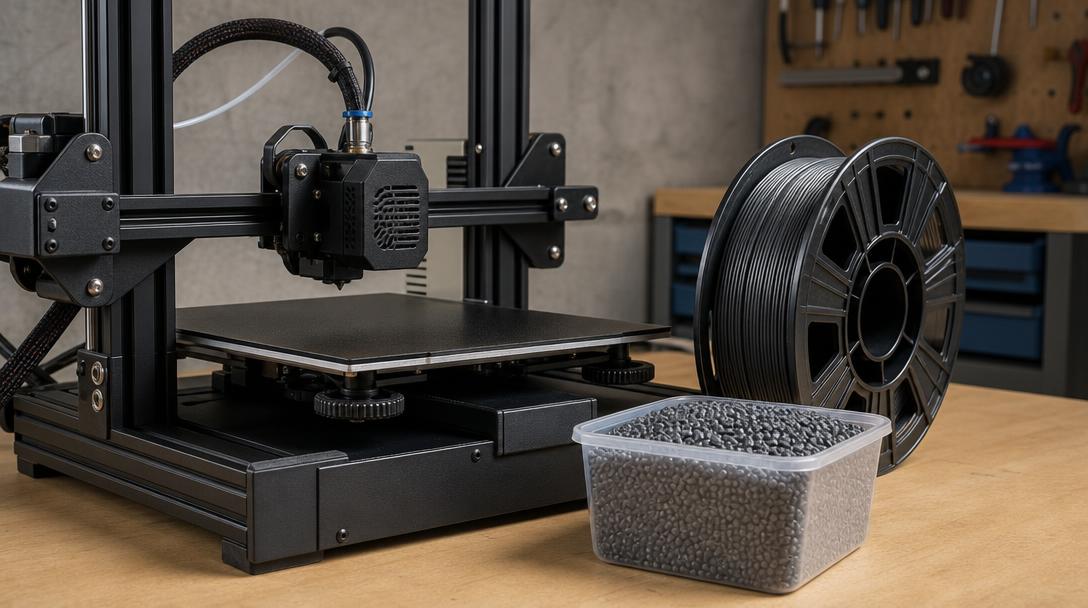
In the common form of FDM printing, plastic filament is fed from a spool and melted in the hotend before being deposited in layers. In pellet-based systems, the raw material is fed as small granules; a suitable extrusion setup melts them and delivers them to the print head. So, buying pellets alone does not make an existing filament printer work with pellets. The system being used must support this feed method.
The economic rationale for this approach may stem from differences in how granulated raw materials are produced and supplied. For businesses operating at scale, material format can have a meaningful impact on logistics and per-part cost calculations. However, a lower raw material price alone will not reduce total costs if processes such as drying, dosing, flow control and material profiling are not managed properly.
How should the 60% claim be interpreted?
The “up to 60%” comparison in the report is a maximum claim; it should not be treated as a general rate that applies to all materials, machines and order quantities. The specific filament, pellets, machine and production conditions included in the comparison matter. Print time, waste, labor, drying and equipment investment are also part of the total cost. Looking only at the raw material price per kilogram can be misleading when making a decision.
For this reason, pellet printing stands out as an option worth exploring, especially for users with suitable equipment and a regular production volume. For a one-off prototype or a small batch of custom parts, existing FDM equipment, setup time and material availability may be more decisive. There is not yet evidence that every workshop should switch from filament to pellets.
Potential impact for FDM users
Prusa’s move suggests that raw material formats could become more diverse in the desktop manufacturing ecosystem. Pellet feeding may change material sourcing and cost structures in certain production setups, while also requiring users to examine printer compatibility and workflow more carefully. The product announcement does not mean traditional spool-fed FDM printers are disappearing. Instead, it points to a landscape where filament- and granule-based systems can coexist to meet different production needs.
If you are considering having a part made externally, it is important that your design file is suitable for the material and intended conditions of use. You can explore 3D printing service options for your needs, estimate affordable 3D printing prices for your file, and upload your model to get an instant 3D printing price. You can also review the key differences between FDM materials on our printing materials page.
Checklist before making a decision
- Compatibility: The manufacturer’s specified hardware is required for pellet feeding and extrusion.
- Total cost: Equipment, preparation, waste and labor should be included alongside raw material costs.
- Production volume: Regular, high-volume work may make the economic case for pellets more compelling.
- Material requirements: The part’s mechanical and environmental conditions are just as important as cost.
The Prusament Pellets announcement is a timely sign that desktop manufacturing brands are beginning to add different raw material formats to their product ecosystems. However, before applying the claimed cost difference of up to 60% directly to your own project, assess it alongside compatible equipment and all production costs.



 Türkçe
 العربية
 Русский
 فارسی
فارسی Deutsch