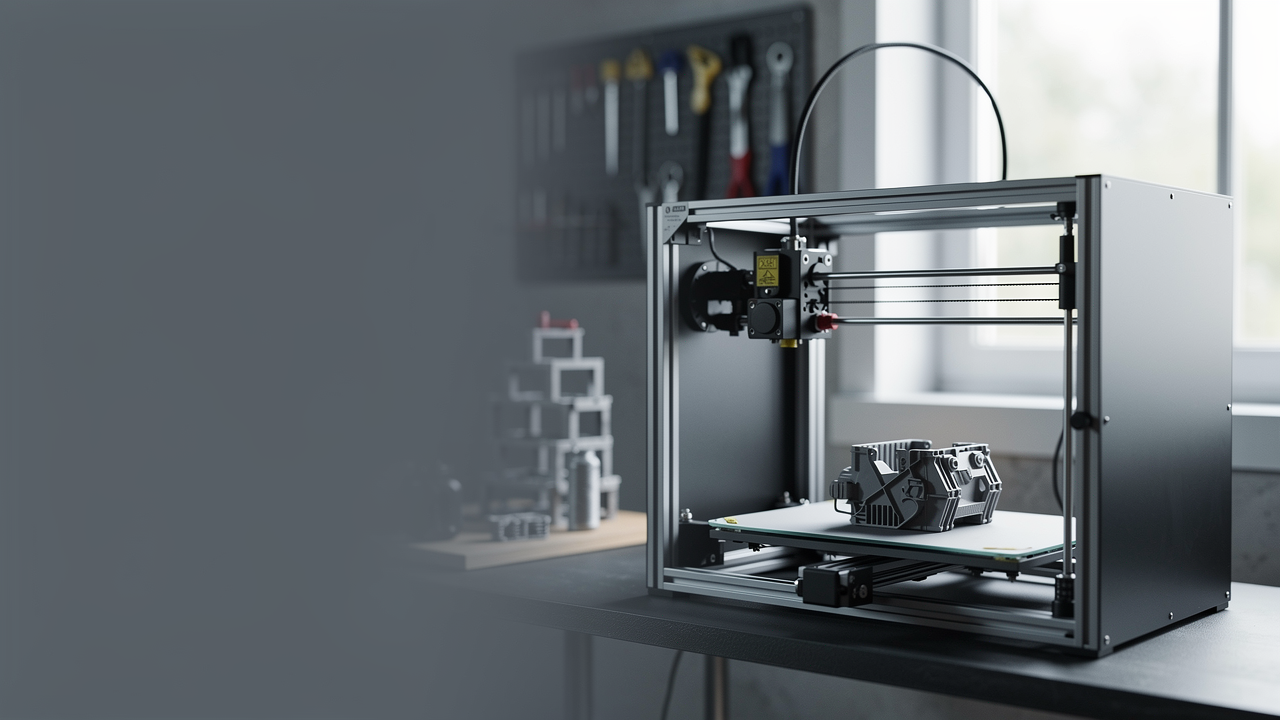

Why Prusa XL+, CORE One+ Gen 2, and CORE One L+ Matter: An Upgradeability-Focused FDM Printer Update
With its announcement dated 13 August 2026, Prusa Research updated its desktop FDM product family all at once: Prusa XL now continues under the XL+ name, while the CORE One series is being refreshed with CORE One+ Gen 2 and CORE One L+. At first glance, this move may look like nothing more than new model names. However, the truly important part of the news is that Prusa is addressing performance not only by selling new machines, but also through an upgrade logic that keeps existing users in the game. This approach could make equipment investment longer-lasting in prototyping and short-run production.
From the perspective of a Ucuz3D reader, there are two critical signals here. First, in desktop FDM, not only speed but also print-start reliability, surface quality, and ease of maintenance are now becoming competitive factors. Second, features such as an enclosed chamber, more stable cooling, and tool changing are no longer exclusive to high-end industrial systems. If you are also validating a part through a 3D printing service and then considering setting up similar workflows in your own workshop, these kinds of platform updates are worth following directly.
What stands out technically in this update?
Two shared details across all refreshed models stand out: the new nozzle wiper system and GT1.5 belts. According to VoxelMatters, the nozzle wiper was one of the most requested community features for a clean start. The change on the belt side aims to reduce fine repeating artifacts seen on large, flat surfaces. This can make a practical difference especially for enclosures, panels, and prototype parts where visible surface quality is expected.
On the CORE One+ Gen 2 side, the shorter time to start the first layer is important. Thanks to the redesigned bed connection, the “heat is being absorbed” wait disappears for materials like PLA and PETG that print at lower bed temperatures. On its own, this is not a speed-record headline; however, it is the kind of improvement that reduces the buildup of small delays in day-to-day production. Especially in workshops that change parts frequently, workflow improvements like this can noticeably affect total cycle time.
On the XL+ side, the 360-degree cooling system and the Tool Offset Sensor carry greater news value. The new cooling architecture aims for more balanced results on bridges, overhang surfaces, and fine details. The Tool Offset Sensor, meanwhile, significantly speeds up calibration in multi-toolhead setups. For users working with multicolor prints or different nozzles on the same machine, this means not just convenience, but also less downtime.
Why is this not just a new model story, but a business model story?
In my view, the strongest part of this announcement is that Prusa is clearly preserving its upgrade philosophy. The company says it will continue providing firmware, profiles, spare parts, and support for older machines, and that for some users the hardware upgrade path will also remain open. In the FDM world, many brands release a new version by effectively making the old chassis obsolete. Here, by contrast, the idea of getting closer to the next generation without throwing away the current machine entirely comes to the forefront. For users calculating return on investment, that is an important message.
On the part development side, the cost calculation is still not limited to the printer price alone. Material selection, reprint rate, maintenance, waiting time, and per-part efficiency should all be considered together. That is why, when planning production, it is necessary to read not only the device itself but also the logic of affordable 3D printing prices and the gram-based cost approach correctly. A process that looks good on the outside but causes problems on the second print may seem cheap on paper, yet be expensive in reality.
What is the practical meaning for a Ucuz3D user?
This news is especially meaningful for three types of users. First, product developers who order prototypes regularly. Second, small workshops producing jigs, fixtures, or enclosures. Third, users who occasionally want to move toward more engineering-focused materials. XL+’s hotter and more stable chamber approach points toward classes like PC Blend or carbon-filled materials; it is possible to see the general framework for these areas on the engineering materials 3D printing page.
In short, this move by Prusa shows that the race in desktop FDM is no longer only about being “faster.” A cleaner start, less calibration burden, a stronger upgrade path, and more stable printing at large volume are now all part of the same package. If you are looking for the right process for your own part, a healthier starting point is first to see your scenario in the online 3D printing workflow, and then compare general material options on the our printing materials page.


 Türkçe
 العربية
 Русский
 فارسی
فارسی Deutsch