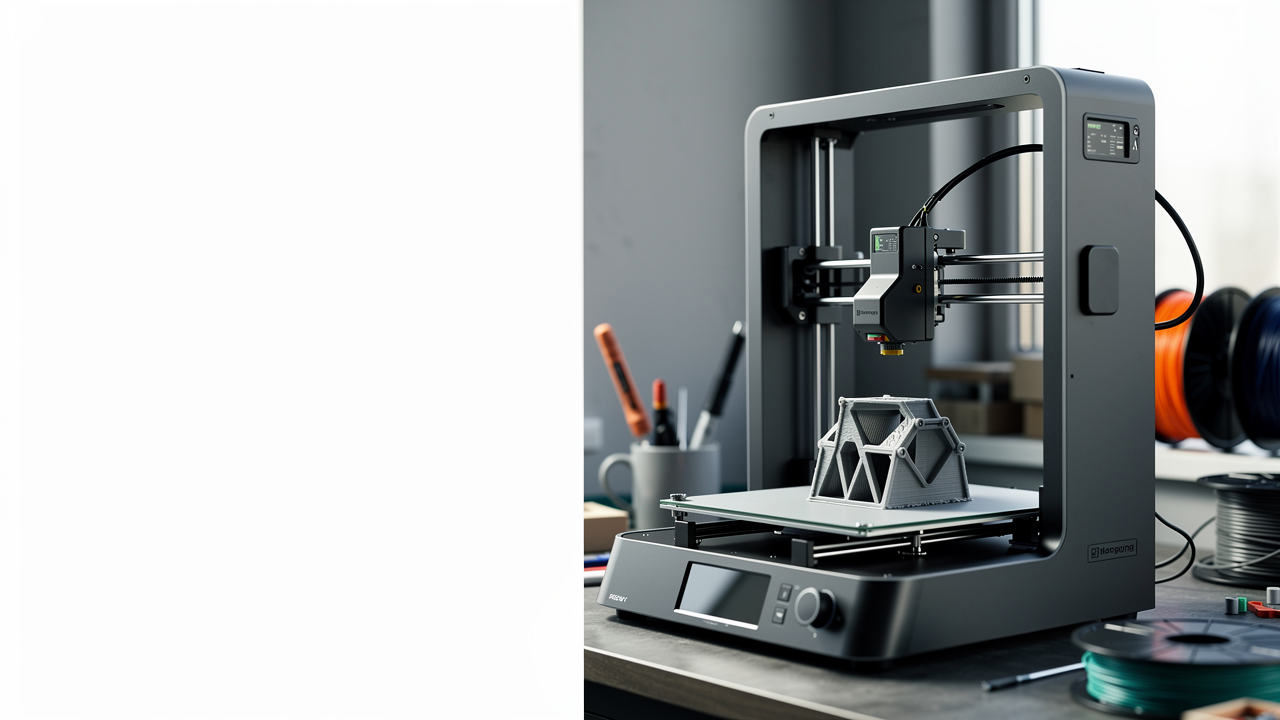

Why Stratasys’ F3300 and F900 Move Matters: What It Means to Bring Quality Data into the Print Moment in FDM Production
In FDM-based manufacturing, one of the biggest thresholds is often not just printing a part, but being able to show that the part was produced in a repeatable and verifiable way within the production process. That is exactly the key point in Stratasys’ announcement dated 11 August 2026: the company received $7.8 million in project funding to develop in-situ quality assurance capabilities that collect quality data during printing for the F3300 and F900 platforms. According to the TCT Magazine report, this work will be carried out under the America Makes and Department of War Organic Industrial Base Modernization Challenge.
At first glance, this development may look like a corporate project announcement. In practice, however, the issue touches one of the core questions affecting FDM’s transition from prototyping to the production line: Was the part printed correctly, and how quickly and reliably can you prove it?
Why is data during printing the real issue?
Parts produced with FDM already have a strong place in areas such as fixtures, jigs, low-volume spare parts, and functional prototypes. Even so, in serial or semi-serial production, decision-makers do not look only at geometry. Consistency between layers, process deviation, when a possible print anomaly occurred, and whether this can be turned into documented evidence all become critical.
The structure Stratasys is targeting in this project, as stated in the news text, is to give manufacturers access to real-time process data. If this approach delivers the expected results in the field, some post-process inspection workload could be reduced, qualification cycles could become shorter, and production planning could become more predictable. Especially for businesses that continuously print the same type of part, this means not only a technical advantage but also an operational one.
Why does this matter for Ucuz3D readers?
From the Ucuz3D perspective, the value of this news lies in showing that FDM has moved beyond the role of “rapid prototyping.” Today, a business can have a fixture, assembly aid, or low-volume service part produced quickly through a 3d printing service. But on the corporate side, the real growth is linked to how traceable and repeatable that production is.
For this reason, Stratasys’ quality monitoring investment focused on the F3300 and F900 is not just the story of two machines. In a broader sense, it means FDM is being positioned as a more reliable method within manufacturing. It may still be too early to talk about an ambitious outcome such as completely eliminating post-print measurement or visual inspection stages; however, generating data at the moment of printing can be seen as a critical step on that path.
In which applications could its impact be more visible?
- Fixtures and production tooling: In environments where the same part is produced again and again, process stability becomes more valuable.
- Spare part production: Especially for low-volume but time-critical parts, quality documentation and traceability can be important.
- Defense and aerospace supply: As emphasized in the article, reducing the qualification burden could enable faster adoption in these fields.
- Engineering plastics: In applications where high performance is expected, process data becomes part of the decision just as much as the material itself. At this point, the engineering materials approach gains more importance.
How could this news affect purchasing and production decisions?
On the market side, two outcomes may stand out. First, major manufacturers are now trying to sell not only print speed or build volume, but a verifiable production workflow. Second, for customers buying the service, file preparation, material selection, and application scenario are beginning to be discussed more consciously. When evaluating which material a part should be produced with and what quality expectations it should meet, it is necessary to understand the production logic correctly as much as affordable 3d printing prices.
The important takeaway here for small businesses and product teams may be this: FDM should no longer be seen only as a method for “cost-effective sampling.” With the right part selection, the right material, and the right process tracking, it can take on a much more strategic role within production. To assess the technical suitability of your file at an early stage, online 3d printing workflows can also speed up this decision process.
If you would like to read the technical background in a broader context, Ucuz3D’s our printing materials page also offers a useful starting point for framing the logic of materials.
Conclusion
This move by Stratasys will not change the world of FDM manufacturing overnight on its own. However, the strong point of the news is that it clearly shows where the industry is focusing: the issue is no longer just a bigger or faster printer, but data that creates confidence during printing. For any business that wants to think in terms of serial production with FDM, this approach may become as important a criterion in the coming period as printer selection itself.


 Türkçe
 العربية
 Русский
 فارسی
فارسی Deutsch