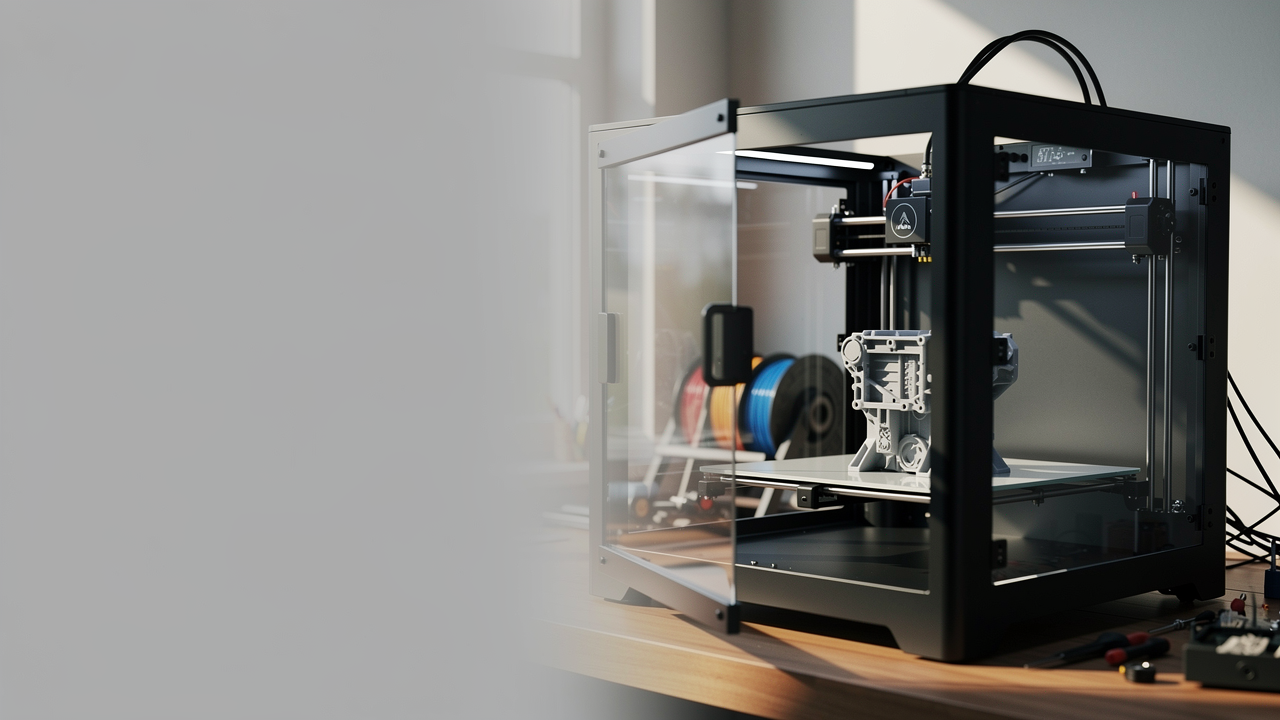

Why Prusa XL+, CORE One+ and CORE One L+ Matter: How the Summer 2026 Update Affects FDM Use
In its product announcement dated August 12, 2026, Prusa Research updated three major lines in its desktop FDM range at the same time: Prusa XL now continues as XL+; CORE One is being refreshed as CORE One+ (Gen 2); and CORE One L is moving to the CORE One L+ version. At first glance, this may look like a simple name refresh. But when you look at the details, it sends a more serious message, especially for users working in prototyping, low-volume production, and multi-material printing: manufacturers are no longer just releasing new printers, but focusing on reducing the small frictions in daily workflows.
From the perspective of a Ucuz3D reader, the important point is this: in the FDM ecosystem, higher productivity no longer means only higher speed. A cleaner print start, less waiting time for calibration, more consistent surface quality, and the ability to upgrade an existing machine without throwing it away altogether also directly affect total production performance. On the path from prototype to end-use part, these kinds of improvements can often be more valuable than a speed increase on its own.
What is the main technical highlight of this update?
One of the shared highlights in the announcement is the nozzle wiper and the new GT1.5 belt structure introduced across the whole series. The nozzle wiper can provide practical benefits, especially for first-layer cleanliness and leak management in multi-material or color-transition prints. The new belt structure is intended to help reduce the fine repeating artifacts seen on large, flat surfaces. This is particularly important for users printing visual prototypes, product enclosures, and presentation pieces.
On the XL+ side, the most striking point is the faster tool alignment process and the improved 360-degree cooling system. In systems built around multi-toolhead logic, calibration time is not just a matter of convenience, but a matter of production pace. Faster and more consistent alignment can reduce the risk of errors in long multi-material jobs. Improved cooling is also an update that can make a real difference in bridges, sagging, and small details.
On the CORE One+ side, the print bed structure that reduces waiting time before the first layer and the easier maintenance/cleaning experience stand out. Starting a print faster with commonly used materials such as PLA and PETG creates a noticeable difference in the daily prototype cycle. After all, in the 3d printing service field, one of the things customers care about most is not only part quality, but also how quickly the revision cycle moves.
Why is this not just a new model, but workflow news?
The valuable part of this news is that Prusa is clearly maintaining its upgrade philosophy. The company says that existing users will also have an upgrade path on both the hardware and software sides. This approach is still important in the desktop FDM world because, for many workshops, an investment decision is not just about buying a device once. Being able to keep moving forward on the same platform for longer makes the total cost of ownership more reasonable.
This point also connects directly to cost calculations. When producing parts, the decisive factors are not only the machine’s sticker price, but also the failed print rate, operator time, ease of maintenance, and the number of repeated jobs. That is why, when evaluating affordable 3d printing prices, it is necessary to look not only at gram consumption, but also at process efficiency. Likewise, in online manufacturing workflows, getting a fast quote alone is not enough on the online 3d printing side; the right match of printer, material, and tolerance also determines the result.
What is the practical meaning of this for Ucuz3D?
These kinds of printer updates show that the boundary between desktop FDM and professional output is becoming a little thinner. The role of desktop systems continues to grow, especially for large-volume prototypes, multi-part assemblies, jig-fixture production, and low-volume functional parts. Of course, not every new announcement is a direct reason for every user to replace their device. But if print quality, preparation time, and ease of maintenance are all improving at the same time, this is a trend worth taking seriously.
If you also want to clarify which class makes more sense for your part needs, from PLA to PETG and from ASA to nylon, it is better to evaluate the options on the engineering materials side based on your part’s usage scenario. Because good results usually come not only from a good printer, but from the right combination of material, printer, and settings.
In short, this announcement says a little more than just “a newer model.” Prusa’s summer 2026 update shows that user experience, surface quality, multi-tool workflow, and the upgradeable platform approach are all becoming more important together on the FDM side. That makes it a signal worth following both for those producing in their own workshop and for teams developing prototypes through outsourced manufacturing.


 Türkçe
 العربية
 Русский
 فارسی
فارسی Deutsch