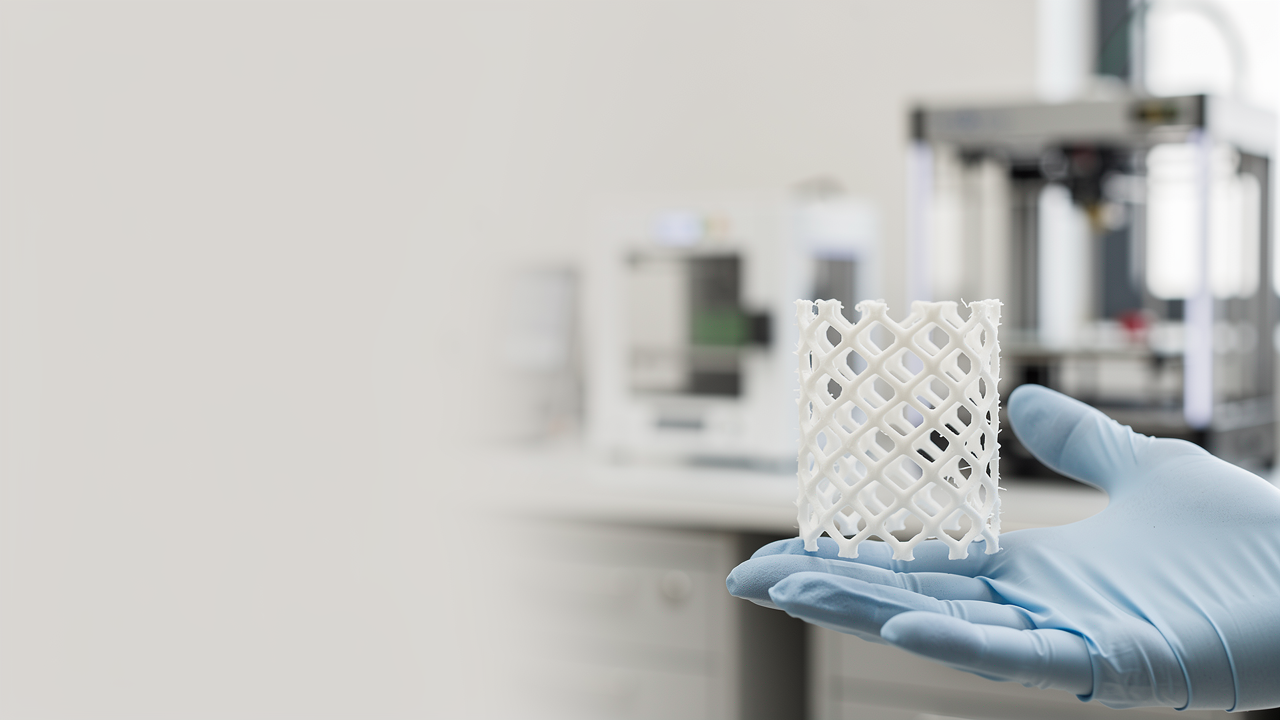

Why Is Onkos Surgical’s 1,000th Patient-Specific Pelvic Implant Case Important? Planning in Medical 3D Printing Reaches a New Scale
Medical 3D printing usually shows its strongest impact not in mass production, but in complex cases where a standard solution falls short. One current example is Onkos Surgical reaching its 1,000th case on the patient-specific My3D pelvic implant platform, according to VoxelMatters’ report dated August 14, 2026. This milestone shows that 3D printing in healthcare is no longer just an impressive technology showcase; it has become a real workflow for planning, personalization, and low-volume production.
Why is 1,000 cases an important milestone?
A single successful example is newsworthy; however, a platform that goes beyond hundreds of cases and reaches 1,000 applications suggests that we can now talk about a repeatable clinical process. According to the report, Onkos’ system combines advanced imaging, 3D anatomical modeling, case planning, and patient-specific implant design within the same workflow. This creates a significant advantage, especially in areas such as pelvic reconstruction, where the anatomy is challenging and standard implant geometry does not fit every patient.
The main message here is that 3D printing is no longer just a “part manufacturing method” on its own, but is becoming an extension of the digital decision-making process. In other words, the value lies not only in the final part being patient-specific, but also in making pre-operative planning more visible, more measurable, and more collaborative between the surgeon and the engineer.
Why does 3D printing stand out where standard solutions struggle?
In complex anatomies such as the pelvic region, bone loss, post-tumor reconstruction, or revision surgeries are among the hardest areas to manage with standard dimensions. As emphasized in the report, this platform focuses specifically on cases where standard implants do not fit the patient’s anatomy precisely. This clearly explains why 3D printing so often stands out in low-volume production that requires a high level of customization.
For the Ucuz3D reader, the lesson here is this: in jobs that require complex geometry, custom fit, and a short decision cycle, 3D printing becomes more meaningful than conventional methods. This logic applies not only to medical implants, but also to custom fixtures, assembly jigs, surgical planning models, ergonomic equipment parts, and prototypes. In fact, when receiving a 3D printing service, the real difference is often created not by quantity, but by geometry and the need for customization.
What does this news say to the FDM side?
It is important to be careful here: not every medical part or implant is produced with FDM, and not every healthcare application directly means an end-use part. However, the digital workflow shown in the report follows a logic that is also very familiar to the FDM world. First imaging or measurement, then 3D modeling, followed by rapid validation and, if needed, low-volume production. In particular, an FDM-based approach can play a practical role in pre-operative visualization models, training parts, trial fixtures, and process validation equipment.
For this reason, medical 3D printing news should not be read only under the heading of “advanced technology.” The real value lies in accelerating the transition from digital design to a physical part. Similarly, understanding the production logic of a part, uploading the file and quickly seeing a quote in the online 3D printing workflow, or evaluating the cost logic through the per-gram pricing approach on the affordable 3D printing prices page can significantly shorten decision time when moving from prototype to functional part.
How should the Ucuz3D reader interpret this development?
The Onkos example shows that three critical trends are maturing:
- Personalization is no longer the exception: Patient-specific or part-specific design is becoming a natural extension of digital workflows.
- Low-volume production is becoming more legitimate: The fact that only a very small number of a part will be produced does not reduce the value of 3D printing; on the contrary, it can increase it.
- Planning is at least as important as production: When imaging, modeling, and validation progress together, the value of the final part increases.
- The language of sector-specific use is changing: 3D printing is no longer associated only with the word “prototype”; it is also becoming established in areas such as maintenance, training, patient fit, and process standardization.
If you would like to see this maturation on the medical side in a broader framework, Ucuz3D’s guide 3D Printing in the Medical Field: From Prosthetics to Surgical Models also provides a strong background.
In short, this news shows that the value of 3D printing lies not only in “being able to print,” but in being able to carry a complex need from measurement to model and from model to part in a more controlled way. The 1,000-case milestone proves exactly this: when the right workflow is established, patient-specific production can move beyond being a niche showcase and become a repeatable manufacturing practice.


 Türkçe
 العربية
 Русский
 فارسی
فارسی Deutsch