
Why Hexagon Geomagic Design X Integration Matters: 3D Scanning Accelerates Spare Part Reverse Engineering
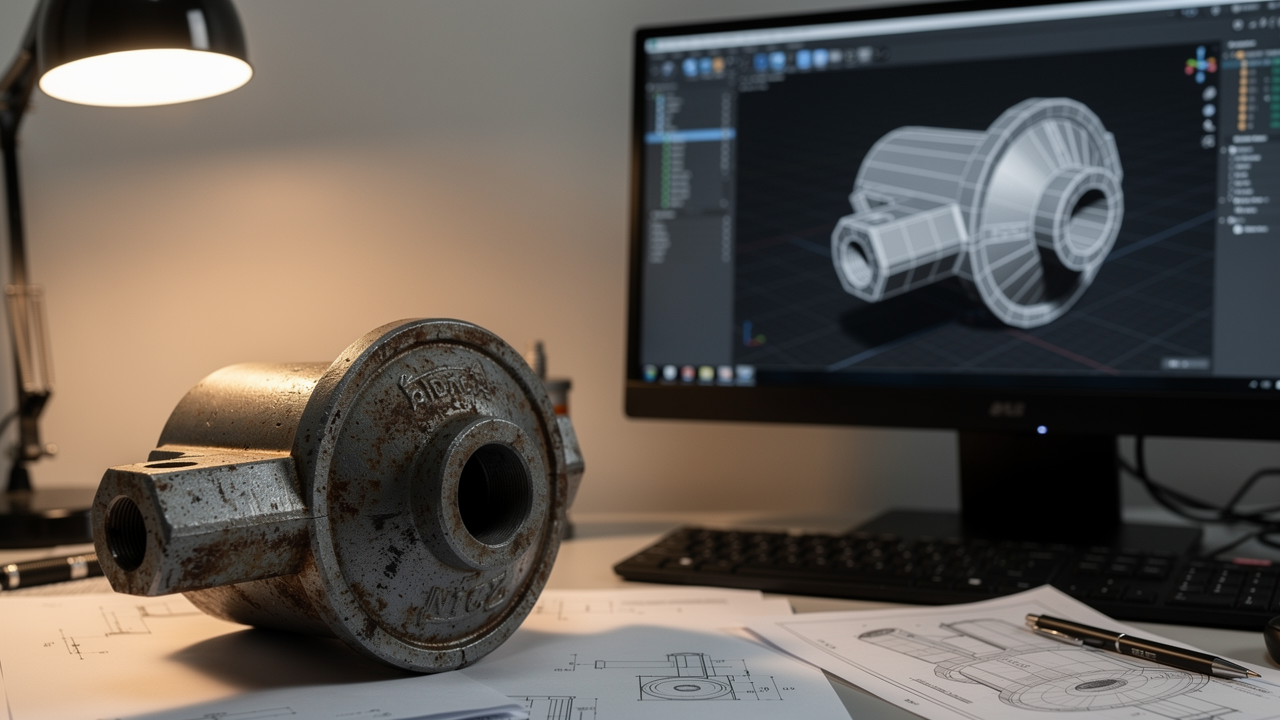
Hexagon Geomagic Design X integration addresses a major bottleneck in spare-part and maintenance-focused 3D workflows: the time it takes to move from a physical part to a reproducible CAD model. According to 3D Printing Industry’s July 24, 2026 report, Hexagon announced a new reverse-engineering workflow that directly connects its ATLASCAN Pro handheld 3D scanner with Geomagic Design X software. The company says this combination can speed up model reconstruction by up to eight times for maintenance, repair, and overhaul teams compared with mainstream CAD tools. As this claim is validated in real-world use, it could create serious practical value, especially for discontinued parts.
Why is this such a critical step?
On the 3D printing side, most people focus on the printer and the material; however, in spare-part work, the real time loss often happens before printing. If you only have a physical part in hand, measuring it, cleaning up its errors, and turning it back into a manufacturable CAD model is a process in itself. If this step is slow, the whole chain is delayed, whether you are making a prototype with FDM or moving toward a final part.
This is why Hexagon’s new workflow directly affects 3D printing productivity. A more organized transfer of scanned data into the CAD side becomes especially important in the following scenarios:
- Discontinued spare parts: If the original technical drawing is unavailable, scanning + reverse engineering may be the most realistic starting point.
- Maintenance and MRO operations: The goal is to generate a model quickly instead of leaving equipment waiting for long periods.
- Functional prototyping: It becomes easier to create a new variation by using an existing part as a reference.
What does this mean in practical terms for Ucuz3D readers?
This news once again shows that 3D printing does not create value on its own; it creates value together with scanning, model cleanup, and file preparation. Especially when you want to reproduce a broken, worn, or unavailable part, the workflow usually moves in this order: the existing part is scanned, corrected dimensionally, turned into a CAD model, and then prepared for printing. The faster the second link in this chain is, the faster a production decision can be made.
For this reason, it is necessary to look not only at printing, but also at the 3D scanning and reverse engineering side. After that, using a 3d printing service for part validation or a new iteration can make the process more manageable, especially for one-off or low-volume jobs.
Not every scanned part goes directly to print
There is an important reality here: scanned mesh data and manufacturable CAD data are not the same thing. Surface noise, missing areas, worn corners, or assembly tolerances can create problems in direct printing. So while fast scanning is valuable, the final decision still depends on engineering evaluation. Extra correction is especially needed in snap-fit parts, bearing seats, screw areas, and heat-exposed zones.
That is why the real message of this news is not “scan everything and print it,” but rather: make the reverse-engineering step more systematic. If the goal is not just a visual reference but a truly working part, material selection and the usage environment should also be considered from the beginning. To understand the cost logic before printing, reviewing the price per gram approach makes it easier to evaluate file complexity and part expectations within the same framework.
Why should it be watched closely in spare part production?
Recently, one of the strongest application areas in 3D printing has been digital inventory and spare part production. Hexagon Geomagic Design X integration also serves this trend because it aims to reduce the bottleneck directly at the source-data stage. The company’s claim of up to eight times faster performance may not produce the same result for every part; even so, it is still important if maintenance teams can make decisions faster instead of waiting days for a model.
If you are also planning to turn a physical part into a digital model and reproduce it, once the file is ready, comparing options through the instant quote flow could be a practical next step. The Hexagon Geomagic Design X move is a reminder that, in the 3D printing ecosystem, sometimes the biggest gain comes not from printer speed, but from the preparation process leading up to print.


 Türkçe
 العربية
 Русский
 فارسی
فارسی Deutsch