
Why Boom Supersonic’s FDM Drill Guide Move Matters: What Lower Costs in Manufacturing Tooling Really Mean
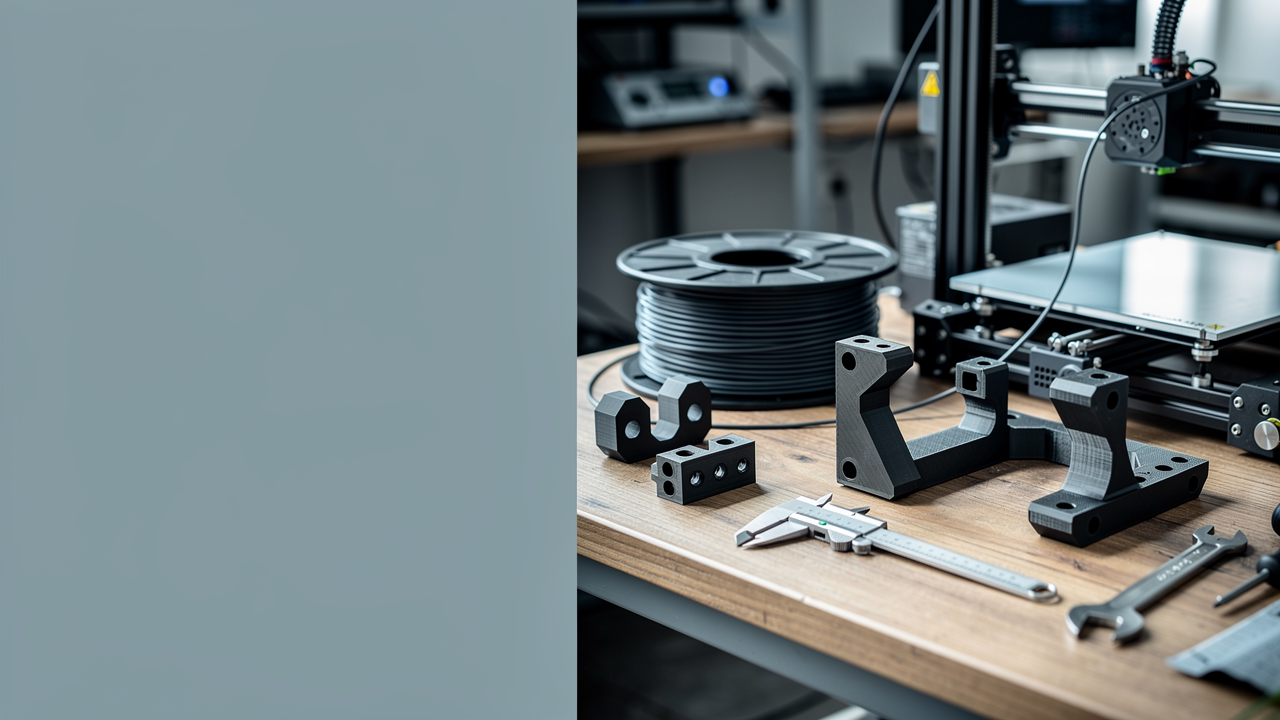
3D printing is often discussed in terms of end-use parts; however, on the production line, the real major difference is sometimes made by tooling, guides, and fixtures. According to TCT Magazine’s August 7, 2026 report, Boom Supersonic achieved an approximately 92% cost reduction compared to its previous method by producing drill guide parts used in the Overture manufacturing process with FDM. This story is not just about one company’s savings; it is also a strong real-world example showing why FDM is becoming an increasingly sensible option for low-volume production aids that require fast revisions.
From the Ucuz3D perspective, the key point here is that 3D printing does not have to be the final product. Sometimes the highest value appears in support equipment that speeds up production. Especially for custom-sized drilling guides, assembly tools, alignment parts, and temporary production aids, the 3d printing service approach can provide a serious time advantage.
Why is this newsworthy?
The Boom Supersonic example makes it clear that FDM has moved “beyond prototyping.” The main highlight in the report is not part aesthetics, but an operational gain that directly affects production flow. Parts such as drill guides require functional accuracy, sufficient rigidity, and fast repeat production. With traditional methods, every revision can mean new lead time and new cost. FDM, on the other hand, helps manage design changes more agilely, especially for low- and medium-volume support equipment.
This point is also familiar to manufacturers in Turkey. It is not always logical to make a tooling part using methods as expensive as those used for the final serial product. In scenarios where the design changes frequently, trial and error continues, or rapid line deployment is needed, getting a fast quote with online 3d printing can significantly shorten the decision-making process.
Why does FDM work here?
In applications like this, the critical question is: Will the part fly, or will it make production easier? In Boom’s case, the components being discussed are not final structural parts that go into flight; they are support tools used in manufacturing. This distinction is very important. Because with the right material and the right design, FDM can offer extremely strong value in production aids. It stands out especially in jobs that require complex geometry, operator ergonomics, weight reduction, and fast revision.
The lesson here is not that everyone should print the same part with the same material. The lesson is this: support parts that take time to machine with CNC or create new cost with every revision can, when appropriate, be shifted to FDM. Especially in engineering-focused solutions, the options on the engineering materials page frame this perspective more clearly.
What is the practical takeaway for the Ucuz3D reader?
- Think beyond spare parts and consider production tooling: Guides, fixing parts, or assembly aids used within the workshop are often the first opportunity.
- Factor in revision cost: What matters is not only the one-time production cost, but also the ease of reproducing the part as the design changes.
- Choose the material according to the task: Not every tooling part can be solved with PLA; when temperature, impact, and rigidity requirements increase, PETG, ABS, ASA, nylon, or more advanced technical materials may come into play.
- If the quantity is low, the advantage grows: In low-volume jobs where methods like injection molding do not make sense, FDM can be a much more logical choice.
How should this cost news be read correctly?
A strong figure like 92% looks impressive; however, it would not be correct to copy that result one-to-one for every part. This is because the outcome varies depending on part size, tolerance expectations, selected material, post-processing needs, and the existing production method. Still, the main message of the story is clear: in production aids, 3D printing is no longer “an idea worth trying,” but a tool that directly produces business results in many cases.
For this reason, when evaluating your own part, it is necessary to look not only at print time but at the total decision logic. How often does the part change, how many units are needed, how much longer is the wait with a traditional method, and how much flexibility is required in the operation? These questions determine not only technical suitability, but also when the per-gram pricing approach on the affordable 3d printing prices side truly creates an advantage.
In short, the Boom Supersonic story shows that FDM creates serious value in aerospace not only for flashy parts, but also for the invisible yet critical support components of production. For workshops, R&D teams, and low-volume manufacturers in Turkey, this is the real importance of the story: when used for the right part, 3D printing can reduce costs while also shortening deployment time.
Additional verification: Stratasys Boom Supersonic case study.


 Türkçe
 العربية
 Русский
 فارسی
فارسی Deutsch