
What Is ABS+ Filament? When Does It Offer an Advantage Over Standard ABS?
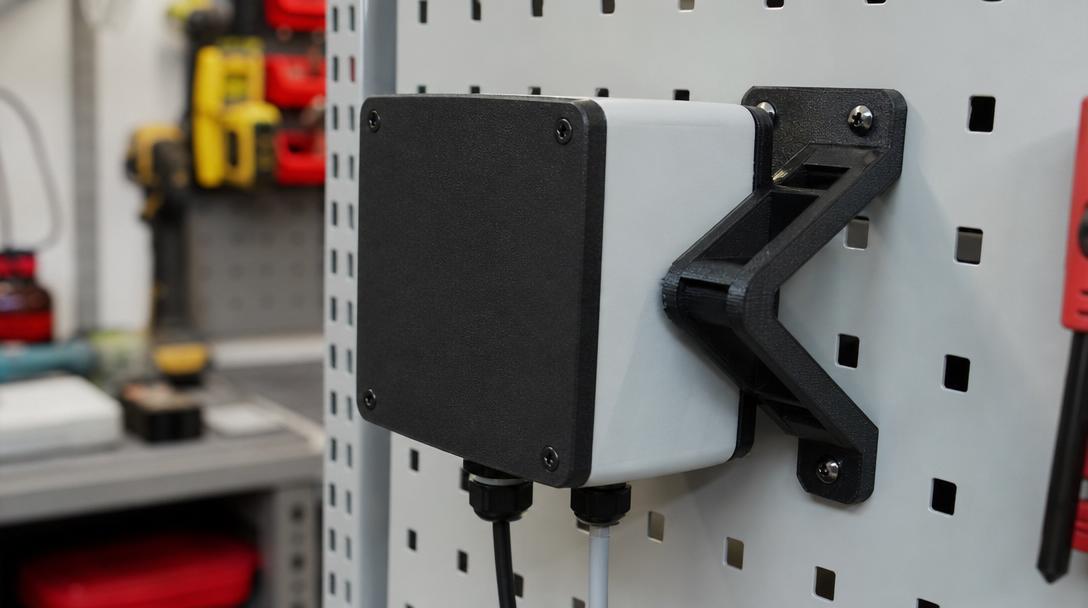
The term ABS+ refers to a class that does not have exactly the same definition across every brand and manufacturer; but the general idea is clear: to keep the strengths of standard ABS while making its printing behavior a bit easier to manage. That is why users often see ABS+ as an option that is ‘as technical as ABS, but a little better behaved.’ When getting 3d printing service for functional enclosures, workshop fixtures, connection components that may be exposed to impact, and technical parts more serious than everyday-use items, ABS+ may be worth considering.
What does ABS+ offer?
What people like about standard ABS is its durability, better heat performance than PLA, and its technical feel in use. In some formulations, ABS+ can offer a more balanced surface finish, more controlled printing, and a slightly less troublesome production experience. Of course, this difference varies by manufacturer; in other words, the ABS+ label is not a magical guarantee of quality. Still, as a material class, it can be a more accessible technical option compared with pure ABS. In Ucuz3D’s overall material approach, decisions like this are made from among our 17 material options based on the actual needs of the part.
Should ABS+ always be chosen?
No. If your part is only a desktop prototype, PLA may be more economical. If it will stay outdoors and be exposed to UV for a long time, ASA may be the better choice. If flexibility is required, you need to move up to the TPU class. In short, ABS+ can be a good technical middle ground, but it does not solve every problem on its own. Also, the ABS family still requires attention in terms of the print environment, temperature control, and warping; so the ‘plus’ label does not mean all difficulties disappear.
What is it good for, and what is it not good for?
- Good for: Functional parts that may be exposed to impact and are used in medium-to-advanced technical applications.
- Limited for: Outdoor parts that will remain under UV exposure for long periods.
- Not suitable for: Flexible parts, ultra-cheap rapid prototypes, or high-heat jobs that demand the true upper limits of engineering performance.
To make the right decision within the ABS family, you also need to understand the production risks. Issues such as edge lifting, shrinkage, and environmental control directly affect the material’s real-world performance. That is why the article ABS Filament Guide: Durability and Heat Resistance provides a solid foundation.
Short decision summary
If you want a technical part but would like to avoid an experience as demanding as pure ABS, ABS+ is a sensible candidate. Still, the decision should be made based on the use scenario, not the label: will the part stay outdoors, be exposed to heat, take impact, or serve only as a quick prototype? Once these questions are clear, the material choice also becomes clear. To get started, you can review the affordable 3d printing prices page, upload your STL file through the online 3d printing workflow, and evaluate the most sensible technical option for your specific part.


 Türkçe
 العربية
 Русский
 فارسی
فارسی Deutsch