
What Does Volkmann’s New Production Center in Germany Tell Us About the Additive Manufacturing Supply Chain?
The additive manufacturing supply chain gains its full meaning not just from the printer itself, but from powder management, quality control, shipping, and lead times taken together. Volkmann’s expansion of its production center in Germany points to exactly this: competition in industrial 3D printing is no longer determined solely by printing capability, but by how quickly and controllably the production flow is managed. Especially on the metal additive manufacturing side, seemingly invisible steps such as powder conveying and material preparation have a direct impact on overall yield.
What is the key development in this news?
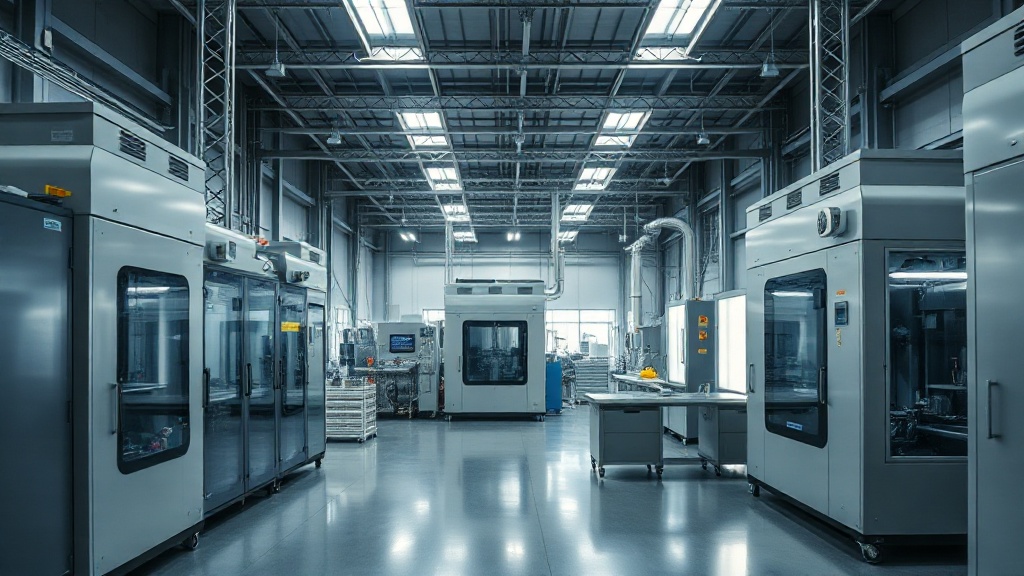
According to an article published in TCT Magazine on 11 June 2026, Volkmann is expanding its production center in Soest, Germany, by more than approximately 48,000 square feet of additional space. With this investment, the company aims to increase capacity in metal powder handling systems, pneumatic vacuum conveying solutions, bulk bag discharging equipment, and feeding systems. The most notable point is that this expansion has already begun to reduce lead times for custom orders going to North America. In other words, the news is not merely about a facility growing — it signals the strengthening of the operational backbone behind additive manufacturing.
Why it matters: speed in 3D printing is not just print time
Many people measure speed in 3D printing solely by the time a machine takes to produce a part. In serial and semi-serial production, however, the bottleneck most often occurs in steps such as material preparation, conveying, sieving, and safely reintroducing it into the process. Volkmann’s move shows that these background processes have now become a strategic area of investment. If you want to compare production approaches across different sectors, Ucuz3D’s 3D printing applications by industry page will help clarify this perspective.
Particularly on the metal additive manufacturing side, managing powder in a clean, traceable, and reusable manner is critical from the standpoints of quality, occupational safety, and cost. This is why infrastructure investments that support the production flow carry significant signal value in the market — just as much as news about a new machine.
Practical lessons from this news for Ucuz3D
Even though Ucuz3D’s focus is FDM production, developments of this kind in the industrial 3D printing world carry a common message for all manufacturers: sustainable quality is built not only with a printer fleet but with process discipline. When file preparation, material selection, production planning, and delivery management are all addressed together, a more predictable service can be offered to the customer. If you want to take a closer look at additive manufacturing terminology, the additive manufacturing glossary guide quickly covers the core concepts.
- Capacity increase means shorter lead times for the customer.
- Control of material flow reduces quality fluctuations.
- Centralized testing and quality verification lowers the need for rework.
- Operational integrity improves pricing and planning accuracy.
What does this mean for those seeking 3D printing services in Turkey?
News like this serves as a reminder that customers should now ask not only which printer is being used but also how controlled the production process is. The process maturity of a manufacturing partner makes a significant difference, especially for prototype, spare part, and functional part requests. If you want to get a quick overview of your project in terms of material, lead time, and quantity, our 3D printing production pricing page is a good starting point.
In summary, Volkmann’s investment shows that competition in the additive manufacturing market is now taking shape not just at the level of the printer, but across the entire production chain. If you are also looking for a more planned and predictable production process for your part, clarifying your project early and moving forward with the right production flow always provides an advantage.




 Türkçe
 العربية
 Русский
 فارسی
فارسی Deutsch