UltiMaker and Bioactivx Partnership: What Does On-Demand FDM Production Mean for Wound Care?
UltiMaker and Singapore-based medical technology startup Bioactivx have signed a memorandum of understanding to develop a scalable, on-demand 3D printing solution for regenerative wound care. The announcement, dated September 17, 2026, is notable because it demonstrates how desktop-class FDM infrastructure can be positioned within a controlled medical manufacturing workflow.
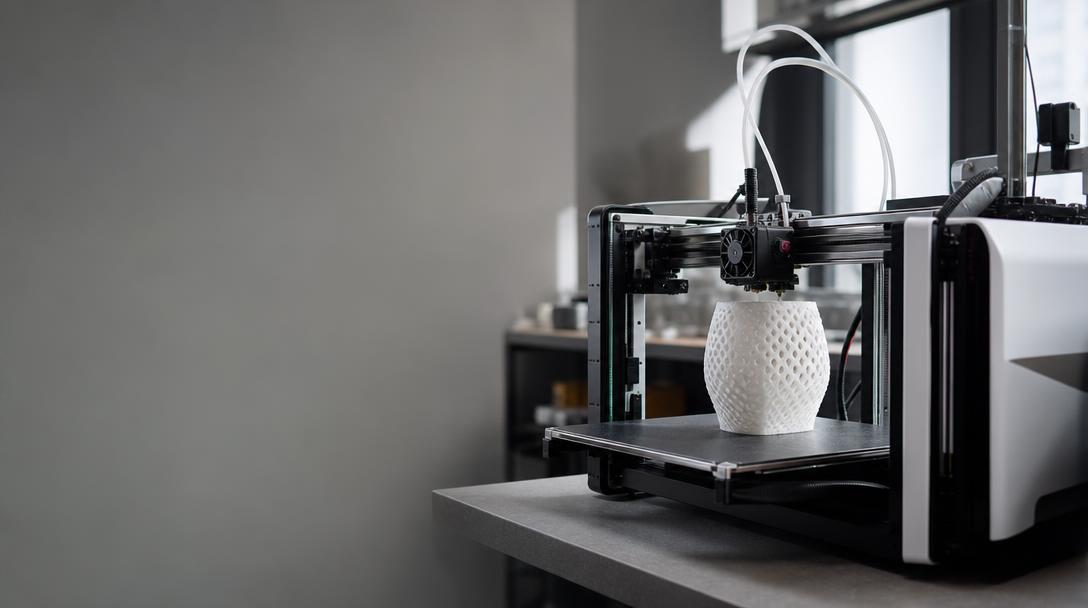
At the center of the news is Bioactivx’s synthetic, animal-free product called Bioactiv Matrix. The company states that this solution is intended to accelerate wound closure and support healing without scarring. The important point here is that the product is not simply printed with a printer: Bioactivx compounds its own active-ingredient filament in-house, then manufactures the final product using a fleet of UltiMaker 3D printers inside a certified cleanroom.
Why the partnership matters from a technical perspective
Bioactivx cites reliability, ease of use, and the flexibility to develop its own printing process among the reasons it chose the open architecture of the UltiMaker platform. This does not mean that every filament will automatically become a medical product on every printer. On the contrary, medical applications require material formulation, printing parameters, cleaning, traceability, and regulatory compliance to be addressed together. Here, the FDM printer serves as one part of a broader, validated manufacturing chain.
In the same announcement, Bioactivx shared that it had opened a medical-grade filament production and cleanroom printing facility and received HSA approval from Singapore’s Health Sciences Authority for Bioactiv Matrix. It also stated that regulatory applications for the United States, the European Union, Australia, and other ASEAN countries are ongoing. Therefore, this news should not be interpreted as meaning that the product is ready for use in all markets, but rather that regional approval and scaling steps are progressing.
Moving closer to the point of need instead of relying on centralized production
The goal of the two companies’ new partnership is to bring the production of wound-care products closer to where they are needed. Reducing dependence on traditional centralized manufacturing and cold-chain logistics could speed up access, especially during the critical period immediately after an injury. For this to happen, a short printing time alone is not enough; cleanroom capacity, trained personnel, quality control, and the requirements of local health authorities are also part of the process.
The takeaway for Ucuz3D readers is more general but valuable: FDM can be a manufacturing tool that reduces mold investment and the need for centralized inventory in personalized or low- to medium-volume products. However, printing a part that comes into contact with the body using ordinary PLA, PETG, or another filament and using it as a medical product is not a safe approach. Material suitability, product design, and the manufacturing environment must each be validated separately. For your standard FDM parts, you can review our 3D printing materials.
How could this development affect manufacturing decisions?
- On-demand production: Producing according to need instead of relying on centralized storage can offer advantages, particularly in personalization and limited-series scenarios.
- Open-platform approach: It can provide configuration flexibility for teams developing their own materials and processes; in return, the responsibility for validation also rests with the manufacturer.
- Cleanroom requirement: Simply placing a printer in a cleanroom does not establish medical suitability on its own. The entire process, equipment, and record-keeping system must be evaluated together.
When preparing your project’s prototype or functional FDM part for production, you can consider the 3D printing service option. The decision should be based on the material, geometry, quantity, and conditions of use, while the price per gram model should also be included in the total production calculation. If your file is ready, you can start your production request through the online 3D printing tool.
Source and date: 3D ADEPT MEDIA, news of UltiMaker and Bioactivx’s partnership for regenerative wound care, September 17, 2026. The information is based on the companies’ statements regarding the partnership and Bioactivx’s regulatory steps.


 Türkçe
 العربية
 Русский
 فارسی
فارسی Deutsch