restor3d Announces MyFit: Digital Design and 3D Printing Workflow Expands in Personalized Orthopedics
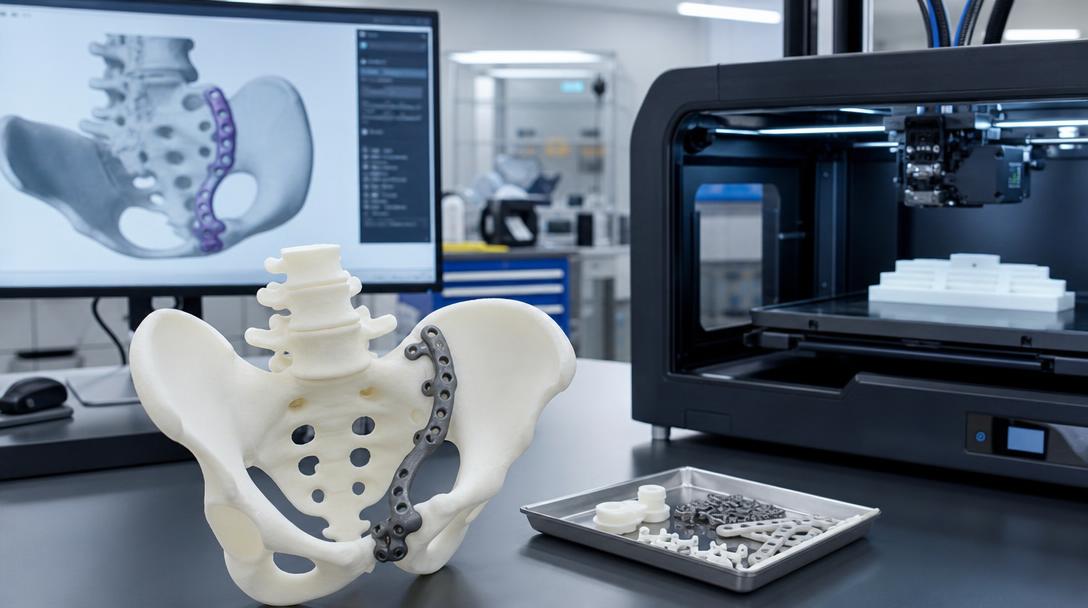
restor3d aims to take personalized orthopedic care beyond the operating room with its MyFit digital solution. The announcement dated September 8, 2026, highlights an effort to bring 3D imaging, personalized design and manufacturing data together in a single digital workflow. This approach shows how 3D printing is being positioned not only for prototype production but also for the planning and follow-up stages of healthcare delivery.
What does the MyFit announcement describe?
The digital package introduced by restor3d under the name MyFit by restor3d aims to extend the design and care processes for personalized orthopedic solutions through the post-operative period. The announcement emphasizes more organized management of data flow between clinical and manufacturing teams, as well as the ability to monitor patient-specific treatment plans in a digital environment.
The key point here is not the launch of a single printer or component, but rather addressing digital design and physical manufacturing within the same workflow. When data related to a person’s anatomy is processed accurately, surgical planning models, trial parts, measurement-specific auxiliary components or designs intended for production can be prepared in a more controlled manner. Naturally, the safety and suitability of each clinical application depend on the rules of the relevant health authorities, as well as the manufacturer’s and clinic’s validation processes.
The success of platforms like these cannot be measured solely by their software features. Compatibility between file formats, recording design revisions, pre-production checks and ensuring that different teams use the same technical language are also important. In this way, personalization can become a repeatable process rather than a one-time model production task.
Why is it important for 3D printing?
The value of 3D printing in personalized orthopedics comes from its ability to create designs based on measurements and intended use scenarios instead of applying the same part to everyone. Physical anatomical models and training or trial parts, in particular, can help healthcare professionals evaluate complex geometries within their teams. Material selection, layer orientation, surface quality and dimensional accuracy should all be considered together when producing these parts.
- Data continuity: Transferring scanning or imaging data into the design process can reduce manual repetition.
- Personalization: Patient-specific geometry can provide a more suitable starting point when standard dimensions are insufficient.
- Trial and training: Physical models can make it easier to examine complex areas before an operation or for training purposes.
- Traceability: Keeping the digital file, design revision and manufacturing record together can contribute to quality processes.
What it means in practice for Ucuz3D readers
This development does not mean that every medical part can be produced on a desktop FDM printer. For implants or products intended for direct use on patients, material selection, sterilization, biocompatibility and regulatory requirements are critical considerations. FDM, however, can be evaluated for applications such as clinical training models, dimensional inspection fixtures, device enclosures, ergonomic trial parts and pre-production prototypes. For such a project, the intended use of the design file, the expected load and the surface requirements should be clarified from the outset.
If your need is not a clinical implant but a measurement-specific model, fixture or prototype, you can review 3D printing service options. When comparing materials and manufacturing scenarios, understanding the price per gram approach can help you consider not only the raw material but also the part geometry and manufacturing steps. If your STL file is ready, you can review an initial price through the online 3D printing workflow.
You can review general filament options on the our printing materials page, and consult the 3D Scanning and Reverse Engineering guide before making decisions about dimensional accuracy and data preparation.
Conclusion
The restor3d MyFit announcement is a reminder that, in personalized orthopedic care, 3D printing is not merely a manufacturing technique on its own but part of a broader ecosystem that brings together data, design, clinical decision-making and follow-up. Its real impact will depend on how verifiably the digital workflow can be carried out and how well it aligns with clinical requirements.



 Türkçe
 العربية
 Русский
 فارسی
فارسی Deutsch