PETG or Copper PLA? Functional Part or Metallic Appearance?
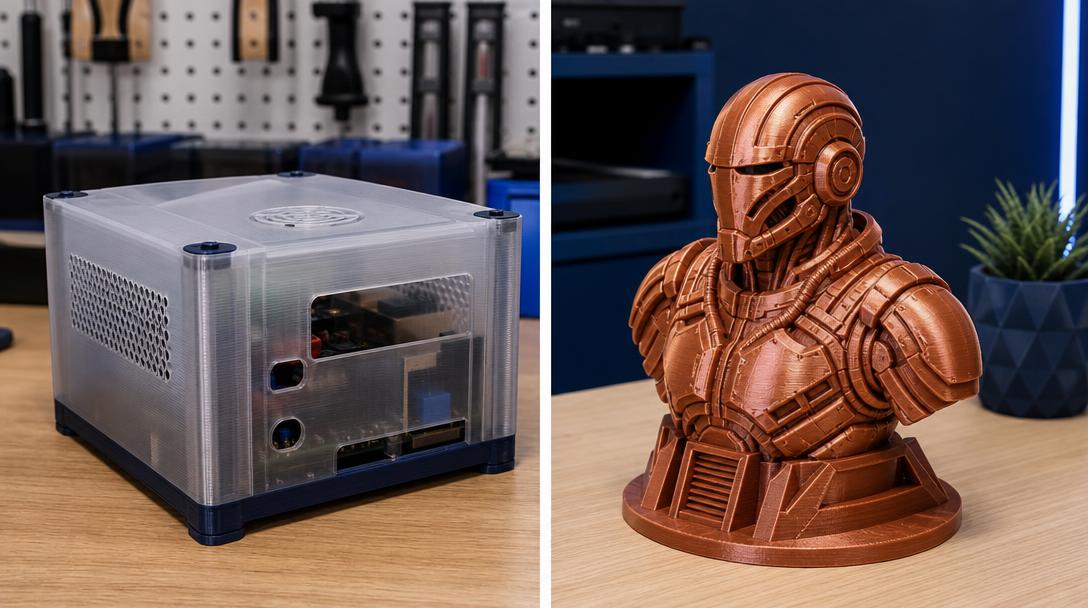
PETG or Copper PLA? The key question in this comparison is not which material is “better,” but what you expect from the part. PETG is often considered for functional parts and enclosures, while Copper PLA may be chosen for decorative models thanks to its copper-toned metallic appearance. Copper PLA is not real copper or metal printing; it is a name describing the filament’s appearance.
The role of PETG in functional applications
PETG is a thermoplastic that can be tougher and more impact-tolerant than PLA, so it may be considered for enclosures, covers, and fixtures that flex slightly or see everyday use. However, the material brand, geometry, wall thickness, infill, and print orientation all affect the result. It is not correct to assume PETG is suitable for every part that operates at high temperatures. If continuous heat, chemical exposure, or outdoor use is involved, the design and actual operating conditions should be assessed separately.
Moisture, temperature, and retraction settings during PETG printing can cause stringing or small surface defects. These can usually be managed through tuning, but a test print can save time when the surface appearance matters. In a functional part, areas such as joints and screw holes should be reinforced not only through filament choice, but also with appropriate tolerances and layer orientation.
Copper PLA is chosen for its appearance
Copper PLA can provide a copper-like tone for decorative figures, presentation models, desk objects, or visual prototypes. However, its filler content and manufacturer’s formula may vary, so you should not assume it has exactly the same properties as standard PLA. A metallic appearance does not mean it has the electrical conductivity, corrosion behavior, or mechanical properties of real metal. For this reason, using this material for a load-bearing or heat-exposed part solely because of its color may not be suitable.
Some metal-filled or metallic-look filaments can wear down a nozzle more quickly; check the manufacturer’s recommendations and use a suitable nozzle for long prints. Layer height and surface finishing also affect the final appearance. If aesthetics are the priority for a decorative model, Copper PLA may make sense; if service life and function matter more, PETG or another engineering material may be a better candidate. You can compare other options in the printing materials section.
- Cover, clip, or lightweight part for everyday use: assess PETG alongside the geometry and load.
- Visual model, award, or decorative object: Copper PLA may offer an advantage in appearance.
- If heat, outdoor use, or sustained loads are involved, do not judge by the filament name alone; test a sample and review the design.
Start by defining the intended use
If appearance is secondary for a functional part, PETG may be a more sensible starting point; Copper PLA stands out for decorative work where a copper tone matters. In both cases, account for the direction-dependent nature of layer-based manufacturing and dimensional tolerances. For Ucuz3D’s 3D printing service, explaining what the part will be used for makes it easier to choose a material.
You can check the approximate cost per gram on the prices per gram page and assess your file using the online 3D printing price calculator. Get closer to the right quote by clarifying whether you want a decorative appearance or a working part.
Separate visual quality from function
For a decorative model, texture, color, and finishing may be priorities; for a mechanical enclosure, dimensions, connections, and reusability matter more. If you plan to sand or polish Copper PLA, consider the manufacturer’s instructions and the filament’s actual composition. Not every product contains the same proportion of metallic additives; printing temperature, flow, and wear behavior can vary by brand. For a clean surface with PETG, keeping the spool dry and testing temperature and retraction settings can improve the appearance.
If the part will be used outdoors, also consider factors such as UV exposure, temperature, and humidity. Neither filament guarantees long-term performance in sunlight, chemical exposure, or high temperatures based on its name alone. Describing the intended use is a reliable way to avoid unnecessary claims and choose the right production approach.
Consider function and finishing together
The dimensions, connection method, and repeated use of a functional part are often more important than a filament’s color advantage. When designing with PETG, make sure the clip is not too thin and that there is enough material around the connection. With Copper PLA, if you want a decorative surface, plan for the visibility of layer lines, print orientation, and any finishing required before printing. The manufacturer’s technical datasheet should be the reference for temperature and nozzle recommendations. This helps you avoid assessing different formulations by relying on a single general rule.


 Türkçe
 العربية
 Русский
 فارسی
فارسی Deutsch