Objectify Joins the Roboze Manufacturing Network: Industrial 3D Printing Capacity Expands in India
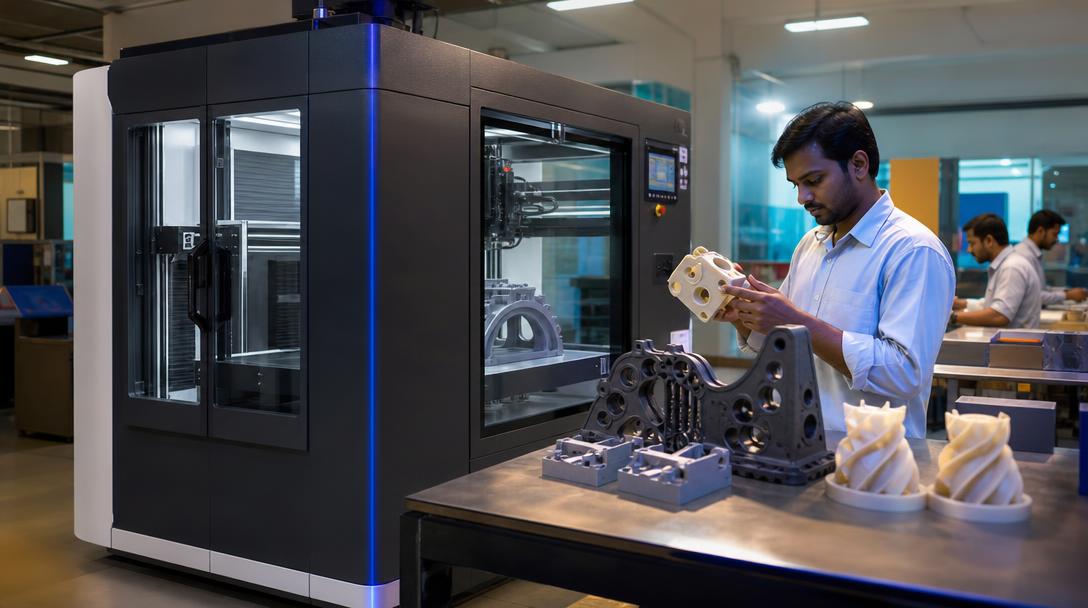
A new collaboration in industrial 3D printing shows that production capacity can grow not only through investment in machinery, but also through local service networks. India-based manufacturing service provider Objectify Technologies has announced that it has joined the Roboze Manufacturing Network and commissioned a Roboze ARGO 500 Hyperspeed system. According to a TCT Magazine report dated 8 October 2026, this move is part of Roboze’s goal to expand its manufacturing ecosystem in India.
From machinery investment to a production network
The key point in this announcement is not simply the installation of a new system. By joining the network, Objectify combines its existing service capabilities with Roboze’s international manufacturing network. Such networks can make it easier for customers to access production sites in different regions rather than sourcing a part from a single location. However, network membership alone should not be assumed to guarantee shorter lead times or lower costs; these depend on the part, available capacity and logistics conditions.
Roboze is a manufacturer known for its high-performance polymer and composite production systems. The ARGO 500 Hyperspeed is positioned as an industrial production platform, rather than a desktop prototyping printer. This development should therefore be seen less as the announcement of a new model for the consumer FDM printer market and more as an example of advanced materials and production infrastructure being expanded through regional service providers. It does not mean that this system uses the same workflow or produces the same parts as the FDM materials offered by Ucuz3D.
Why it matters for India
In the assessment reported by TCT, the partnership is linked to trends such as localisation, supply chain resilience and the development of domestic manufacturing capabilities. A service provider joining the network may help customers access new production technologies and support manufacturing projects carried out with local partners. Still, the report does not disclose a specific customer order, production volume or verified delivery performance. It is therefore more accurate to view this as a step towards establishing capacity and business connections, rather than as proof of a successful mass-production operation.
This example also offers a practical reminder for businesses planning to produce parts: when selecting a technology, consider not only the machine’s specifications but also material suitability, part geometry, required tolerances, quality verification methods and production location. No single manufacturing method is always the best option for low-volume custom parts. If FDM is suitable for your prototype or intended application, you can review the options by exploring our printing materials; the 3D printing service you need should be assessed in light of the part’s dimensions and operating conditions.
Preparing a part for production
Having a CAD file does not, by itself, mean that a part is ready to manufacture. Wall thickness, load direction, connection surfaces and operating environment all affect the choice of material and method. For parts made with FDM, layer orientation and geometry can also affect strength, so it is helpful to review designs for function-critical parts alongside the manufacturing method. If you do not know the price yet, take a look at the per-gram pricing approach on our affordable 3D printing prices page; if your file is ready, you can estimate the cost using the online 3D printing calculator. The final decision should be based on an assessment of the part’s dimensions and production requirements.
The impact of the Objectify–Roboze partnership will become clear from how the network’s added capacity is used in real customer projects. For now, the clear message is that regional production networks and local service partners are becoming increasingly important in industrial 3D printing—but an investment announcement should be distinguished from a verified production outcome.


 Türkçe
 العربية
 Русский
 فارسی
فارسی Deutsch