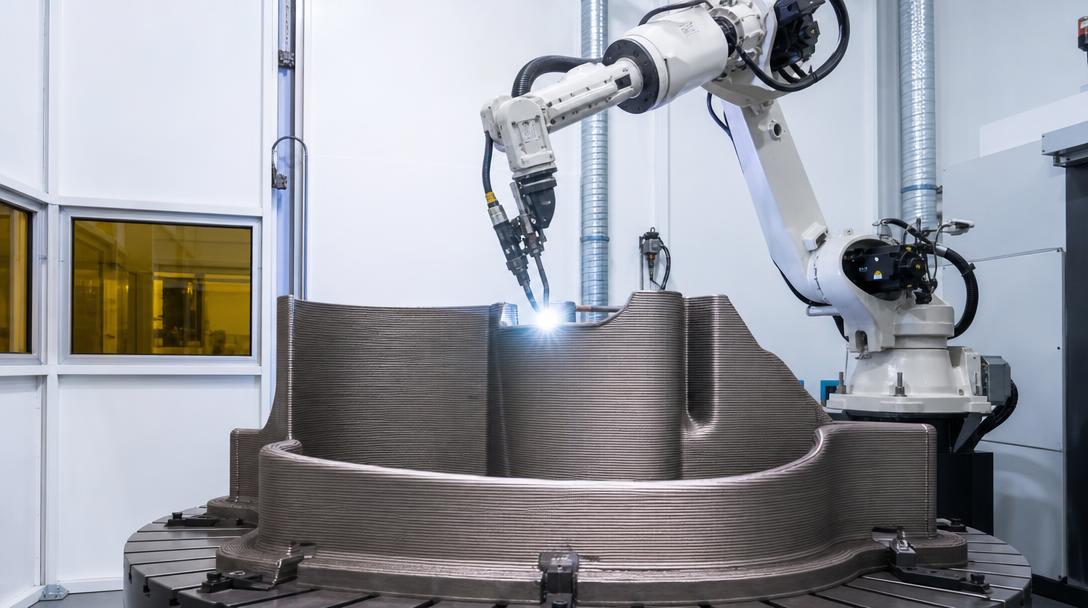
MX3D Earns DNV’s Highest-Criticality Certification for WAAM 3D Printing
The highest-level additive manufacturing certification MX3D has received from DNV shows that, for 3D printing to be used for critical industrial components, verifiable processes are just as important as production itself. The Amsterdam-based company has been certified at the Additive Manufacturing Criticality 3 (AMC3) level for its wire arc additive manufacturing (WAAM) facility; DNV describes this as the highest criticality level.
What does the certification cover?
According to a report published by 3D Printing Industry on 5 October 2026, MX3D announced that it is the first WAAM facility to reach this level. The certification enables the company to produce highly critical metal components for marine, energy and defence applications. This does not mean that every part is automatically approved or safe regardless of where it is used: design, material, production parameters and inspection requirements still matter for specific products and applications.
WAAM is a manufacturing approach in which metal wire is deposited layer by layer using a heat source similar to arc welding. While FDM melts and deposits plastic filament, WAAM uses metal wire; the equipment, materials and validation requirements of the two methods are therefore different. This news should not be interpreted to mean that metal parts can be produced with an FDM service.
How is trust established in industrial manufacturing?
Acceptance of a critical component depends on more than getting its geometry right. Manufacturers must demonstrate the traceability of the material batch used, the consistency of process parameters and that the component has passed the required inspections. A certification such as AMC3 indicates that these capabilities have been assessed within a defined framework; it provides customers and regulatory bodies with evidence of how the production system is managed.
This approach highlights one of the key challenges in moving additive manufacturing from prototyping to repeatable production: keeping records from design through final inspection and defining acceptance criteria in advance. Being able to produce large and complex components is not enough on its own; how each feature will be validated must also be built into the workflow.
What FDM users can take away
Although MX3D’s certification is specific to WAAM, its principles of traceability and quality planning can also guide plastic FDM part production. For example, defining the critical dimensions of a fixture or enclosure from the outset, choosing the build orientation and material based on the intended operating conditions, and then validating the first part by measuring it can reduce rework. However, the certification class for industrial metal processes and desktop or service-based FDM printing should not be treated as having the same standards or scope.
To produce a part using the right method, its design, operating environment and required strength should be considered together. For prototypes, fixtures and spare parts that can be produced with FDM, the 3d baskı hizmeti page provides information about production options. To compare material choices, you can explore mühendislik malzemeleriyle baskı options; upload your file to see an estimated cost with the 3D baskı fiyat hesaplama tool. Considering the design and operating conditions together also makes it easier to understand how geometry and print settings affect the price.
The baskı yönünün parça dayanımına etkisi guide is also a practical starting point for understanding how forces interact with the build orientation of FDM parts. The main takeaway from the MX3D example is that when adopting a new manufacturing method, quality assurance and application-appropriate validation should be planned alongside production capacity.



 Türkçe
 العربية
 Русский
 فارسی
فارسی Deutsch