How Many Days Does 3D Printing Take to Deliver? 5 Factors That Determine the Time
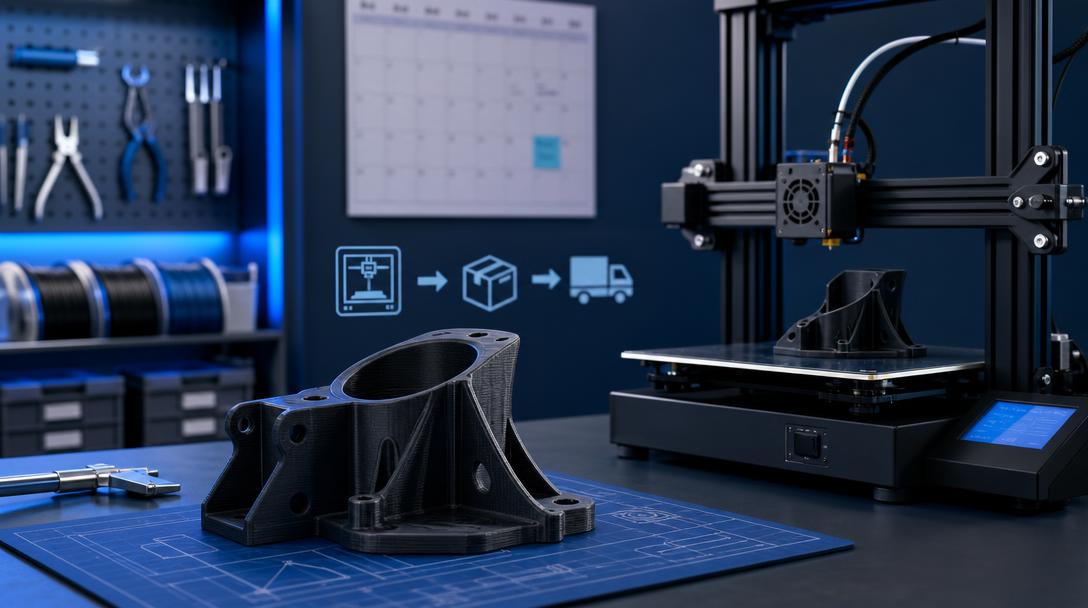
How many days does 3D printing take to deliver? For a single part, production time varies depending on the model’s size, printing time, material choice, quantity and approval time. A small, ready-to-print FDM part may be scheduled within the same working day, while orders that are large, consist of multiple parts or require design work may take longer. A clear timeframe is provided after the file and production plan have been reviewed.
Key factors that determine 3D printing delivery time
The printer’s operating time is not the only factor that determines when an order will be ready. Checking the file, selecting the right material and printing settings, inspecting the part after production and preparing it for shipping are also part of the process.
- Part volume: Larger models require more layers and a longer printing time.
- Layer height: Thinner layers improve surface quality but extend production time.
- Infill and wall count: Values increased to improve the strength of functional parts can raise filament consumption and production time.
- Material: PLA is generally easy and quick to print; PETG, TPU, ASA or engineering materials may require more careful settings and preparation.
- Quantity: When multiple copies of the same model are being produced, bed arrangement, batch planning and inspection time become more important.
How much difference is there between a small part and a large model?
Models such as phone stands, buttons, covers, mounting accessories or small spare parts can often fit into a short printing schedule. By contrast, large enclosures, mechanical prototypes and multi-part sets may take longer than several hours. If the model does not fit on the print bed, it may also be necessary to divide the part or design snap-fit connections or screw-based joints.
For this reason, having the STL or 3MF file reviewed before placing an order provides the most accurate estimate. If your file is not ready, explaining the required part through its dimensions, photos and intended use can also make the evaluation process easier.
How are approval and shipping times calculated?
In addition to production time, file checking, customer approval and delivery stages should also be taken into account. Clarifying the material, color, dimensions and intended use before printing begins helps prevent unnecessary revisions. Especially with press-fit parts that have tight tolerances, even a small dimensional change may require reprinting.
To learn the estimated production time for your project, you can submit your STL file to the online 3D printing quotation process. Once the file and quantity information have been reviewed, a more realistic printing plan can be created. If you are unsure about the material, you can evaluate options suitable for the part’s intended conditions of use as part of the FDM 3D printing service.
What can you do for faster delivery?
- Share the dimensions and intended use clearly.
- If available, send the STL or 3MF file at the correct scale whenever possible.
- Specify the requested color, material and quantity from the beginning.
- Explain whether appearance, strength or rapid prototyping is the priority.
- Approve the file without delay and note any critical tolerances.
The safest way to shorten delivery time is to start with a print-ready file and clear technical information. If you would also like to review the cost and design factors that affect production time, see the 3D printing cost calculation guide. This will help you plan both the timeframe and the scope of production more accurately.



 Türkçe
 العربية
 Русский
 فارسی
فارسی Deutsch