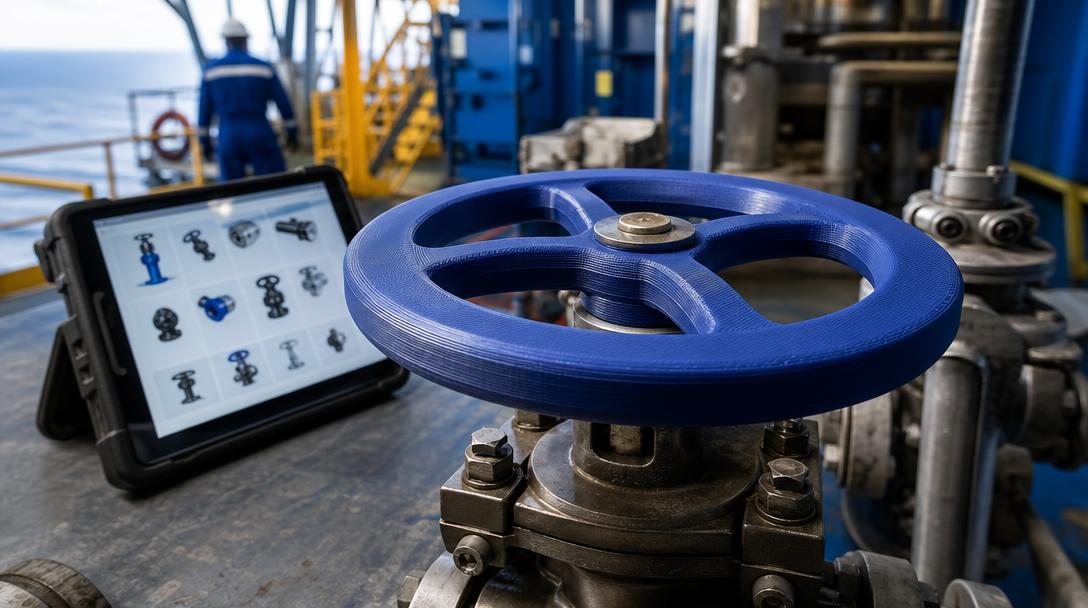
DNV-Approved Polymer Handwheel for Oil and Gas Platforms: A New Benchmark in 3D-Printed Spare Parts
Polymer-based 3D printing is gaining a new application for valve handwheels that are frequently replaced due to corrosion on oil and gas platforms. In its 9 September 2026 report, TCT Magazine examined the development process of the first polymer part qualified by DNV for the Brazilian and Latin American energy market. The project aims not only to produce a new part, but also to combine digital inventory, verification and rapid spare-part production when needed within a single workflow.
Handwheels made of carbon steel can suffer from corrosion when exposed to sea air and harsh platform conditions. This can make valve operation more difficult while increasing maintenance needs, the risk of downtime and spare-part logistics requirements. According to information reported by TCT, Petrobras engineer Danilo Cunha stated that on older platforms, a significant proportion of handwheels may require maintenance after approximately 15 years of operation; on newer platforms, around 10-15% of valves may be candidates for replacement. These figures point to a recurring maintenance problem rather than an isolated prototype.
What does 3D printing change here?
At the heart of the approach is keeping a verified digital model of the part and its production information accessible instead of physically storing the part. This makes it possible to reproduce the required geometry using suitable production infrastructure, rather than waiting for long supply chains for every part that fails in the field. The first field trials of the polymer handwheels were conducted onshore, where access was easier and monitoring conditions were more controlled. These pilots provided design improvements, performance observations under real operating conditions and feedback from maintenance teams.
The real significance of the report is that it shows 3D printing moving beyond the “rapid prototyping” stage into a spare-part workflow that requires safety and quality. DNV qualification indicates that the part has been evaluated against specific technical and operational expectations; however, this does not mean that every similar part will automatically receive the same approval. Material, print orientation, layer structure, design tolerances, post-processing, traceability and conditions of use must be verified for each individual part.
Lessons for FDM users
This example should not be interpreted as general permission to print and use a critical valve component directly with a desktop printer. In high-responsibility environments such as energy facilities, engineering material selection, environmental resistance, mechanical testing and approval processes conducted by authorized parties are carried out together. Nevertheless, the same logic may provide guidance for lower-risk industrial tools, protective covers, measurement aids and production fixtures.
- Digital inventory: The dimensions, revisions and production notes of frequently failing parts can be maintained systematically.
- Material selection: Outdoor exposure, chemical contact, temperature and impact conditions should be assessed together.
- Design: How the load is distributed between layers, part orientation and connection areas should be tested.
- Traceability: The filament batch used, print profile and inspection results should be recorded.
If you would like to evaluate a similar part for prototyping or low-risk use, you can first review the options on our printing materials page. Obtaining a professional 3d printing service according to the part’s dimensions and intended use can help you manage the difference between a home experiment and a production-oriented print. On the cost side, the price per gram approach should not be considered sufficient on its own; material, geometry, quality expectations and inspection requirements must be considered together. If your file is ready, you can start an initial assessment through the online 3d printing tool.
Conclusion
The work of Petrobras, Equinor and the other stakeholders involved in the project shows that corrosion-related spare-part problems can be addressed through 3D printing and digital inventory. DNV qualification is a reminder that technical verification and controlled field implementation are decisive in this transition. For Ucuz3D readers, the message is clear: FDM printing can create value not only in visual prototypes, but also in maintenance and spare-part workflows when the right material and verification process are established.



 Türkçe
 العربية
 Русский
 فارسی
فارسی Deutsch