Bambu Lab’s Shenzhen 3D Printer Factory Targets Annual Capacity of 3 Million Machines
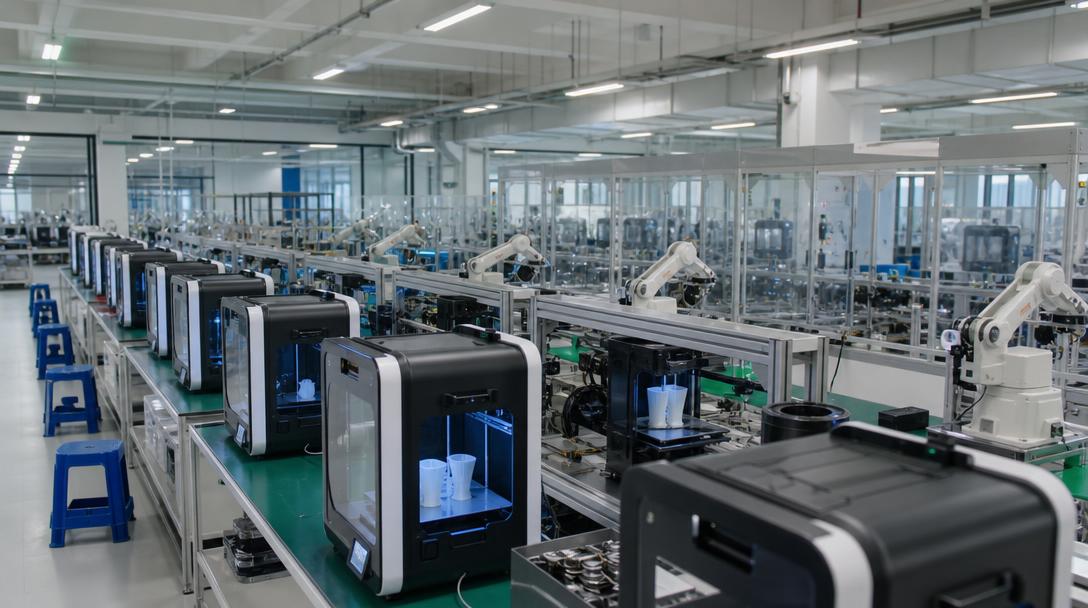
Bambu Lab’s planned new manufacturing campus in Shenzhen is a notable example of the scale of 3D printer production and its supply chain. According to a 3D Printing Industry report dated 25 September 2026, construction preparations are progressing on the site, and the company aims to establish annual production capacity of more than three million printers. This figure refers to planned capacity, not actual production.
From announcement to site preparation
The report says a municipal notice from Guangming District states that Shenzhen Zhuhe Technology, the Bambu Lab subsidiary overseeing the project, has applied for a temporary construction-site entrance. The application covers the temporary use of a limited green area for construction access and the relocation of roadside trees. This administrative step does not prove that construction has begun across all facility buildings, but it does indicate that access to the project site and site logistics are beginning to take shape.
According to the report, the project site covers approximately 83,600 square metres, with a planned total floor area of approximately 376,000 square metres. In addition to production areas, the plans include offices, research and development facilities, and support areas. Despite the project’s scale, the target of three million machines a year should not be read as current production or sales: it is the capacity planned for the facility.
More than just an assembly line
The project documents envision production being integrated with the development and manufacture of core components, R&D and pilot production of 3D printing materials, printer manufacturing, and software development. Automation, robots, smart warehousing, and production tracking systems are also part of the plan. This scope suggests that the campus is designed not merely as a facility for assembling ready-made parts, but as a more integrated manufacturing infrastructure spanning product development, quality control, and shipping.
It is important not to confuse announced plans with capabilities already in place. Permits related to site preparation and project documents do not mean that all the facility’s production lines are operational. What the report shows is that the investment has moved beyond the announcement stage into administrative and physical preparations.
Why does this matter to FDM users?
High-volume manufacturing investments show that the future of desktop FDM printers will involve product variety, component supply, software support, and service operations being considered together. However, a single factory plan does not mean consumer prices will fall, a specific model will become easier to find, or all supply issues will be resolved. These outcomes depend on factors such as the production schedule, actual capacity utilisation, and market demand.
For those commissioning parts, the more practical takeaway is this: even as printer manufacturing scales up, choosing the right material and design for the part remains important. Explore 3D printing services for parts that can be made with FDM, and compare material properties on the printing materials page. When planning your project budget, find out about affordable 3D printing prices; you can also upload your file and get an instant price for online 3D printing.
The report covers a site-access notice from Shenzhen’s Guangming District and the facility planning documents.


 Türkçe
 العربية
 Русский
 فارسی
فارسی Deutsch