Bambu Lab Launches Global 3D Printing Challenge for Assistive Devices: What It Means for FDM Designers
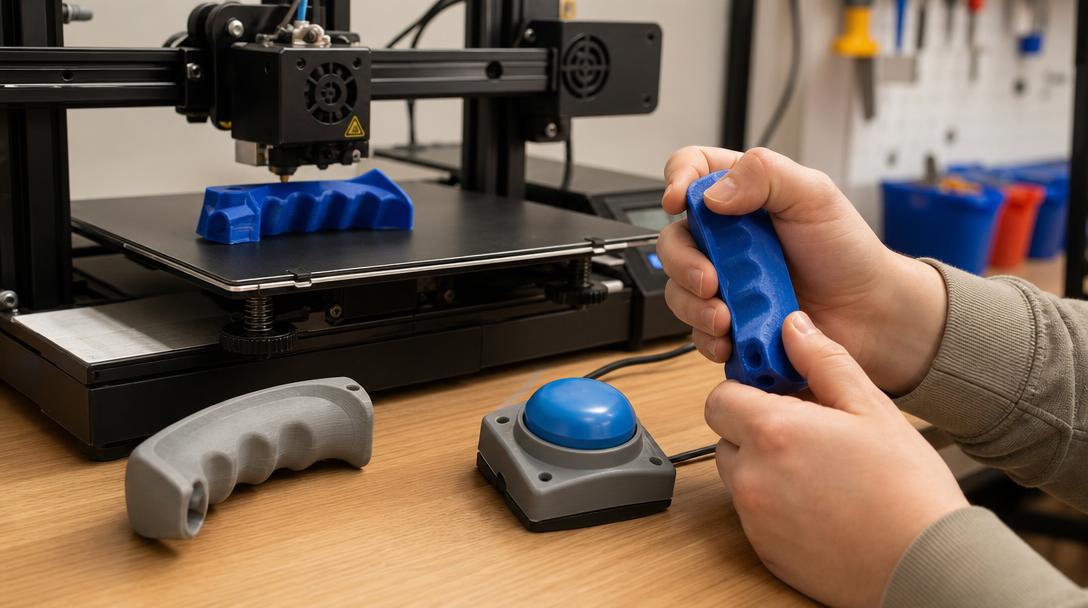
Bambu Lab has announced a global 3D printing challenge focused on assistive devices. According to a 3D Printing Industry report dated September 18, 2026, the aim is to showcase and develop designs at a community level that could improve accessibility in everyday life. This development stands out not only as a competition announcement, but also as a timely example of the role FDM printers can play in practical, customizable assistive products.
Why is 3D printing valuable for assistive devices?
Assistive devices often do not fit a single standard size. A pen grip, an aid that makes pressing a button easier, a gripping support, or a small accessory for a wheelchair may need to be tailored to the user’s hand size, mobility, and daily routine. FDM printing offers the advantages of rapid prototyping and low-volume customization. A design can be printed and tested in real-world use, then revised for size or ergonomics before a new version is made.
This approach is a reminder that 3D printing is not just about producing visual models or hobby items. With the right design and a controlled testing process, desktop FDM equipment can help develop small but effective accessibility-focused solutions.
What responsibilities does the challenge place on designers?
It is not enough for an assistive product to look good. How the user will grip it, the orientation in which it will be printed, whether its edges might irritate the skin, and how repeated loads will be distributed across the part all need to be considered together. Where possible, designers should incorporate feedback from actual users; they should not present a prototype as a critical safety component without first testing it with light loads and under controlled conditions.
- Ergonomics: Grip surfaces, buttons, and transitions should accommodate different hand movements.
- Layer orientation: Choose a print orientation that avoids the risk of loads causing separation between layers.
- Material: Consider stiffness, impact resistance, flexibility, and skin contact requirements together.
- Maintenance: A design that is easy to clean, replace when needed, and reprint is more practical.
How should you choose a material for an FDM part?
For a simple prototype, PLA can be a sensible starting point because it is easy to print and makes it easier to check dimensions. However, PLA is not the only option for a part that will be kept in a hot environment, subjected to impacts, or required to flex continuously. PETG may be suitable for some designs where a sturdier feel is preferred for everyday use, while TPU can be a good choice for applications that need a grip surface, bumper, or flexible joint. Since each filament can behave differently and require different print settings depending on the manufacturer, the final choice should be validated against the actual use case. Ucuz3D’s printing materials page can be a starting point for matching options to your project requirements.
For parts that bear loads or are safety-critical, simply increasing the infill percentage is not enough. The number of walls, print orientation, connection geometry, and part thickness also matter. If an assistive device directly affects a person’s safety, professional evaluation and appropriate strength testing are necessary.
Practical takeaways for Ucuz3D readers
The most important lesson from projects like these is to treat a customized assistive part as a small prototype first. Confirm the dimensions, observe the user’s movements, create a design that is easy to adjust, and test the first print under controlled conditions. If your file is ready, you can get production support through the 3D printing service and make your decision with the price per gram model in mind. You can also upload your design file for a quick preliminary assessment through the online 3D printing process.
Bambu Lab’s announcement shows how community participation can accelerate accessibility-focused design. The competition’s real impact will be measured less by individual prizes than by the growth of open, repeatable FDM solutions designed for diverse user needs and tested in real-world conditions.


 Türkçe
 العربية
 Русский
 فارسی
فارسی Deutsch