
Wood PLA or PLA? Which Makes More Sense for Decorative Models and Presentation Pieces?
When printing a decorative object, a model component, or a presentation prototype, most people arrive at the same question: is Wood PLA, which gives a wood-like feel, the better choice, or is classic PLA the right option? The short answer is this: if your priority is a natural look and surface character, Wood PLA stands out; if you want cleaner detail, more predictable printing, and general-purpose use, standard PLA is usually the more sensible choice. When getting a 3d printing service, this distinction helps you set the right expectations before the part is even produced.
What are Wood PLA and PLA used for?
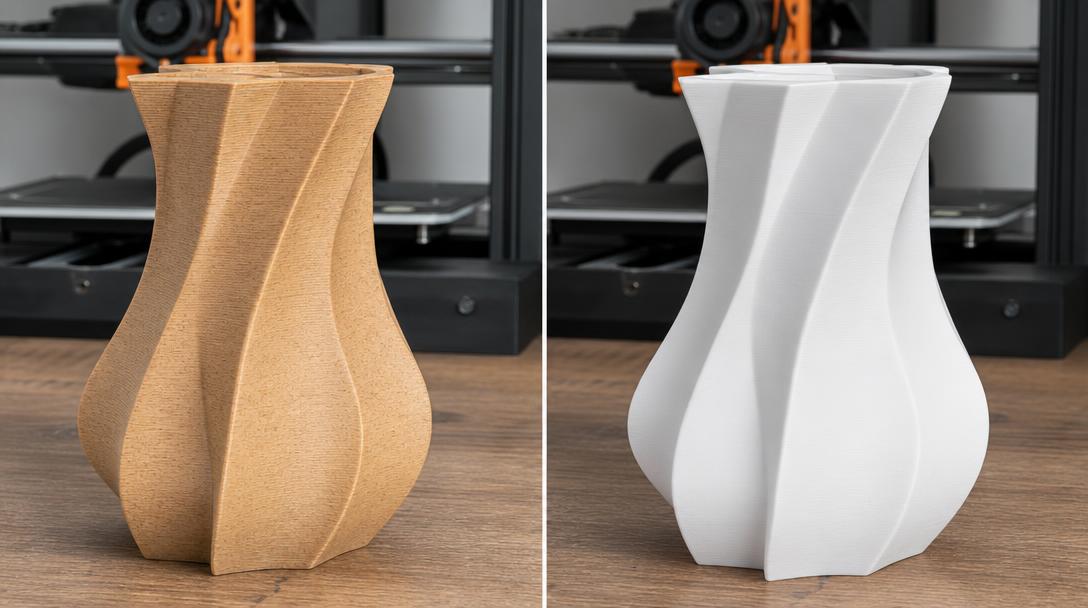
Standard PLA is one of the most common and trouble-free materials in FDM printing. It is highly suitable for presentation models, concept models, light-duty fixtures, desktop objects, and visual prototypes. Wood PLA, on the other hand, is PLA-based but designed to create a wood-like appearance and texture effect. It makes particular sense for decorative vases, nameplates, small accessories, gift items, and parts where you do not want them to “look like plastic.”
The critical point here is this: Wood PLA is not real wood; it is an FDM-compatible filament type intended to create a wood-like appearance. That is why it should be seen not as a carpentry material, but as a special printing alternative that enhances visual character. If you want to review Ucuz3D’s general material options, the our printing materials page is a good place to start.
Which one falls short for which kind of work?
Although Wood PLA is strong on appearance, it is not ideal for every application. For parts with fine detail, very precise interlocking features, or parts that will later be exposed to mechanical load, standard PLA is generally the safer choice. This is because Wood PLA may not deliver results as smooth as classic PLA for certain geometry and surface expectations. It also should not be the first choice for parts that require resistance to wear, friction, or continuous load.
PLA, on the other hand, can sometimes leave a “too plastic” impression in decorative applications. In other words, if the goal is a warm, natural, and display-worthy appearance, standard PLA may do the job, but aesthetically it may not look as distinctive as Wood PLA.
What is the difference in heat, outdoor use, and durability?
The shared limitation of these two materials is that they are not intended for high heat or harsh outdoor conditions. In areas exposed to direct sun, inside a vehicle, or in summer heat, both options should be evaluated with caution. In short, for a balcony fixture, an engine-area component, or a part that will remain in a consistently hot environment, neither Wood PLA nor PLA would be the first choice.
In terms of impact resistance, the right choice also depends on the scenario. PLA may be sufficient for light everyday use; however, as dropping, impact, and long-term mechanical stress increase, it may be better to consider other engineering or functional materials instead of these two. For this reason, when placing an online 3d printing order, it is important to describe not only the appearance but also where the part will actually be used.
Which one leads in printability and surface quality?
In terms of ease of printing, standard PLA has the advantage in most cases. PLA delivers more predictable results, is more comfortable when preserving fine details, and is widely seen as a safe starter material across a broad range of uses. Wood PLA can be very attractive for the right project, but it may require a more selective approach in terms of nozzle behavior, layer appearance, and surface expectations.
On the other hand, if the issue is purely visual impact, Wood PLA can offer a major advantage. Its wood-like tone creates a warm impression in decorative products. This difference becomes especially clear in parts that are expected to look aesthetic even without paint. If first-glance impact is what matters most in your project, it is better to evaluate it not only with a price per gram mindset, but together with its surface character.
How should you think about it from a cost perspective?
Standard PLA is the more rational starting option for most jobs. PLA makes sense in cases where the prototype will be revised several times, dimensional control is the priority, or the general form is being tested more than the aesthetics. Wood PLA, by contrast, usually creates value in parts focused on the “final look.” In other words, it becomes a preferred option for work such as a mockup for a client presentation, a decorative desktop item, or a gift object.
Final decision: Wood PLA or PLA?
If your part’s job is to look decorative, give a sense of natural texture, and bring a warmer aesthetic to a display or desk, Wood PLA may be the more sensible option. If your goal is clean detail, an easier printing process, rapid prototyping, and a safe general-purpose choice, standard PLA is usually the better option. In short: if appearance comes first, choose Wood PLA; if versatility comes first, choose PLA.


 Türkçe
 العربية
 Русский
 فارسی
فارسی Deutsch