
Why Are Aalto’s 3D-Printed 6G Panels Attracting Attention for Indoor Coverage?
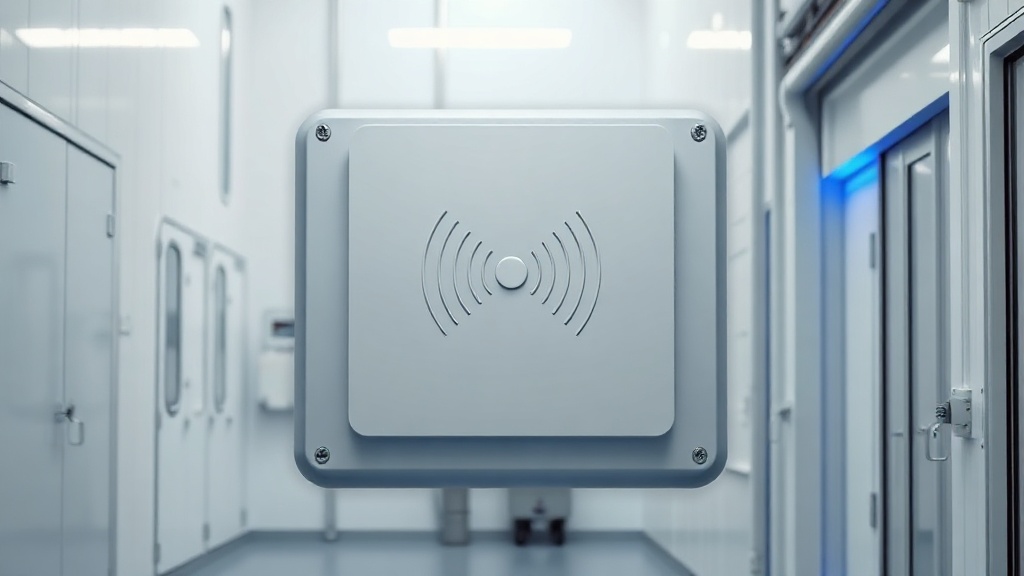
3D-printed 6G panel concept shows that additive manufacturing is now entering the conversation not only for prototyping but also for solving physical challenges in wireless infrastructure. Researchers at Aalto University have developed passive plastic panels capable of routing high-frequency 6G signals around obstacles such as walls, corridors, and equipment. Moreover, because this approach is lower in cost than conventional electronic repeaters and can be produced specifically for a given environment, it presents a compelling example for spaces ranging from industrial facilities to warehouses.
What is the key idea behind this development?
According to a report published on VoxelMatters on 15 June 2026, the Aalto team uses single-piece plastic structures called “metacrystals.” These panels can steer radio waves in a specific direction through geometry alone — with no electricity, active tuning circuitry, or continuous control required. The core value the researchers emphasise is that the solution works based on geometry rather than reprogrammable complex surfaces. In other words, it is the physical form of the part — not electronics — that does most of the work.
This approach seems particularly meaningful for factory floors, long corridors, warehouses, and enclosed spaces whose layout remains largely fixed. In such environments, using a passively designed panel tailored to specific needs can provide a simpler engineering solution than installing separate active systems for each zone. 3D printing applications focused on electronics and IoT — such as enclosures, sensor brackets, and custom mounting components — similarly illustrate why environment-specific manufacturing is valuable.
Why does it matter that these are made with 3D printing?
One noteworthy detail from the report is that the material cost per panel is expressed as only a few tens of euros. Even more significant is that additive manufacturing allows each panel to be customised for the physical environment where it will be installed, rather than being produced from a single mould. This creates an opportunity to address coverage problems in high-frequency networks like 6G not with a one-size-fits-all device logic, but with an application-specific part logic.
- Single-piece structure: Can reduce assembly and integration complexity.
- Passive operation logic: Can lower the need for continuous energy and active control.
- Environment-specific geometry: Adaptable to spaces such as factories, warehouses, or corridors.
- Low-cost potential: Can accelerate prototyping and pilot applications.
Examples like this remind us that 3D printing is not merely a tool for “making things” — it can embed functions such as electromagnetic performance, airflow, lightweight construction, or ease of assembly directly into the geometry of a part. If you want to see how design decisions translate into cost, using the instant price calculator before evaluating the production logic of a part can be a very practical starting point.
Why does this news matter for Ucuz3D?
Even though Ucuz3D focuses on FDM, the main lesson from this story is very familiar: the right geometry makes a huge difference for the right use case. The same logic applies today when producing cable routing fixtures, sensor carriers, custom enclosures, lightweight mounting elements, or on-site prototypes for a business. The part is designed for the environment in which it will be used, then quickly produced and tested in the field.
For this reason, Aalto’s work points beyond being a straightforward product news story — it points toward the future of functional design. Solutions that reduce complex problems to simpler parts are gaining increasing value, especially in manufacturing facilities with fixed installation areas. If you are also planning to develop an environment-specific part for your own product or facility, the guide on the advantages of 3D printing in prototyping provides a good summary of why this approach accelerates development.
What could the next step be?
The Aalto team is now exploring ways to commercialise these static panels and more flexible versions that could adapt to wireless environments changing over time. This suggests that 3D printing may become increasingly visible in communications infrastructure, smart buildings, and industrial network design in the period ahead.
If your project requires a functional FDM part, an enclosure, or a rapid prototype, you can work together to clarify the right geometry and prepare it for production.



 Türkçe
 العربية
 Русский
 فارسی
فارسی Deutsch