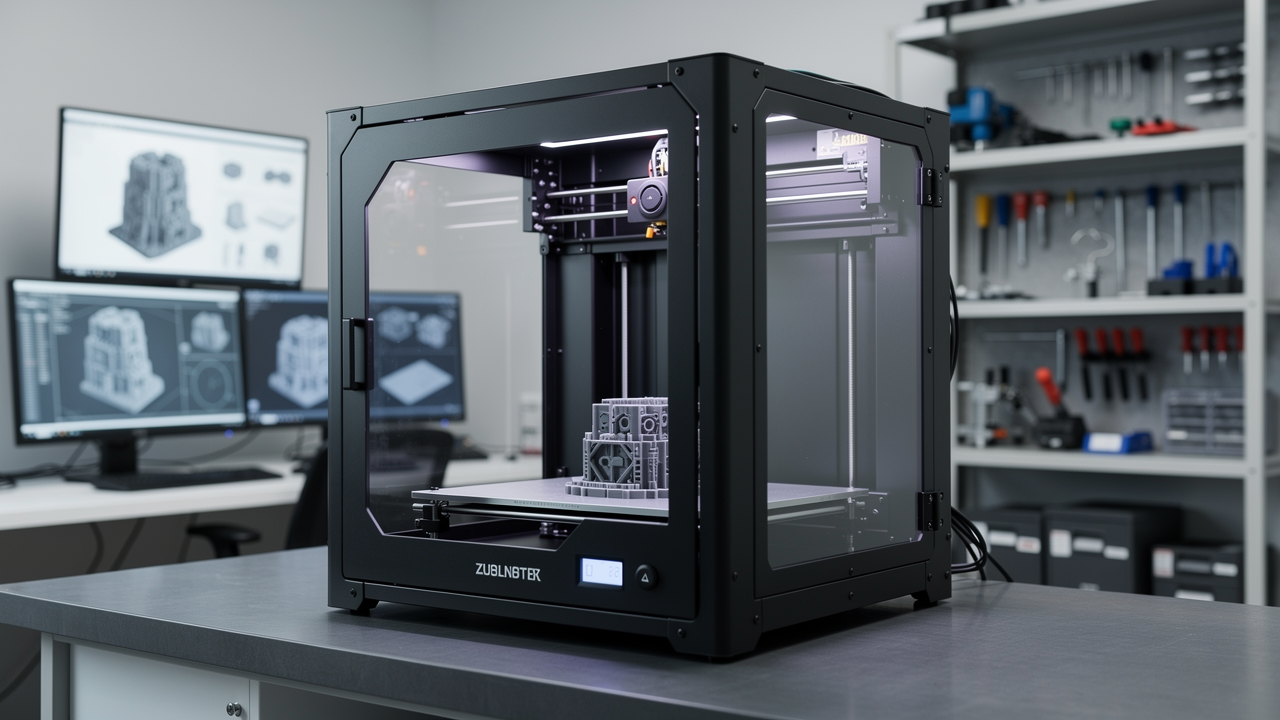

What does the UltiMaker Factor 4 Plus promise for industrial FDM 3D printing?
Industrial FDM 3D printing saw one of its most notable recent developments when UltiMaker announced the Factor 4 Plus. According to the announcement dated 22 May 2026, the real difference of the new system is not just faster printing; with a validation infrastructure that can report part quality, it delivers a more traceable production flow for jigs, fixtures, spare parts and end-use components.
Why is the UltiMaker Factor 4 Plus making headlines?
According to information shared in TCT Magazine, the Factor 4 Plus is positioned with a target of roughly twice the speed of the standard Factor 4, supported by motion planning that reduces vibration. The second highlight in the news is a validation software called TRACE. The system aims to strengthen quality assurance by recording critical print data such as extrusion behaviour and chamber temperature and generating CAD validation reports.
This approach matters especially for teams looking to move from one-off prototypes to in-house serial production. Industrial users no longer simply say “I managed to print the part”; they also ask whether they will get a similar result when they reprint the same part, with which parameters it was produced, and how to demonstrate this during an audit.
What does it tell us for defence and maintenance applications?
UltiMaker also positions this model for defence and demanding field conditions. The reason is that parts needed in remote locations or maintenance environments must not only be produced quickly but also keep a production record. This logic clearly explains why apparatus, tooling aids, protective housings and low-volume functional parts call for more planned production flows.
From Ucuz3D’s perspective, the lesson here is clear: not every application requires a large-scale industrial machine, but in FDM-based production, material selection, print parameters and part traceability must be considered together. Especially for functional parts, as expectations around strength, heat resistance and reproducibility rise, more controlled workflows such as 3D printing solutions for defence become more important.
Why does this news matter for Ucuz3D customers?
News like this directly shows that 3D printing is no longer just a visual prototyping tool; it is becoming part of the functional part production chain. Whether at desktop or industrial scale, the following needs stay the same:
- The right material selection: Will the part work under load, be exposed to heat, or be used outdoors?
- The right geometry: Are the wall thickness and tolerances sufficient for an apparatus, cover, fastener or carrier part?
- Reproducibility: Can a similar result be achieved on the second or tenth print of the same part?
- Proper process records: Especially in corporate projects, is it necessary to track what was produced with which settings?
So even though the news itself belongs to UltiMaker, the message is broader: demand for functional 3D printing is maturing. If you are planning a prototype, apparatus or low-volume functional part, you can start the process by clarifying the technical requirements in advance and assessing printability with the request a quote now step. To see why similar use cases are gaining momentum, the 3D Printing in Spare Part Production guide is also a good reference.
Conclusion
The UltiMaker Factor 4 Plus news shows that in industrial FDM 3D printing, validation and traceability have become purchasing criteria alongside speed. This reminds us why, in FDM-focused production services like Ucuz3D, matching the right material with the right application is more important than ever.
If you have an idea for a functional part, apparatus or prototype, a short technical assessment can help you start production more safely.


 Türkçe
 العربية
 Русский
 فارسی
فارسی Deutsch