
What Does the HeyGears G1 Series Change for Full-Color 3D Prototypes?
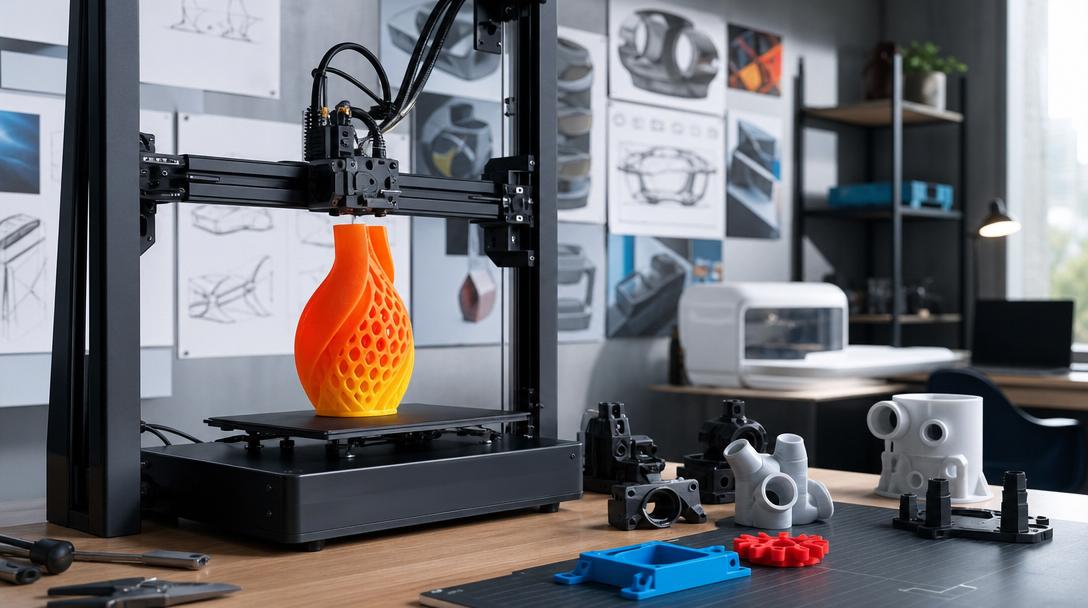
The HeyGears G1 Series stands out as a notable desktop option for teams that need full-color 3D prototypes and surface texture. For functional parts, enclosures, fixtures and low-volume production, however, FDM still holds a stronger position in terms of cost, durability and application flexibility.
According to information shared on 3D Printing Industry on 18 June 2026, Guangzhou-based HeyGears opened pre-orders ahead of Kickstarter for its full-color 3D and UV printing system, the G1 Series. The system aims to produce full-color models, raised surfaces up to 5 mm, and UV printing on flat or curved surfaces. This development is especially relevant for teams preparing product presentations, concept models, demo mockups and customer approval samples, because for certain jobs it promises to reduce the need for post-printing painting.
Why does this news matter?
The need for color prototyping is about more than producing a good-looking model. In areas such as packaging mockups, sales presentation samples, training models or trade-show demos, color, texture and visual integrity can shorten decision time. What makes the HeyGears G1 Series stand out is that it tries to combine all of this on a desktop scale in a single body.
- It aims to reduce the need for manual post-printing painting by producing full-color models.
- Thanks to raised UV textures, it can speed up label, panel or visual-surface trials.
- By bringing the 3D model and UV workflow together in a single system, it offers a more compact setup for small teams.
What is the practical takeaway for Ucuz3D?
The critical point here is that not every color prototype need is also a functional prototype need. A product’s presentation mockup and the actual fixture to be used in the field are different things. If your goal is a durable enclosure, a test rig, an assembly fixture or a low-volume spare part, FDM-based production usually makes more sense. For such parts, material selection, tolerance, wall thickness and mechanical behavior generally become more critical than color. For a suitable job you can open your file for evaluation by saying request a quote now, and you can compare the options used in functional parts across our 17 material options.
Especially in product development teams, the ideal approach is often split in two: a color concept model for visual approval, and an FDM functional prototype for usage testing. Making the design ready for printing is at least as important at this stage as the choice of technology; that is why the getting-started design guide for 3D printing speeds up the process in many projects.
What should FDM users learn from this news?
The G1 Series news shows that specialization in desktop 3D printing is increasing: some machines focus on color and presentation, while others focus on durability and function. This clarifies the right question for anyone ordering a print: is the part for display or for use? If it is for use, PLA, PETG, ABS, ASA, TPU or engineering-focused filaments offer a more realistic path in most projects. If the aim is a customer presentation or concept validation, color solutions can be valuable; but before moving to production, you also need to test separately how the part will behave with FDM.
In short, HeyGears’ new move expands desktop access to color prototyping; in return, it does not reduce FDM’s role in functional prototypes and real-use parts, but rather makes it more visible which method should be chosen for which job. If you too want to choose the right path between a visual model and a functional part, you can reach us with a short brief.


 Türkçe
 العربية
 Русский
 فارسی
فارسی Deutsch