
What Does the Snapmaker U1 Ecosystem Change for Multi-Color FDM Printing?
Multi-color FDM printing is no longer just about producing visual prototypes; it is also gaining importance for combining different colors on the same part, faster material transitions, and more flexible application scenarios. The U1-focused updates Snapmaker shared in early June show that, on the desktop FDM side, multi-color printing is heading toward a more practical and more production-oriented direction.
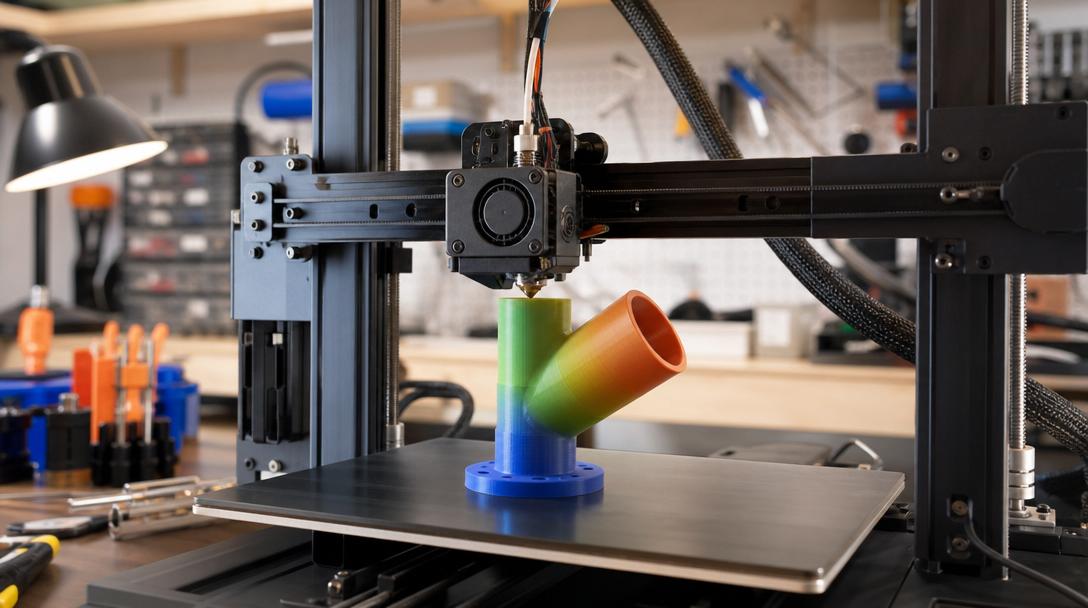
According to a report published on VoxelMatters on June 2, 2026, Snapmaker expanded its U1 multi-color and multi-material platform on both the software and hardware sides as part of its 10th-anniversary announcement. The most notable point was that the Full Spectrum color technology, which previously came from within the community, was natively integrated into Snapmaker Orca V2.3.3 Beta. As a result, users can achieve smoother transitions and intermediate tones without committing to a full filament swap at every color change.
Why does this matter for desktop FDM users?
Although multi-color printing is often perceived as just a “flashier model,” in practice it makes a real difference in product validation and customer presentations. Distinguishing button areas, warning zones, or assembly directions with colors on a product shell makes a prototype understandable at first glance. Especially for teams preparing presentation models, product mock-ups, or visual prototypes, this approach both speeds up communication and reduces the risk of revisions.
On the Ucuz3D side, similar needs usually come up in requests for prototypes, enclosures, and functional parts. If you are thinking about moving to the printing stage for your own model, you can clarify the right production route by sharing your project details on the request a quote now page.
Highlights of Snapmaker’s update
- Native software integration: Bringing the Full Spectrum approach directly into the slicer reduces the need for an extra mod or a separate fork.
- New hotend options: 0.2 mm, 0.6 mm, and 0.8 mm hardened steel hotends offer different use cases across detail, speed, and durability.
- New filaments: Materials such as TPU 95A HF, PETG HF, Silk PLA, and ASA expand both the visual and the functional printing side.
This picture is especially important, because for multi-color printing to genuinely work, you need to consider not only the printer but also the slicer, nozzle choice, and material portfolio together. If you want a broader framework for material selection, you can look at our 17 material options to see which filaments suit which part types.
What is the practical takeaway of this news for Ucuz3D?
This development shows that the desktop FDM ecosystem is becoming more mature. The share of the multi-color approach will grow especially in short-run prototypes, educational models, product presentation parts, and enclosures that require visual validation. However, the critical point here is that not every multi-color print is automatically the most correct solution. For some parts, strength, outdoor resistance, or flexibility matters more than color. In such cases, material choices like PETG, ASA, or TPU directly determine performance.
That is why, when considering multi-color printing, you should look not only at appearance but also at the print orientation, layer bonding, and the operating environment. If you want to examine the subject from a more technical angle, the How Is Multi-Color 3D Printing Done? (AMS/MMU) guide is a good starting point.
In short, this move by Snapmaker shows that multi-color FDM printing is crossing the hobby boundary into a more organized, more controlled, and more application-ready production area. If you, too, want to clarify the right material and the right production approach for a product presentation, prototype, or functional part, starting with a short technical brief is often the best step.



 Türkçe
 العربية
 Русский
 فارسی
فارسی Deutsch