
What Does the Modix MAMA-1000 Tell Us About Industrial FDM 3D Printing?
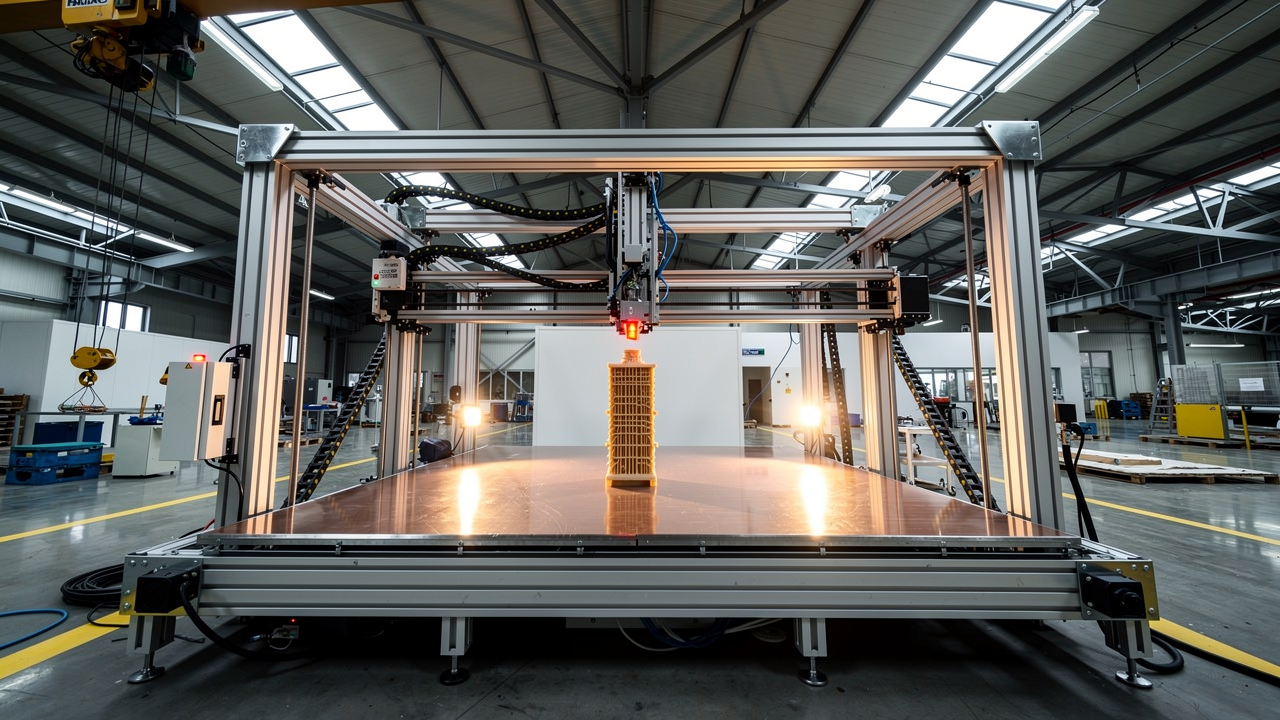
Announced by Modix on 26 May 2026, the MAMA-1000 clearly illustrates the drive to combine high-volume production with more precise part production on a single platform in industrial FDM 3D printing. The news explains why hybrid manufacturing logic stands out, especially for prototypes, fixtures, molds, large enclosures, and low-volume functional parts.
According to information shared on 3D Printing Industry, the MAMA-1000 is a new large-format system with a 1 cubic meter build volume. The most striking aspect of the device is that it supports both pellet and filament extrusion in a single machine. In other words, production teams can use the pellet-based flow, which offers lower raw material costs for high-volume rough production, and then switch to the filament head for jobs that demand surface quality, detail, and tolerance. This approach directly answers the need for “two different production behaviors in one machine” in the world of industrial FDM 3D printing.
Why are pellet and filament important together?
The figures given in the news clearly show why machines in this class are drawing attention: in most cases, the per-kilogram cost of raw materials in pellet form is significantly lower than that of filament. This can bring down the total cost on large parts, production aids, or bulky mold-like jobs. If you want to quickly see the cost side for your own part, it helps to upload your STL file and use the instant price calculation approach to understand the weight and production logic of the job early on.
From Ucuz3D’s perspective, the key takeaway is this: not every job is solved with the same material and the same production strategy. The news mentions an ecosystem open to different material families such as PLA, PETG, ABS, ASA, TPU, recycled polymers, and filled composites. This is a reminder that selecting the material according to the part’s requirements is just as critical as selecting the printer. When strength, heat resistance, and the use case come to the forefront, a printing with engineering materials approach offers a more accurate framework.
What does this news mean in the field?
The use cases Modix gives as examples are also directly production-oriented: low-temperature molds with wood-filled PLA, large furniture and interior components from recycled plastic, and large signage production with flame-retardant materials. The common thread here is producing genuinely useful large parts rather than an aesthetic demo. For many businesses in Turkey, this translates into custom apparatus, assembly fixtures, test setups, protective enclosures, or quickly reproducing a broken plastic component.
Of course, this news does not directly mean “everyone should buy a pellet printer.” The real message is that the economic logic of additive manufacturing changes as part size grows and quantity drops. Especially for large but low-volume parts, the shorter preparation time compared to classic production methods provides a significant advantage. If you want to read this cost logic more systematically, the How Is 3D Printing Cost Calculated? guide is a good complement.
Why is this meaningful for Ucuz3D?
Since Ucuz3D only does FDM-based production, it is important to read this news from the right angle: the focus here is not metal or resin processes, but how filament-based production is expanding along the axes of scale, material, and cost. Systems like the MAMA-1000 are positioned in the large industrial class; yet the signal they send is more general: FDM is no longer just hobby prototyping, but a field maturing for real production aids and functional parts as well. If you have a need for a large cover, enclosure, prototype, or functional plastic part, determining the right material and production approach with a short technical assessment is a good first step.
In short, Modix’s launch shows that flexibility and cost efficiency are being sought together in industrial FDM 3D printing. If you want to see whether your part is suitable for FDM production, a short assessment with your dimensions, file, or use case is a good starting point.



 Türkçe
 العربية
 Русский
 فارسی
فارسی Deutsch