
What Does Ottobock’s 3D-Printed Silicone Prosthetic Liner Change in Medical 3D Printing?
Medical 3D printing is becoming one of the strongest areas that separate personalized production from standard healthcare products. Ottobock’s 3D-printed silicone prosthetic liner solution, called iconiq, is a current example of this. This development, shared on May 31, 2026, shows that for highly sensitive topics such as a prosthesis user’s skin contact, comfort, and fit, the digital workflow can now be used not only for prototyping but also for the real end product. Especially in medical applications that need a custom surface, pressure distribution, and fast repeat production, it becomes clear why additive manufacturing is being talked about more and more.
Summary of the news: a new model emerges between standard products and fully custom production
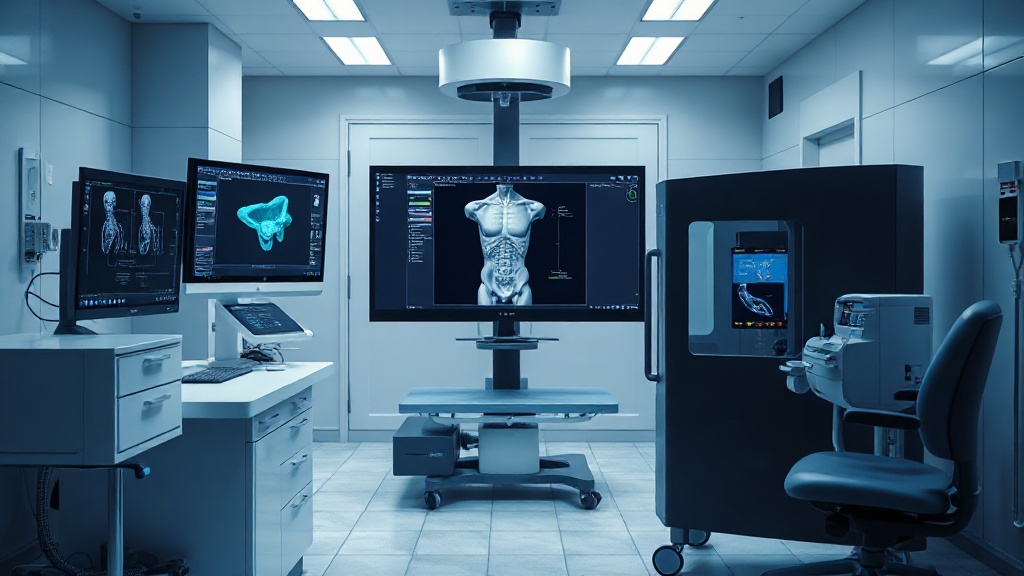
According to VoxelMatters, Ottobock brought to market a silicone liner that acts as an intermediate layer between the prosthetic socket and the user, personalizing it through a digital ordering and additive manufacturing flow. The critical point here is the opening of a third path between the two classic extremes: instead of standard products with limited adaptability or time-consuming, expensive custom manufacturing, you get industrial-scale personalization based on scan data. This approach is important in medical production both for the patient experience and for operational efficiency.
The product’s workflow is also notable: 3D scan data can now be captured without creating a physical mold, sensitive areas can be defined digitally, and data can be transferred directly to the production department. If you want to see how similar digital processes work on the product development side, our 3D Scanning and Reverse Engineering guide is a good starting point.
Why is it important for medical 3D printing?
The real value of this news comes not from 3D printing’s ability to produce complex geometry alone, but from scaling personalized care in a repeatable way. In products that touch the skin, such as a prosthetic liner, even a difference of a few millimeters can seriously affect comfort. A production chain that works with digital data makes it possible to adapt the same design logic to different user profiles in a more controlled manner.
- More accurate fit: Scan data now allows anatomical differences to be handled with real surface information instead of rough measurements.
- More traceable process: Ordering, revision, and re-production become more manageable with digital records.
- Faster iteration: As clinical feedback comes in, product parameters can be readjusted.
- More sustainable operation: As physical molds and manual intermediate steps decrease, the process is simplified.
All of this also explains why more and more is being invested in medical and dental 3D printing solutions in the healthcare sector. Of course, the product in question relies on a silicone-based custom production approach; this is not exactly the same technology as Ucuz3D’s FDM service. But the needs the news points to are very familiar on the FDM side too: anatomical demo models, clinical apparatus, transport housings, assembly aids, and rapid prototypes.
What could it mean on the ground for Ucuz3D?
For medical teams, entrepreneurs, and device developers in Turkey, the takeaway is quite practical: demand for personalization is growing, and the digital preparation steps that support this demand are now more important. Even if the final product is produced with a different technology, FDM 3D printing remains a very strong step for idea validation, ergonomics testing, apparatus development, and low-volume functional part production. Especially when developing a new medical product, seeing the first attempts quickly, keeping costs under control, and validating dimensions early provide a major advantage.
That’s why the right question for teams is not just “which technology?” but “which technology at which stage?” If you are working on a medical device body, a desktop test apparatus, or a prototype housing, uploading your file and using the get an instant price approach to see the first sample quickly can significantly shorten development time.
In short, Ottobock’s iconiq move shows that medical 3D printing is advancing toward serial personalization. If you need a prototype, test apparatus, or functional FDM part in your own medical product development process, you can quickly clarify the production path suited to your project through Ucuz3D.


 Türkçe
 العربية
 Русский
 فارسی
فارسی Deutsch