
How Do Hi3D’s New Tools Simplify Producing Print-Ready 3D Models?
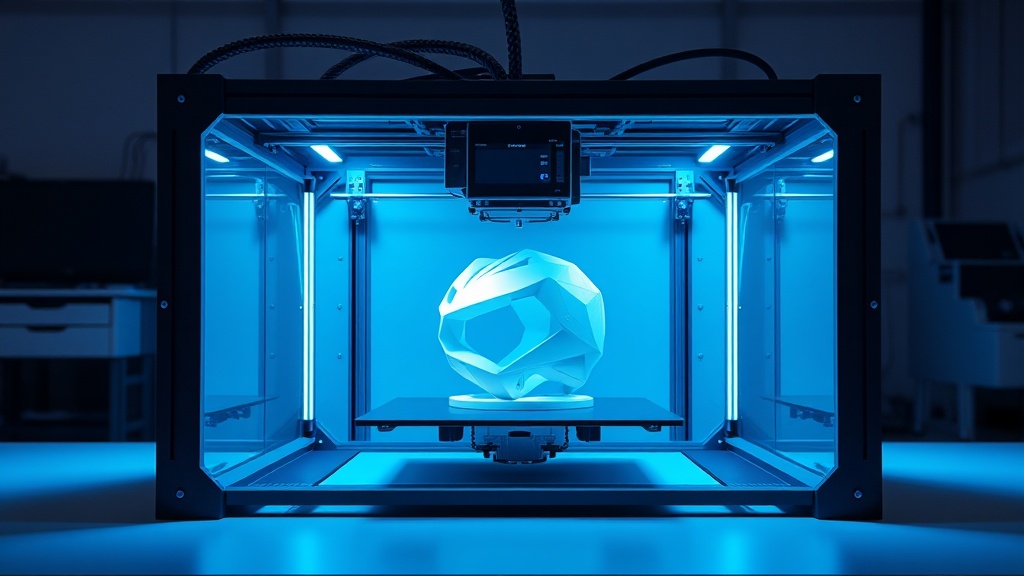
Producing a print-ready 3D model remains one of the hardest stages of turning an image into a model with artificial intelligence. According to a report published on 17 June 2026 by 3D Printing Industry, Hi3D has added new Maker tools to its browser-based production flow to ease this bottleneck. Its attempt to automate the overhang, build-volume limit, part-merging and dirty-mesh problems that often keep AI-generated models from going straight to the slicer explains why it is drawing so much attention in the FDM world.
What problem is Hi3D trying to solve?
AI-based model generators have accelerated dramatically of late; yet the resulting file is often not truly ready to print. One of the most notable new features highlighted in the report, Print by Parts, splits large geometry such as characters or decorative models into sub-parts suited to the print orientation. This makes the wide overhangs, build-plate volume overflows and heavy support usage that can leave print marks far more manageable than in a single piece.
This approach is a fresh reminder of something FDM users know all too well: a good-looking model and a model that prints cleanly are not the same thing. Because material and geometry choices matter as much as file preparation, especially for teams who want to see costs before production, taking an early instant price calculation approach to your part idea can save serious time.
What impact might the new tools have on the FDM workflow?
The Auto Connectors feature mentioned in the report places automatic connection elements between the split parts, reducing the need to manually draw pins, sockets or alignment details. This can shorten preparation time, especially for cosplay, figures, scale models and assembled prototypes. In addition, cleaner and watertight mesh generation has the potential to reduce the repair work needed before the slicer.
That said, it must not be forgotten that automation does not solve everything. In FDM printing, layer orientation, wall thickness, tolerance and support requirements are still the main variables that determine the result. If strength or function is the priority, splitting the model alone is not enough; the right choice on the material side is also required. For this reason, in functional prototype or jig projects, selecting the right filament from among our 17 material options to match the part’s use case is a critical step.
Why shouldn’t you trust a print just because “AI made it”?
As important as Hi3D’s update is, the final check for print success must still be made with production logic. AI tools often prioritise surface aesthetics; yet in a real print, thin walls, unsupported floating details, weak joining surfaces and overly small fits can cause problems. That is why a model should be quickly reviewed under these headings before printing:
- Part orientation: Layer direction directly affects strength and surface quality.
- Overhang risk: Geometry should be split or reoriented to reduce unnecessary support needs.
- Connection details: Automatically added pins and sockets must be compatible with real-world tolerances.
- File cleanliness: Non-manifold edges, gaps or surface overlaps should be re-checked at the slicer stage.
At this point, to read the automation steps described in the report more accurately, our Design for Printing: Overhang Angles and the 45-Degree Rule guide also makes a good complementary resource.
Why does this news matter?
Hi3D’s move shows that competition in 3D printing is now focused not just on producing a model, but on making the model genuinely printable. In particular, non-designer users preparing photo-, illustration- or logo-based ideas for printing in a shorter time can create new opportunities beyond the hobby side—in promotional products, visual prototypes and small-batch validation work as well.
If you have a model you want to turn into a print, evaluating it first in terms of printability and material is usually the most sensible step. If you would like to move forward with a suitable file structure and the right FDM strategy, you can clarify your project and quickly create a production plan.



 Türkçe
 العربية
 Русский
 فارسی
فارسی Deutsch