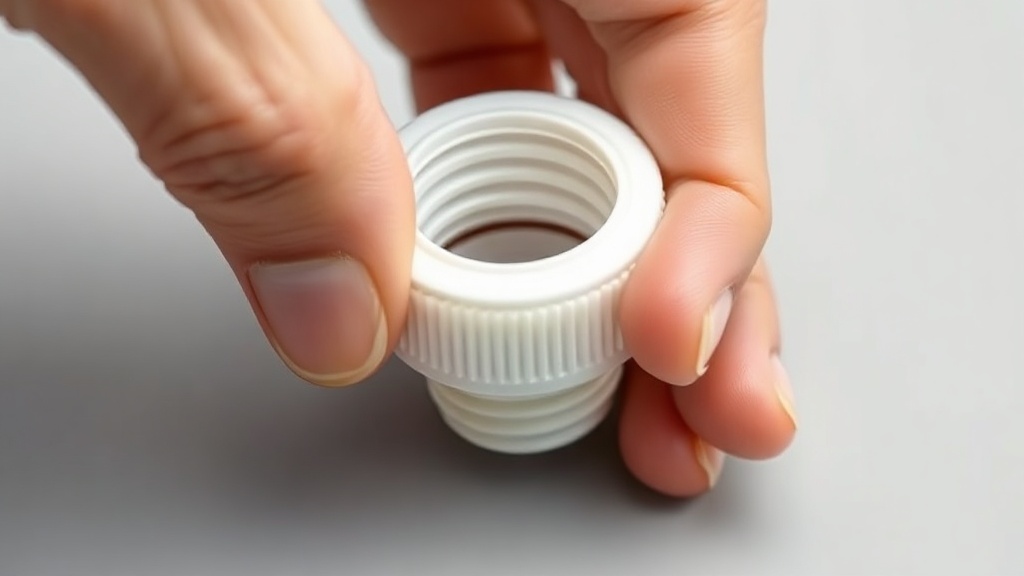

Threaded Cap Printing: Working Screw Threads and Bottle Design in 3D Printing
A cap and bottle that lock together by turning may look simple at first glance, but they are among the most frustrating parts to produce on an FDM printer. A successful threaded cap print depends just as much on tolerance adjustment and layer orientation as on the geometry of the thread profile. When set up correctly, the part turns smoothly in your hand; when set up wrong, it either won’t engage at all or strips out after a single turn.
Why Do Screw Threads Challenge FDM?
FDM builds up molten plastic layer by layer. A screw thread is a sloped, helical surface that tends to staircase and sag within this layered structure. Fine-pitch threads in particular round off and lose their function when they fall below the nozzle’s resolution.
Size Up Your Thread
Instead of small threads like M3–M5, design with coarser pitches where possible — for example, pet-bottle-style threads. The wider the pitch, the more cleanly each thread is printed.
Tolerance: The Heart of the Matter
Always leave clearance between the male and female parts. Approximate values:
- 0.2–0.3 mm radial clearance: Provides smooth rotation for most PLA and PETG caps.
- 0.4 mm and above: Loose but secure grip for flexible materials or coarse threads.
- Below 0.1 mm: Usually jams; may be attempted on a precisely calibrated printer.
Don’t expect your design to be perfect in a single attempt. Printing a small test cap and narrowing the tolerance step by step is the most reliable approach.
Print Orientation and Material Selection
Printing the threads as vertically as possible — with the cap opening facing down toward the bed — gives the helical surface a cleaner finish. Also consider the overhang angles to avoid needing supports.
On the material side, PETG is more resistant to wear and moisture than PLA, making it a better choice for caps that are opened and closed frequently. If there are specific requirements such as contact with oil, water, or food, the material selection should be made accordingly. If you’d like to compare your options, you can check material-by-material pricing on our production pricing page.
Layer Height and Speed
A finer layer height in the thread area — around 0.12–0.16 mm — reduces stairstepping and lets the thread turn more smoothly. Slightly reducing print speed in this section also noticeably improves surface quality.
If you’d like to bring a threaded cap-and-bottle set to life, you can send us your model and get a quote through our quick order page. We’re here to help you achieve a design that truly works together.



 Türkçe
 العربية
 Русский
 فارسی
فارسی Deutsch