
Seaweed-Derived Additive Paves the Way for Earth Structures with Sustainable 3D Printing Materials
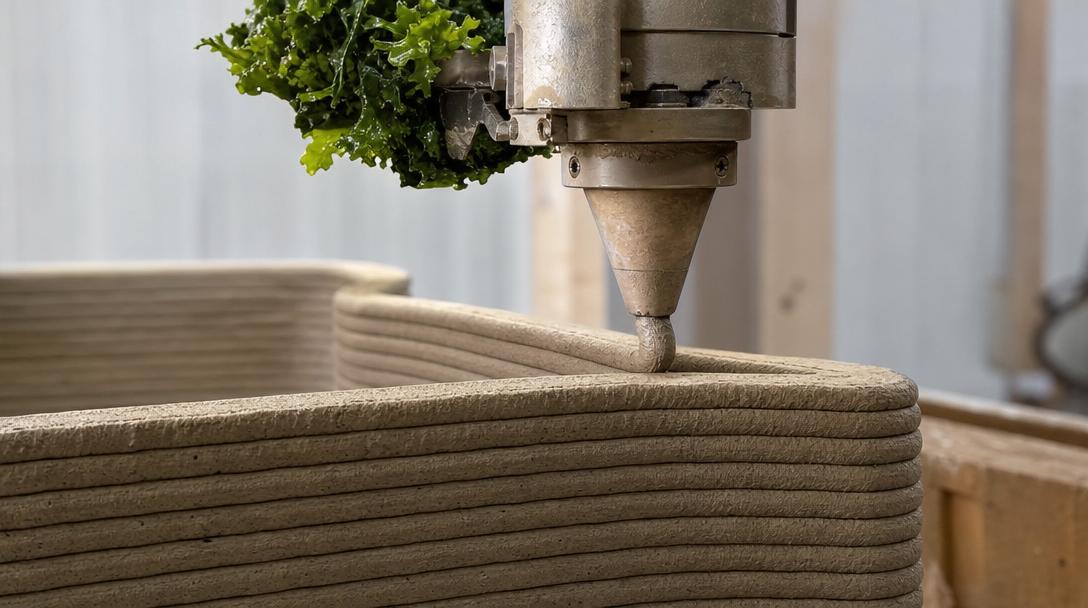
Sustainability is taking on a bigger role in the world of 3D printing every single day. Researchers at the University of Colorado Boulder (CU Boulder) have developed a method that makes earth-based materials suitable for 3D printing using a derivative obtained from seaweed. This work is seen as a new milestone in the field of sustainable 3D printing materials and offers important clues about the future of additive manufacturing in the construction sector.
Giving Earth-Based Material 3D Printing Capability with Alginate
The CU Boulder team made it possible to process a soil-and-sand mixture with extrusion-based 3D printers by adding a natural polymer called alginate, derived from brown seaweed. When combined with water, alginate develops a gel-like structure that helps the layers bond to one another during printing. Once dried, the result is remarkably strong and durable. While traditional construction methods shape earthen structures through compaction and molding, this new approach allows complex geometries to be produced layer by layer.
Why Does It Matter?
The most striking aspect of the method is that the material is made almost entirely from natural and abundantly available resources. Compared with conventional construction materials, its carbon footprint is far lower. What’s more, because this mixture is compatible with printers running on the standard FDM principle, it requires no special hardware. Researchers note that this approach could be used especially for low-cost housing solutions in rural areas. Innovations like these in sustainable 3D printing materials strengthen the place of additive manufacturing among environmentally friendly production methods.
The study’s key findings can be summarized as follows:
- Natural binder: Alginate provides an alternative to synthetic additives and is fully biodegradable.
- Accessible technology: The method is compatible with desktop FDM printers and does not require large industrial systems.
- Use of local materials: Production is possible directly from the region’s soil and sand resources, which lowers logistics costs.
- Recyclability: After printing, parts can be crushed, remixed, and reused.
- Low energy consumption: Far less energy is needed compared with producing cement or fired brick.
From Prototype to the Real World
The team validated the feasibility of the method by printing small structural elements and decorative objects at laboratory scale. The next stage involves larger parts and structural testing. An approach like this could expand the use of FDM 3D printing technology in the construction sector by combining it with materials science. Scenarios such as the rapid, low-cost production of temporary shelters in disaster zones are among the potential applications of this technology. That said, for the method to be commercialized, the material’s durability needs to be verified through long-term testing and the production speed needs to be increased. To reach these goals, researchers are working on optimizing the alginate ratio and testing compatibility with different soil types. In later stages, it is thought that this method could also be used in the mass production of prefabricated building elements.
If you too are interested in choosing the right material for your own prototypes or industrial parts, you can evaluate your project by calculating an instant price. At Ucuz3D, we quickly produce prototypes and functional parts with 17 different FDM material options.
If you want to keep a close eye on new materials research, you can review all the options we offer on our printing materials page. For more information about our sustainable production approach and quality FDM printing service, you can also read our guide to 3D printing in architecture.




 Türkçe
 العربية
 Русский
 فارسی
فارسی Deutsch