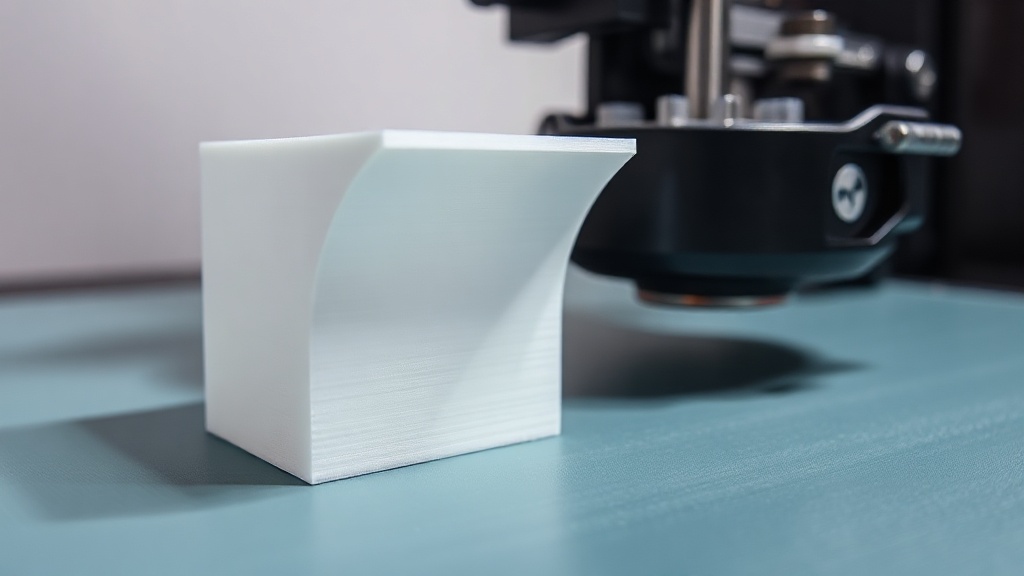

Printing Without Supports: Is the 45-Degree Overhang Rule Real?
Anyone who has spent some time with 3D printing has heard this phrase: “No supports needed up to 45 degrees.” But is the overhang 45 degree rule truly a hard limit, or is it a flexible rule of thumb in practice? The short answer: it is not a law of nature, but it is a good starting benchmark. Even knowing whether the angle is measured from vertical (close to 90 degrees) or from horizontal (close to 0 degrees) can change the outcome.
How Is the Angle Measured?
In common usage, the overhang angle is the deviation of the protrusion from the vertical axis (Z). 0 degrees means a perfectly vertical wall, while 90 degrees means a bridge parallel to the print bed. The “45-degree rule” essentially states that surfaces angled up to 45 degrees from vertical print cleanly, because each underlying layer provides sufficient support for the next. Beyond this angle, each layer protrudes further than the previous one and sagging begins.
Why Does the Rule Flex?
In reality, many machines and materials easily exceed 45 degrees. The following factors define the true limit:
- Cooling: A well-directed fan solidifies the filament before sagging occurs. With strong cooling, acceptable results can be achieved up to 60-70 degrees.
- Layer height: Thinner layers provide more overlap, tolerating steeper angles more effectively.
- Print speed: Slowing down on overhangs gives each layer time to settle properly.
- Material: PLA is generally more forgiving on overhangs compared to PETG and ABS.
What to Do in Practice?
The most reliable approach is to print an overhang test tower calibrated for your own machine. This test features overhangs at increasing angles, so you can visually observe at which angle the surface begins to degrade. During the design phase, keeping overhangs below 45 degrees as much as possible, placing the part intelligently on the print bed, and splitting the model if necessary to make it printable without supports will all make your life easier.
If your part contains complex overhangs and you are concerned about the marks supports leave on the surface, it is usually possible to minimize support usage through smart orientation and material selection. We can examine your model together and determine the best print orientation. Send your file via the quick order form and we will evaluate the overhangs and get back to you.



 Türkçe
 العربية
 Русский
 فارسی
فارسی Deutsch