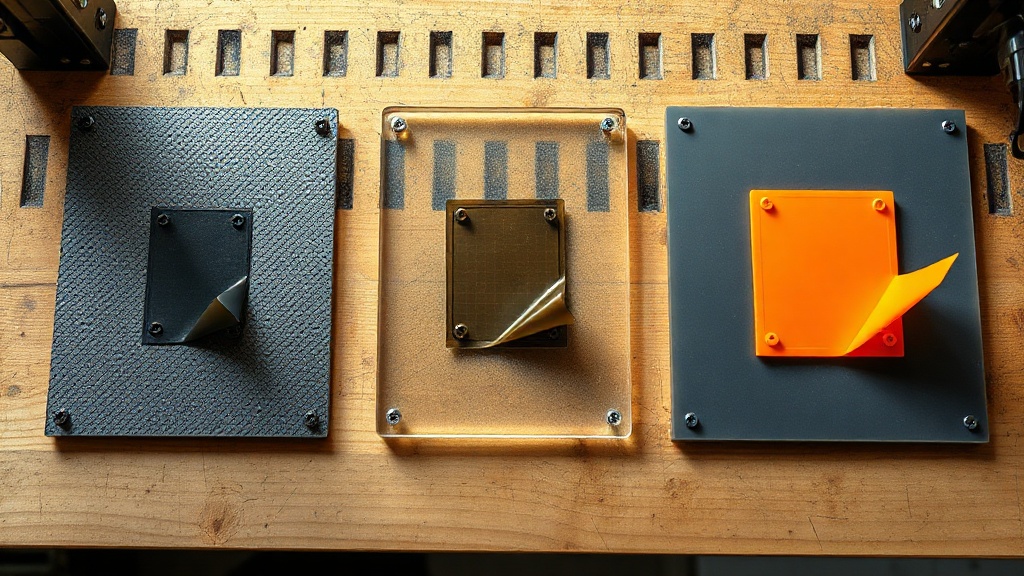

Print Surface Selection: Differences Between PEI, Glass, and Garolite
Getting a part to adhere to the build plate “just right” is one of the most frustrating balancing acts in 3D printing: too little adhesion and the print lifts off; too much and the surface gets damaged when you try to remove the part. The most critical factor that determines this balance is print surface selection. PEI, glass, and Garolite each offer a different adhesion character and different material compatibility. Knowing the right surface solves most adhesion problems before they even start.
PEI: The Versatile Standard
PEI-coated spring steel plates are the most popular choice today. They grip when hot and release the part on their own as they cool; because they are flexible, you simply flex the plate to pop the part off easily. They are compatible with many materials such as PLA, PETG, and ABS. The one thing to watch out for is that PETG can over-adhere to smooth PEI and tear material from the surface, so using a thin release agent is advisable.
Glass: The King of Flatness
A glass build plate demands a mirror-smooth first layer from below. Its flat surface and thermal stability deliver excellent flatness for large parts.
- Pro: A shiny, glass-smooth bottom surface.
- Con: A release aid (such as a spray or glue stick) is usually needed for adhesion.
- Caution: It is heavy and will break if dropped; heat-up time is also longer.
Garolite: Friend of Nylon and Flexible Filaments
Garolite (G10) is virtually a lifesaver for materials such as nylon and TPU that struggle to adhere to other surfaces. While nylon reluctantly grips PEI or glass, it finds a solid hold on Garolite. That said, it is a niche product and requires some maintenance — the surface needs light sanding — so it is not the first choice for everyday PLA printing.
In Summary: Which Surface?
PEI makes sense for general use and convenience, glass for large parts with a shiny mirror-smooth underside, and Garolite for nylon and flexible filaments. If you are experiencing adhesion problems, the issue is usually not the surface itself but rather the first-layer gap and cleanliness.
If you would like to leave the choice of the right surface for your material to us, check out our production pricing and let us determine together the best filament and surface combination for your project.


 Türkçe
 العربية
 Русский
 فارسی
فارسی Deutsch