
Nozzle Temperature Settings in FDM Printing: A Temp Tower Guide and the Opportunities of New Filaments
One of the most critical parameters for quality in FDM 3D printing is the correct nozzle temperature setting. A temperature that is too low leads to weak layer adhesion and insufficient flow, while a temperature that is too high brings problems such as stringing, sagging, and color degradation. What’s more, not every filament brand and type delivers its best results within the same temperature range. So how do you find the right temperature? The answer is the temperature tower (temp tower). On top of that, the new-generation PLA filaments released in recent months by manufacturers such as Prusament PLA High Speed and Dow once again show that every material requires a different temperature profile.
What Is a Temperature Tower (Temp Tower) and How Do You Print One?
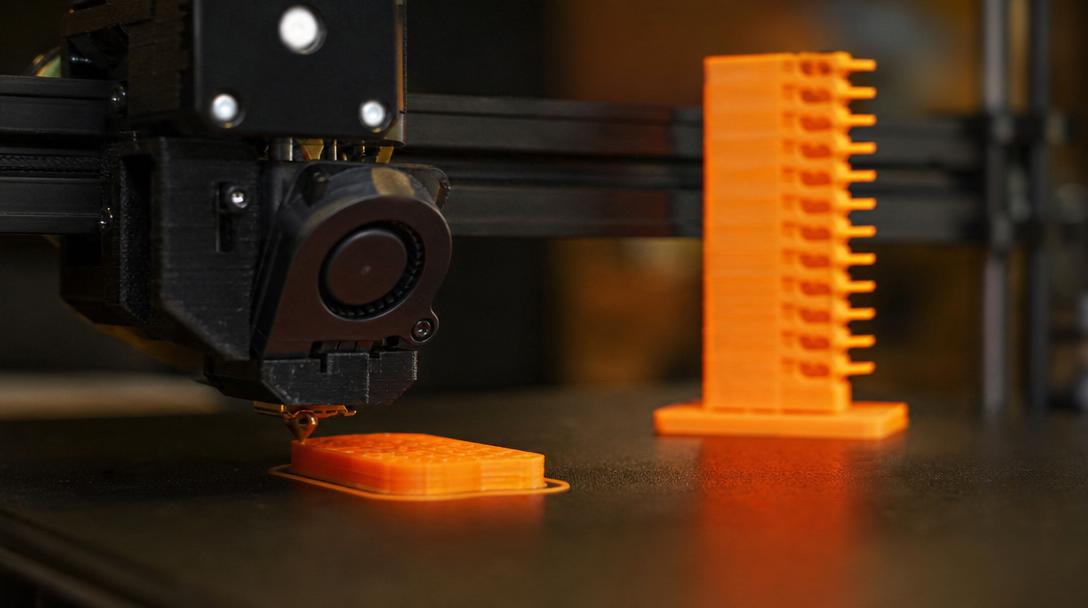
A temperature tower is a calibration model that lets you test 5-8 different temperature steps within a single print. By adding a temperature change at specific layer heights in your slicing software, you can compare surface quality, bridging, and string formation at each step. When interpreting the tower, look at these criteria: surface smoothness, the amount of stringing, overhang quality, and layer adhesion. The cleanest-looking step with the least stringing indicates the ideal temperature for you. Most modern slicers, such as OrcaSlicer, PrusaSlicer, and Bambu Studio, come with ready-made temperature tower test models.
The Relationship Between Stringing and Temperature
The most common cause of thin, cobweb-like strands is a nozzle temperature that is too high. When filament flows hotter than necessary, pressure builds up inside the nozzle and unwanted strands are left behind during travel moves. Although retraction settings can partly solve this problem, the root cause is usually temperature. After finding the lowest stringing level with a temperature tower test, you can fine-tune the retraction distance and speed to improve the results even further. On Bowden systems a retraction distance of 4-7 mm is recommended, while on direct drive systems 0.5-2 mm is advised; however, these values should be optimized together with temperature.
The ideal temperature ranges of different materials differ noticeably from one another. For example, new-generation high-speed printing filaments such as Prusament PLA High Speed require a different flow and temperature profile than standard PLA; running a temperature tower test on materials like these is almost mandatory. Likewise, Dow’s new toughened PLA formulation may also fall outside the standard temperature range.
- PLA: 190-220 °C range, less stringing at lower temperatures but a risk of weak layers
- PETG: 230-250 °C, higher temperatures increase flow but also increase stringing
- ASA: 240-260 °C, an enclosed chamber and good ventilation are recommended
- Carbon fiber reinforced filament: 220-260 °C, a hardened nozzle is essential
New Filament Announcements Put Different Temperature Approaches on the Agenda
In 2026, two notable developments took place in the 3D printing materials market. Dow announced a tougher and more reliable PLA formulation, aiming to expand FDM’s range of use in prototype and functional part production. Prusa Research, meanwhile, introduced Prusament PLA High Speed, a filament that does not compromise on quality even in high-speed prints. Innovations like these show that every new material has its own optimum temperature profile and will not deliver the best results with standard factory settings. For this reason, the temperature tower test is no longer just an initial calibration but has become a quality routine that should be repeated with every new spool.
Why Is Temperature Control Critical in Industrial FDM?
In sectors such as defense and aerospace, FDM part quality is measured not only by dimensional accuracy but also by the integrity of layer adhesion. The DLA Columbus Test Center managed to cut its production time from weeks to hours thanks to temperature management in the test fixtures it produced with FDM. Industrial applications like these show that precise temperature control is decisive at every level, from the prototype stage to serial production.
Once you have chosen the most suitable material for your project, don’t skip the temperature tower test to find the right nozzle temperature. If you wish, you can review all of our material options on our print materials page and instantly calculate the price by uploading your STL file on our instant price calculator. You can also take a look at our nozzle guide for more information about nozzle sizes and selection.



 Türkçe
 العربية
 Русский
 فارسی
فارسی Deutsch