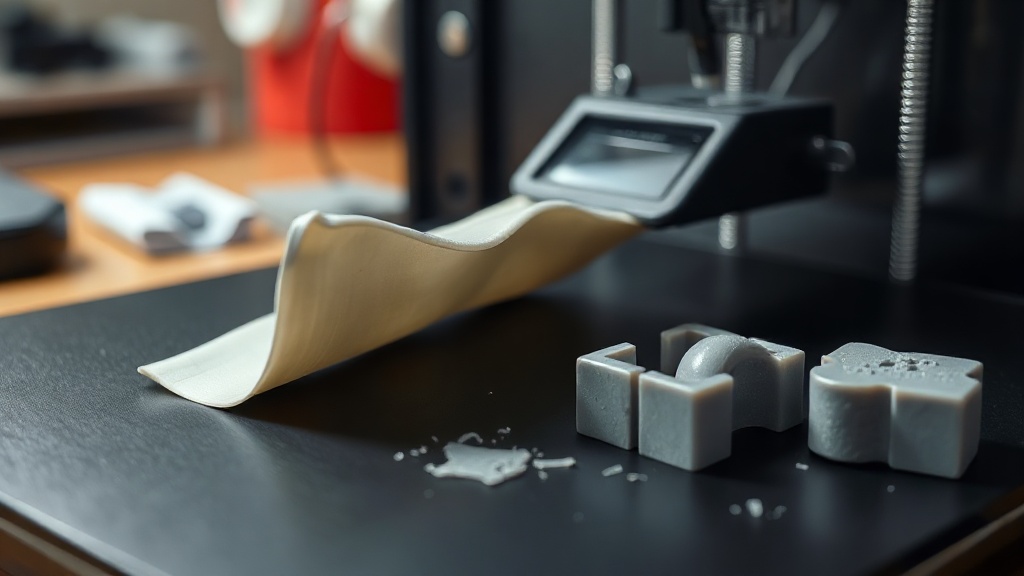




How to Solve Cracking and Warping Problems in ABS Printing
Anyone who has worked with ABS has experienced it at least once: the print is halfway done, corners slowly curl up off the bed, or fine lines of separation appear between layers on taller parts. These two problems — ABS cracking and warping — almost always share the same root cause: uncontrolled heat loss. In this article, let’s walk through the reasons and practical solutions together.
Why does it happen?
ABS shrinks noticeably as it cools. The bottom layers are anchored to the bed and stay fixed, while the upper layers try to contract as they cool, creating internal stress. If this stress overcomes the bed adhesion, corners lift (warping); if it overcomes the inter-layer bond, the part cracks from top to bottom (delamination). In other words, cracking and warping are two faces of the same physical event.
Controlling temperature and the environment
The bulk of the solution lies in keeping the part at as stable a temperature as possible during cooling:
- Use an enclosure: The single most effective measure for ABS is printing inside an enclosed space that retains heat.
- Eliminate air drafts: An open window, air conditioning, or a fan blowing from the side will lift corners.
- Reduce the part cooling fan: Unlike PLA, strong cooling triggers cracking in ABS; in most cases the fan should be kept very low or off.
- Keep the bed temperature high: Typically the 100–110°C range delays early shrinkage of the bottom layers.
Strengthening bed adhesion
A firm first-layer bond to the bed significantly reduces the chance of warping:
- Carefully dial in bed leveling and first-layer height.
- Use ABS slurry, a glue stick, or a suitable adhesive surface.
- Add a brim for parts with a wide footprint; it’s a simple fix that works well for parts with stressed corners.
- Keep the bed free of dust and grease.
Design-side precautions
Sharp corners concentrate stress at a single point; adding small fillets to corners is beneficial where possible. A reasonable infill percentage instead of very thick solid walls also reduces internal stress. If your part is large and the challenges of ABS are wearing you down, alternatives such as ASA — which offers similar mechanical strength — are also worth considering.
If you’d rather leave the struggle with ABS to us, simply submit your request on our quick order page for controlled printing in an enclosed environment.



 Türkçe
 العربية
 Русский
 فارسی
فارسی Deutsch