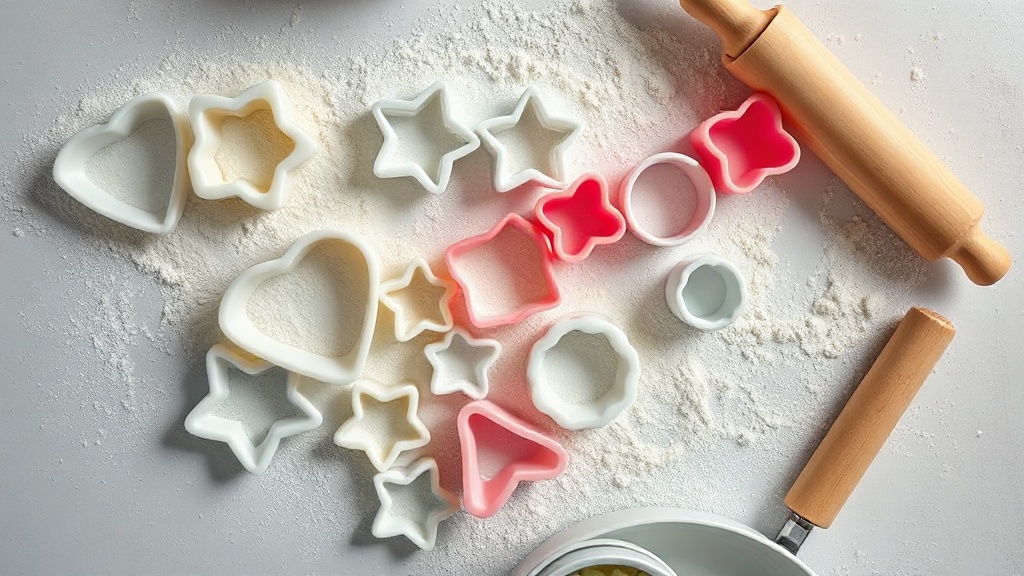

Handy in the Kitchen: A Guide to Printing Measured Moulds and Cookie Cutters
The most practical way to transfer a child’s favourite cartoon character or a brand logo onto dough — precisely and at exactly the right size — is to produce a custom mould made just for it. Cookie cutter printing requests start right here: getting the shape you can’t find in off-the-shelf cutters, at the size you want and with clean, sharp edges. In this post we share what you need to keep in mind when designing a cutter that is both enjoyable to use and genuinely functional.
Why are dimensions so critical in cutter design?
The success of a cookie cutter depends less on how it looks and more on the fineness of its cutting edge. If the edge wall is too thick it will leave a mark in the dough but won’t cut cleanly; too thin and it becomes fragile during printing. In practice, the following dimensions are a good starting point for a well-balanced result:
- Cutting-edge thickness: 0.6–0.8 mm is ideal for a clean cut.
- Total height: 12–15 mm gives enough depth to grip the dough comfortably.
- Grip flange: A 2–3 mm wide ridge added to the top edge makes it more comfortable to press down with your fingers.
Preserving detail in complex shapes
Fine details — the sharp tip of a star, the corners of letters — are the areas most prone to being crushed in the dough. Instead of leaving these points razor-sharp, softening them slightly improves both the durability of the print and the quality of the cut. If hollow inner areas are needed (as in a logo), designing the interior outlines as a separate stamp piece almost always produces a cleaner result.
The question of materials and food contact
Because FDM printing creates a layered surface, micro-gaps can trap moisture and residue over time. For this reason, cookie cutters are best thought of as accessories that have brief contact with dough and are thoroughly washed after each use. Washing by hand in warm water after use, and avoiding dishwasher cycles at high temperatures or prolonged contact with hot dough, will extend the life of your print. If you’d like to clarify which material is right for your use case, simply submit your request via our quick-order page and we can decide on the best option together.
When you need more than one piece
Patisseries and small-batch producers often order several copies of the same cutter. Duplicating the same mould makes printing costs predictable and gives you a spare for busy days. Cutters designed as a set — for example, all the figures in a holiday theme produced together — also make production much more convenient.
If you want to turn the shape in your mind into a precise, sturdy mould that truly works in the kitchen, just share your idea with us and we’ll plan the rest together.



 Türkçe
 العربية
 Русский
 فارسی
فارسی Deutsch