
FDM Filament Quality: The Differences Between Cheap and Expensive Filament
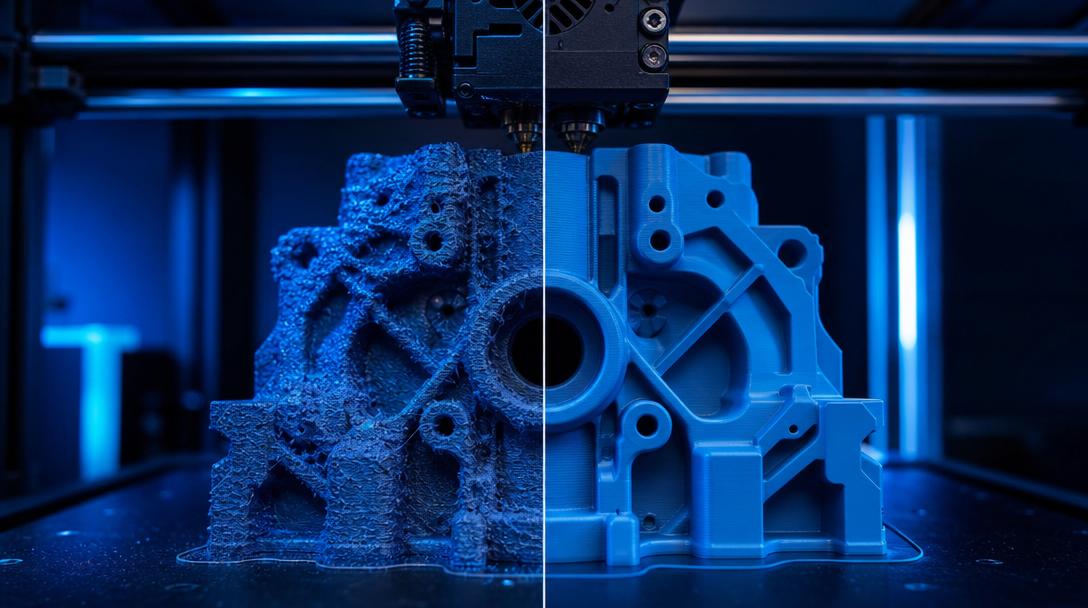
In FDM printing, filament quality is the single most important factor that directly determines the success of your prints. The market offers spools starting at just a few cents per gram, but you’ll also find options at double the price for the same weight. So is this difference just about branding, or is there a real, tangible quality gap that shows up in your prints? In this article we’ve gathered the tips and the latest industry developments to help you make the right decision.
The Hidden Costs of Cheap Filament
One of the most common problems with low-priced filaments is diameter tolerance. A filament that should be 1.75 mm can drop to 1.65 mm in some sections and rise to 1.85 mm in others. This fluctuation leads to inconsistent extrusion and gaps on the part’s surface. Another widespread issue is moisture: cheap filaments usually arrive in vacuum packaging, but if the bag is damaged or the spool was already humid when it left the factory, the entire roll will need drying.
The first step in telling quality apart is to check the tolerance information on the spool label. A tolerance of ±0.03 mm or better is the mark of a professional-grade filament. Also inspect the surface of the filament: it should have a smooth, matte or slightly glossy texture, with no burrs, bubbles or color variation.
The Latest Developments from the Industry
Significant strides have been made in filament quality over the past few months. Dow announced that it is working on a tougher, more reliable PLA filament. The entry of major chemical companies like this into the filament market could make the gap between cheap and quality options even more pronounced. Meanwhile, Prusa Research released its Prusament PLA High Speed filament for fast-prototyping needs; this product aims to combine rapid printing with the surface quality you’d expect from premium standard PLAs, placing it on par with the quality options among our 17 different material choices.
The recent investment in Spectrum Filaments also aims to expand FFF/FDM filament production capacity. Rising demand is pushing more manufacturers to raise their quality standards. Meanwhile, the in-depth analysis eSUN published on its PETG filament shows that a good filament comes not just from material composition but from consistency throughout the production process.
Practical Ways to Test Filament Quality
Before buying a spool of filament, or to assess the quality of one you already own, you can use the following methods:
- Diameter check: Take 5–10 measurements at different points along the spool using a digital caliper. If the deviation exceeds ±0.05 mm, that spool is problematic.
- Print test: Print a small test piece in the 190–220 °C range. Consistent extrusion, good layer adhesion and a smooth surface are signs of a quality filament.
- Snap test: Try to bend the filament 90 degrees by hand. If it breaks easily, it is either too damp or contains low-quality additives.
- Consumption calculation: Print 100 grams and weigh the spool to work out the real cost per meter. Filaments with poor diameter tolerance consume more material than expected.
Once you apply these tests, you can see in concrete terms just how “expensive” a cheap filament really is. When you print the same part with two different filaments and compare them, you can also clearly compare the cost per gram using the instant price calculator tool.
Quality Filament Is More Economical in the Long Run
Buying a more expensive filament may strain your budget at first glance, but the total cost usually drops thanks to fewer failed prints, consistent results and less material waste. Industry reports also note that quality filaments hold up better under proper filament storage conditions and absorb moisture more slowly.
When deciding which filament quality is enough for your project, consider the part’s intended use, its mechanical load and your visual expectations. A mid-range filament may be enough for a decorative object, while for a functional prototype or an engineering part it is wise to choose the option with the best possible tolerance.
If you need help choosing the right filament for you, or you’d like your project printed at professional quality, you can reach us through our order online now page, and we’ll determine the most suitable material and price together.



 Türkçe
 العربية
 Русский
 فارسی
فارسی Deutsch