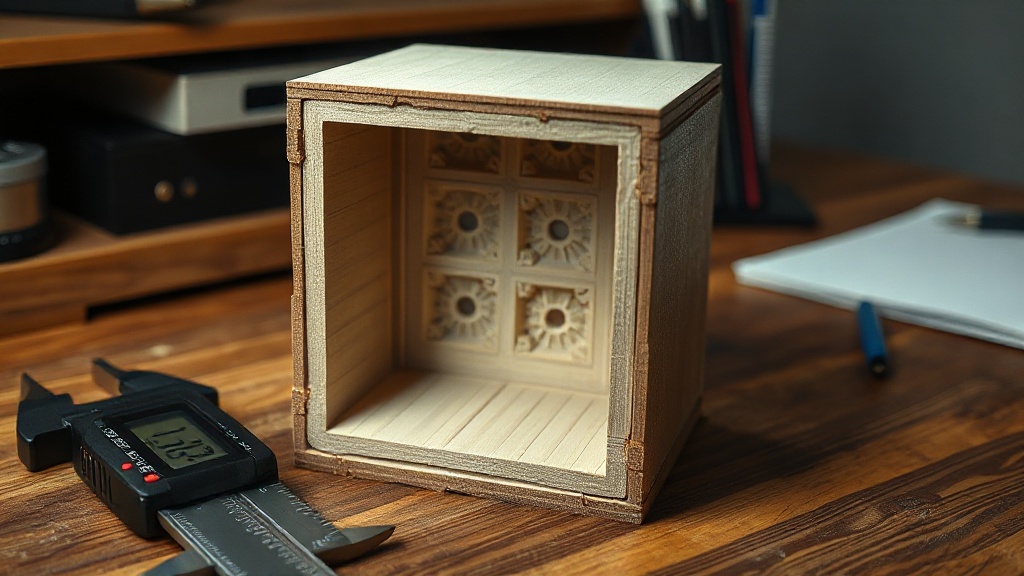

Choosing the Right Wall Thickness: How Many Perimeters Are Enough?
Most beginners increase the infill percentage to strengthen a part, yet the real determining factor is the wall thickness perimeter count. These outer shells that form a part’s exterior do far more work under load than the infill ever could. Choosing the right number of perimeters saves material while delivering stronger parts than you might expect.
What is a perimeter, and why does it matter more than infill?
A perimeter is how many times the slicer traces the outer contour of the part. With a standard 0.4 mm nozzle, each perimeter adds roughly 0.4–0.45 mm of wall. Three perimeters means approximately 1.2 mm of solid wall. When a load is applied, stress concentrates near the surface first — so well-built shells are many times more effective than the sparse infill in the middle.
How many perimeters are enough?
As a general starting point, we recommend the following:
- Decorative and visual parts: 2 perimeters are usually sufficient.
- Everyday use, light mechanical load: 3 perimeters is a balanced choice.
- Functional parts subject to impact or sustained load: 4–5 perimeters make a noticeable difference.
- Thin-walled boxes and clips: Design the total wall thickness as an exact multiple of the perimeter width to avoid gaps.
Nozzle diameter changes the calculation
Perimeter count alone is not meaningful; it must be considered together with the nozzle diameter. With a 0.6 mm nozzle, three perimeters give approximately 1.8 mm of wall, whereas with a 0.4 mm nozzle you need four to five perimeters for the same thickness. Always setting the wall thickness in your design to an exact multiple of the nozzle diameter prevents the slicer from leaving unnecessarily thin gaps.
A practical check
In the slicer preview, check whether the wall is filled entirely by perimeters. If you see a thin strip of infill in the middle, either increase the perimeter count by one or adjust the wall thickness by a few tenths of a millimetre. This small tweak significantly reduces layer separation.
Material also affects the choice
Three perimeters in PLA is more than adequate, but with PETG or engineering materials under real mechanical load, adding one or two extra perimeters is worthwhile. If you’re unsure which material and perimeter combination makes the most sense for your part, share your design with us and get a quote through our quick order page — we provide recommendations based on your intended use.
Tell us where your part will be installed and how much load it will carry, and we’ll plan the perimeter count and wall thickness together for the best result.



 Türkçe
 العربية
 Русский
 فارسی
فارسی Deutsch