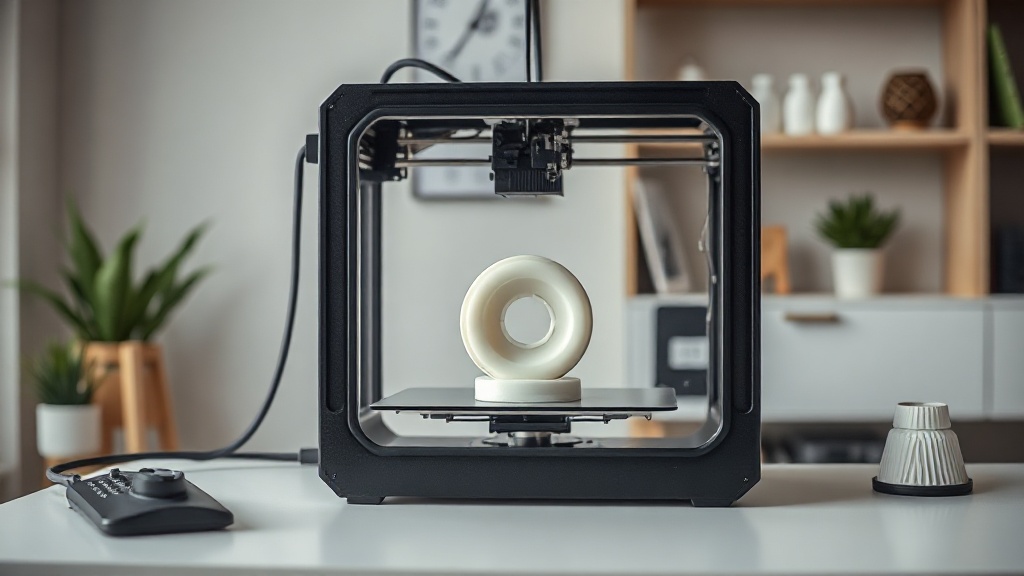

Bambu Lab PLA Pure: Low-Emission PLA Filament Takes the Spotlight for Home 3D Printing
Low-emission PLA filament seekers got this week’s standout news with Bambu Lab PLA Pure. According to the June 16, 2026 announcement, the new filament is positioned around cleaner indoor air quality, a traceable raw-material structure, and a printing experience suited to everyday use in home 3D printing.
This development is more than just a new spool launch; it shows that in the FDM world, filament choice is now judged not only by strength and surface quality but also by the conditions of indoor use. For those who run their printer in a home office, the living room, or a shared living space in particular, emissions, odor, and post-print cleanup are becoming increasingly important topics.
What is the key technical message in the news?
According to the information Bambu Lab shared, PLA Pure is offered as a PLA filament formulated with a limited number of ingredients, with some of its components described through references to compliance with European food-contact regulations. The point the brand particularly emphasizes is the material’s focus on a lower particle and VOC profile during indoor use. This does not automatically mean that every 3D-printed part is suitable for direct food contact; but it does show that filament manufacturers are now competing more visibly on ingredient transparency and suitability for living spaces.
For Ucuz3D, the significance of this news is this: in FDM-based production, the right material choice determines not only a part’s durability but also its use scenario. While PLA remains a strong option for general prototypes, visual models, and in-office use parts, for jobs requiring more heat or mechanical strength it may be more appropriate to turn to different filaments from among our 17 material options.
Why does it matter for the industry?
- On the filament side, it is no longer just printability but also indoor air quality that has become a marketing and product-development criterion.
- Home users and small workshops are placing greater value on the “easy printing + cleaner working environment” combination.
- In the FDM ecosystem, material differentiation creates new purchasing decisions independently of the printer hardware.
That is why the news directly concerns desktop FDM users. If your goal is a functional prototype, a housing, fixtures, or low-risk visual parts, following developments in the PLA class still makes sense. But if the place of use involves a hot environment, impact load, or the outdoors, it is helpful before making a choice to look at the PLA Filament: Properties, Advantages and Areas of Use guide in order to clearly see PLA’s limits.
How should an Ucuz3D customer read this news?
Launches like this tell us one thing: there is no single “best filament”; the right material is determined by where and how the part will be used. For concept models to be used indoors, promotional parts, or quick visual prototypes, PLA can still be a practical choice. By contrast, for more durable, more heat-resistant, or mechanically more demanding applications, you need to switch to different FDM materials.
If you too are unsure whether a model makes more sense produced with PLA or with another filament, you can submit your file and share your use scenario directly via the request a quote now page. This makes it easier to choose a more suitable FDM material based on part type, environmental conditions, and delivery expectations.
In short, the Bambu Lab PLA Pure news shows that in the FDM market the question “does it just print?” is increasingly being replaced by “in which environment, for which user is it more suitable?” And that continues to make material selection one of the most critical decisions in the 3D printing process.


 Türkçe
 العربية
 Русский
 فارسی
فارسی Deutsch