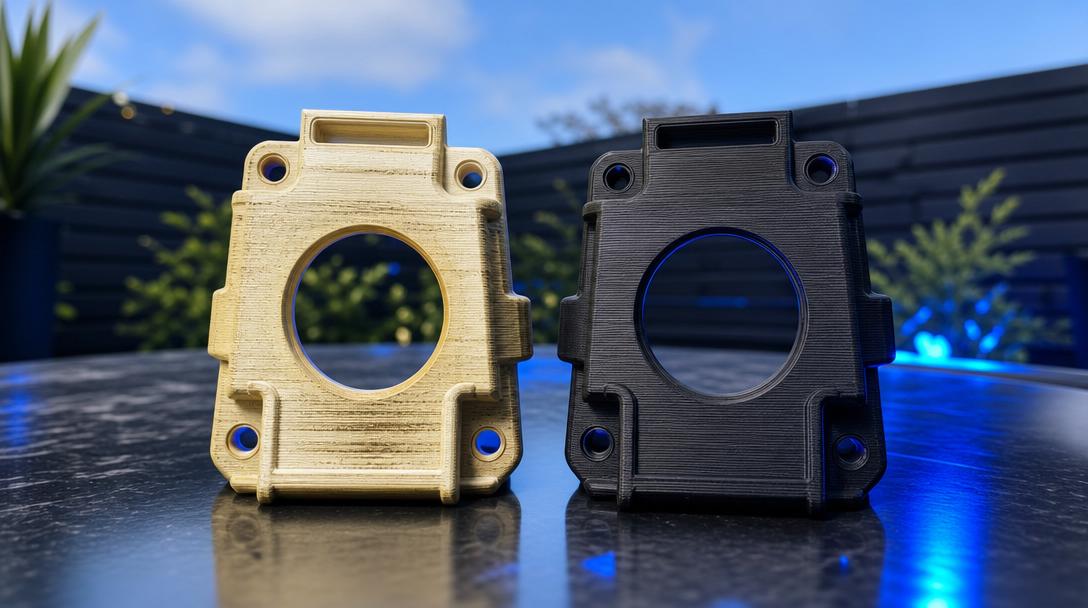

ABS or ASA? Which One Lasts Longer for Outdoor 3D Printed Parts?
When designing a 3D printed part for outdoor use, one of the most critical decisions is choosing the right material. PLA simply won’t cut it for a fixture that will sit in the sun for hours and be exposed to rain and heat; at this point, two strong candidates come to mind: ABS and ASA. So how does the answer to the ABS or ASA question play out under outdoor conditions? Let’s compare these two materials from every angle.
ABS and ASA: Similar Origins, Different Fates
ABS (Acrylonitrile Butadiene Styrene) is an engineering plastic that has been used in industry for decades, with high impact strength and easy machinability. ASA, on the other hand, is a variant produced by replacing the butadiene in ABS’s chemical structure with acrylate ester. This small change gives ASA far superior UV and weather resistance compared to ABS. In recent weeks, major manufacturers such as Stratasys developing flame-retardant FDM materials for railway systems and outdoor applications shows that demand for weather-resistant materials is growing across the industry. At Ucuz3D, we follow these developments closely as we offer our customers 3D printing with engineering materials options.
Outdoor Performance Comparison
UV Resistance
When exposed to UV rays, ABS gradually yellows, its surface goes matte and it becomes brittle. ASA, by its very nature, is inherently resistant to UV; even after years in the sun it largely retains its color and mechanical properties. If you’re looking for a lasting outdoor solution, ASA is the clear winner in this respect.
Impact Strength and Temperature
Both materials have similar impact strength. ASA’s glass transition temperature is around 100 °C, which is almost identical to ABS. In other words, there is no meaningful difference between them in terms of heat resistance. Both can hold their shape up to 95-100 °C.
Printability
The most common issues encountered when printing ABS are warping (edge lifting) and layer separation. An enclosed print chamber and controlled ambient temperature are almost mandatory. ASA requires similar conditions, but some users report that ASA warps slightly less than ABS. For both materials, an enclosed chamber, a heated bed (100-110 °C) and good ventilation of the environment are recommended.
Which One Should You Choose, and When?
- For parts in direct sunlight (garden fixtures, in-car components, facade elements): Go with ASA. Thanks to its UV resistance, it keeps its form for years.
- For indoor settings or spaces with no sun exposure: ABS is sufficient and is usually cheaper than ASA.
- For automotive and outdoor industrial parts: ASA is a proven outdoor material that has been used in the automotive sector for many years. It is also increasingly preferred in sectors such as railway systems and transportation.
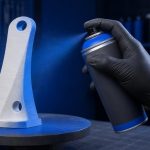
- If painting and coating are planned: ABS holds paint better; however, ASA also delivers good results with the right primer.
Both materials are close to each other in terms of machinability and surface quality. While the fact that ABS can be smoothed with acetone vapor is an important advantage, ASA does not respond to this process in the same way.
What to Watch Out for When Producing Outdoor Parts with FDM
Print settings are just as critical as material choice. Common recommendations for ASA and ABS: an enclosed chamber (40-50 °C internal environment), 100-110 °C bed temperature, 240-260 °C nozzle temperature, low fan speed (0-30%) and good ventilation. To increase the durability of the part, we recommend setting the wall count to at least 3-4 perimeters and using a sufficient infill ratio (25-40%). For outdoor parts, choosing the right infill ratio directly affects the lifespan of the part.
When deciding between ABS and ASA for a part to be used outdoors, the fundamental question is this: Will the part be exposed to sunlight? If the answer is yes, ASA is the right choice; if not, ABS is. Both materials can be successfully printed with FDM technology, and with the right settings you can achieve long-lasting parts. Calculate your instant price for your project, and let’s decide together which material is best for you.


 Türkçe
 العربية
 Русский
 فارسی
فارسی Deutsch