
Why Is 3D Printing Taking Center Stage in High-Performance Automotive?
The automotive industry is embracing additive manufacturing (AM) more every day, from prototyping all the way to series production. Especially in the high-performance and luxury vehicle segment, examples of directly 3D-printed parts used as final products are multiplying fast. 3D printing in automotive is no longer just the domain of prototype workshops; it is now becoming an indispensable part of mass production lines as well. In this article, we have gathered the latest notable developments in the sector.
MINI’s 3D Printing Push in Limited Production
MINI, under the BMW umbrella, used 3D printing all the way from the first development stage to series production with its 1965 Victory Edition limited series. The brand’s personalization journey, which began with the MINI Yours Customised program, now extends directly into production parts. FDM and other additive manufacturing technologies in particular make it possible to produce low-volume custom parts economically. If you also need a custom prototype part for your vehicle, you can get a quick quote from our urgent order page.
Apollo EVO’s Dragon-Scale Exhaust
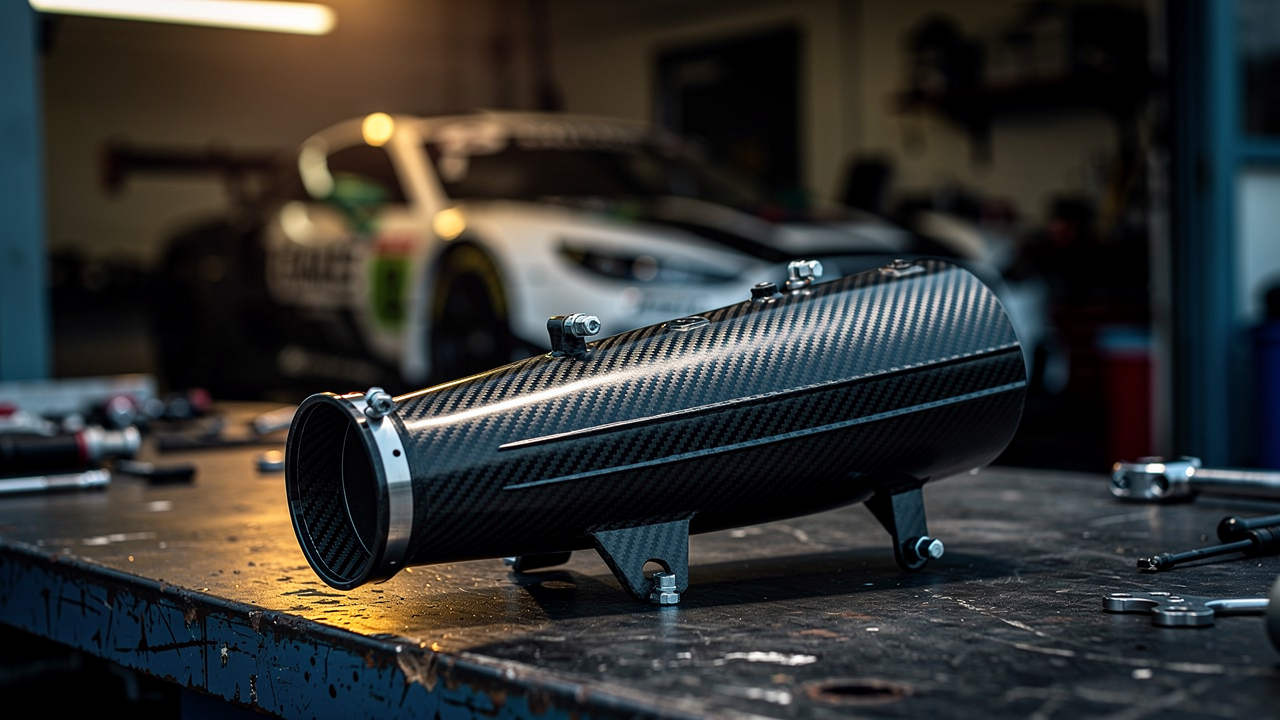
German sports car manufacturer Apollo Automobil developed a monolithic 3D-printed exhaust system for its EVO model. Finished with a dragon-scale pattern, this part is one of the most striking features of the hypercar, of which only 10 units will be produced. While such complex geometries are nearly impossible to manufacture with traditional methods, 3D printing makes it possible to produce them as a single piece thanks to additive manufacturing. FDM technology likewise offers an ideal solution for functional parts with complex internal channels and cooling structures. The speed and low cost that FDM printing provides, especially for automotive prototypes, make this kind of specialized application accessible to manufacturers of every scale.
LongBow Speedster and LFAM Body Panels
British electric sports car startup LongBow Motors introduced the world’s first fully 3D-printed vehicle body with its Speedster model. Produced using large-format FDM (LFAM) technology, the panels combine low weight with a high degree of design freedom. This approach means both faster prototyping and lower tooling costs compared to traditional sheet metal or composite molds. This advantage of LFAM is a reminder that the same principle applies on a small scale to prototype production with FDM desktop printers.
Platinum and Gold Details on the Bentley Batur
In the luxury segment, Bentley’s Mulliner division featured 3D-printed platinum and rose gold details on the Batur model. On these exclusive vehicles, of which only 34 units were produced, parts such as the steering wheel center marker and the drive mode selector were 3D-printed in precious metals. This example shows how additive manufacturing offers limitless customization possibilities in bespoke luxury production. The same personalization logic can also be applied in industrial prototypes and low-volume custom part production at far more accessible costs with FDM technology.
- MINI 1965 Victory Edition: 3D printing integration from development to series production
- Apollo EVO: Single-piece monolithic 3D-printed exhaust system
- LongBow Speedster: Fully 3D-printed vehicle body with LFAM
- Bentley Batur: 3D-printed luxury details in precious metals
- Czinger 21C: Fully 3D-printed chassis and record-breaking performance
Czinger 21C and the 3D-Printed Chassis
California-based Czinger raised the bar in the sector by using a fully 3D-printed chassis in its 21C hypercar. Produced with Divergent’s powder bed fusion technology, the chassis surpasses traditional methods in terms of both lightness and structural integrity. The vehicle broke multiple production-car records, clearly demonstrating just how far additive manufacturing has come in high-performance automotive.
In this segment, where production volumes are low and design complexity is high, 3D printing offers a clear advantage over traditional methods. By the same logic, FDM technology stands out as a fast and economical production alternative across many areas, from industrial prototypes to functional spare parts. To see how your project can benefit from this technology, you can visit our automotive 3D printing page or calculate the price instantly and explore production options for your own part. You can also take a closer look at the process in our guide on the advantages of 3D printing in prototyping.



 Türkçe
 العربية
 Русский
 فارسی
فارسی Deutsch