
Why Does RIT’s Recycled Metal 3D Printing Research Matter?
Recycled metal 3D printing is back in the spotlight. A new NSF grant awarded to the Rochester Institute of Technology is advancing an approach that could reduce dependence on expensive, highly refined powders in metal additive manufacturing. Although the news focuses directly on the metal production side, the overarching goal — improving cost, material access, and production speed simultaneously — sends an important signal to the entire 3D printing world.
What exactly is the RIT team working on?
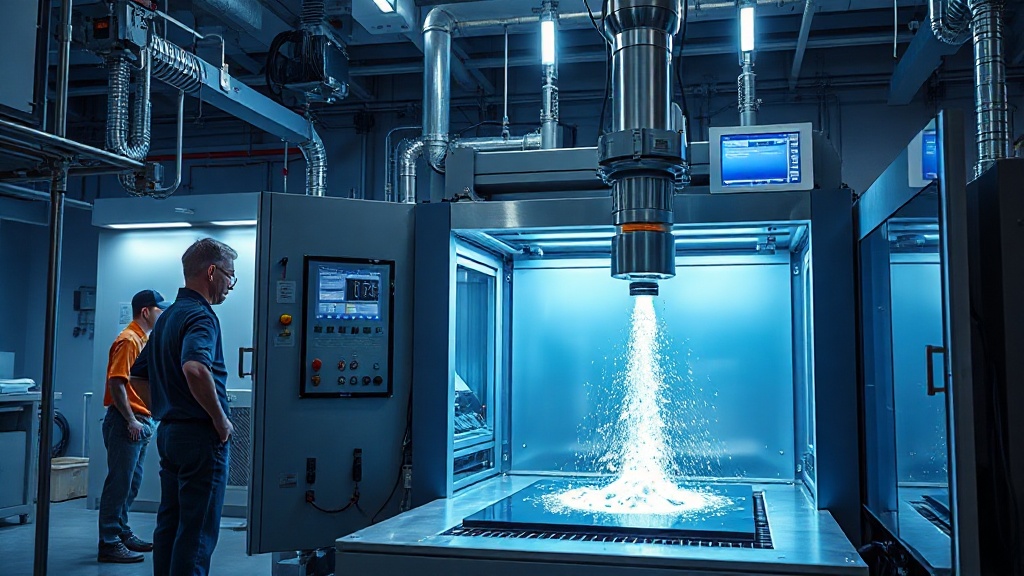
According to a report published on VoxelMatters on June 14, 2026, RIT is developing a molten metal droplet jetting approach with an approximately $3 million NSF grant. The key innovation is the separation of the metal melting step from the deposition step. By doing so, researchers aim to use more affordable input materials while also increasing production speed.
Today’s metal 3D printing systems mostly require specialized spherical metal powders — materials that can be expensive and that demand careful handling during storage and transport. RIT’s approach points toward a future where recovered metal and machining chips could be used far more practically. That is why this news is not merely a laboratory-scale experiment; it is a development worth following from a supply-chain and production-economics perspective as well.
Why is it drawing attention across the industry?
There are three main reasons this research is standing out. The first is cost pressure: material prices remain a decisive factor in the overall economics of additive manufacturing. The second is accessibility: creating alternatives to expensive standardized powders can open up a wider range of production scenarios. The third is sustainability: revaluing scrap or secondary-source metal can reinforce circular-economy principles in manufacturing.
- Lower material cost potential is created.
- More flexible supply scenarios become possible.
- Higher throughput through multi-nozzle architectures and modelling is put on the agenda.
- Sustainable production narrative is grounded in a technical foundation.
We see a similar cost logic on the FDM side. Part geometry optimisation, correct material selection, and production-volume planning all significantly affect the total cost. So if you want to see the budget for an FDM part in your own project, uploading your STL file and using the instant price calculator is a very practical starting point.
How should this news be read from Ucuz3D’s perspective?
Ucuz3D offers only FDM production, so the metal method described in this news is not in the same service area. Yet the message the news conveys is familiar to us as well: in manufacturing, efficiency and the right pairing of material and process is everything. Especially for functional prototypes, fixtures, enclosures, or durable-use parts, the engineering-grade materials printing approach determines the cost-to-performance balance.
Another important lesson is that design must be considered together with the production method. While nozzle behaviour, flow, and multi-material topics are discussed on the metal side, wall thickness, tolerance, infill, and orientation choices directly affect results on the FDM side too. That is why news stories should be read not merely as “new technology” but in terms of how they will change production decisions. If you want to quickly refresh the basic principles on this topic, the How Is 3D Printing Cost Calculated? guide is a good reference.
What should be watched in the period ahead?
The real impact of the RIT research will be understood by whether the laboratory success can be translated into repeatable production quality. Part quality, production speed, nozzle reliability, and material consistency will be the most critical topics. If that balance is achieved, recycled metal 3D printing could be discussed not only under the sustainability heading but also increasingly in cost-focused manufacturing.
If you would also like to clarify the right production approach for your own part and evaluate FDM rapid-prototyping or functional-production options, you can share your model via Ucuz3D and work together to determine the most suitable material and production path for your needs.


 Türkçe
 العربية
 Русский
 فارسی
فارسی Deutsch