
When Is a Closed Enclosure Necessary? Temperature Management for ABS and ASA
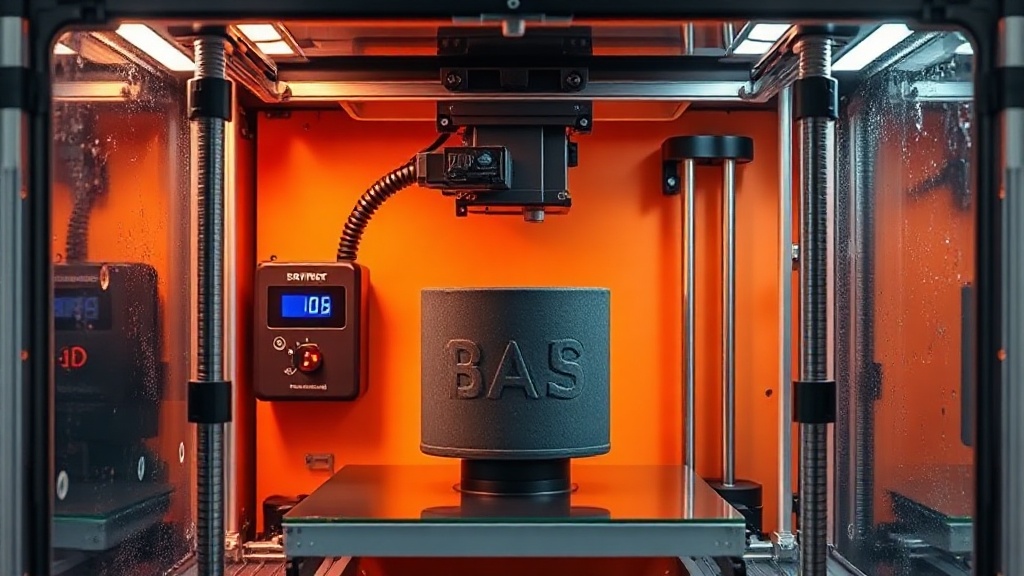
Many people who print PLA on an open printer without any issues are caught off guard when they switch to ABS or ASA and find corners lifting and layers cracking. This is the point where a closed enclosure becomes the go-to solution, because some materials simply cannot be printed reliably without a stable ambient temperature. The real question isn’t “is an enclosure necessary?” but rather “which materials require one?”
The Root Cause: Shrinkage and Cooling
Thermoplastics shrink in volume as they cool. This shrinkage occurs with every material but is most pronounced with engineering-grade filaments. When the upper layers cool rapidly while the lower layers are still warm, the resulting internal stress pulls the corners upward (warping) or separates the layers from one another (delamination). A closed enclosure reduces this temperature differential by keeping the air inside the print volume warm and still.
Which Materials Need an Enclosure?
- ABS and ASA: Due to their high shrinkage rates, an enclosure is almost mandatory — especially for large parts.
- PC (Polycarbonate) and nylon: These materials strongly prefer a warm environment protected from drafts.
- PLA and PETG: These can generally be printed on an open printer without issues; PLA can even suffer from heat creep if the environment is too warm.
An Enclosure Is More Than Just a “Box”
Effective enclosure management requires balancing several factors simultaneously:
- Blocking airflow: Even a light breeze from a window or air conditioner is enough to warp a large part.
- Controlling temperature gradually: While a warm, stable environment is sufficient for ASA, excessive heat can stress some electronics inside the printer.
- Containing fumes and particles: Keeping the smoke generated when printing ABS within a closed volume is also healthier for your workspace.
One advantage of ASA over ABS is its greater resistance to UV and weathering, which is why it is preferred for outdoor parts. However, since its shrinkage behavior is similar to ABS, the enclosure requirement is essentially the same.
Printing the Right Material in the Right Environment
If you’re unsure which material is best suited for your part, clarifying the intended use (indoor, outdoor, mechanical load) will simplify the choice. If you’d like to compare the costs of different materials, you can visit our production pricing page.
If you’d like your ABS or ASA part printed without warping concerns in a controlled environment, all you need to do is tell us about your project.


 Türkçe
 العربية
 Русский
 فارسی
فارسی Deutsch