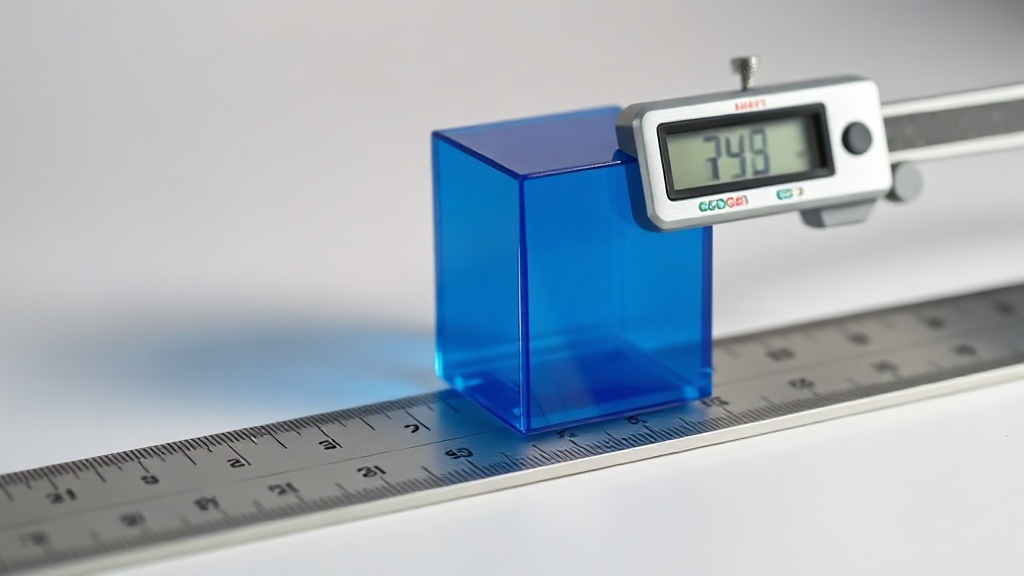

Tolerance Test Cube: Measure Your Printer’s True Clearance in a Single Print
You drew two parts that fit perfectly on screen, but once printed, one wouldn’t go into the other at all — or fell out at the slightest touch. This classic frustration almost always has the same root cause: not knowing your printer’s true tolerance. That’s exactly where a tolerance test print comes in and puts an end to guesswork.
Why is tolerance hidden in the printer, not in the model?
When you set a 0.2 mm gap in a CAD program, the model file records that exactly. However, nozzle diameter, flow rate settings, print speed, cooling, and the material’s shrinkage rate all narrow or widen that gap. The same file gives different results on a different printer — or even with a different material on the same printer. In other words, the number you’re looking for is not universal; it’s specific to your machine and your filament.
What does the test cube measure?
A good tolerance cube contains holes or pins arranged with incremental clearances against a fixed center pin. You’ll typically see the following increments:
- 0.10 mm – usually a press fit; seats when forced
- 0.15 mm – ideal range for tightly rotating joints
- 0.20 mm – joints that spin freely but don’t wobble
- 0.30 mm and above – parts that slide comfortably, such as lids and sliders
Once the print is done, you test each step by hand and note which one gives you the feel you want. The value you find becomes your reference for every design you create from that point on.
Small but critical details for accurate measurement
Print the test cube with the same material, the same nozzle, and the same layer height as your actual job. The value you find with PLA won’t hold for PETG — PETG sticks more and generally needs a bit more clearance. Also clean off any stringing or string residue before separating the part from the bed, otherwise you may select the wrong increment.
When you need professional results
Calibrating your own printer is a rewarding exercise; but for functional parts where dimensional accuracy is critical, you may not want to leave things to chance. In our workshop in Şile, we derived tolerance values separately for each of the 17 different materials we work with, so your press-fit joints seat correctly on the very first attempt. If you’d like to plan your costs, you can check out our production pricing page.
Print a tolerance test today, measure once, use it for life. If you have a press-fit project, create a quick quote and let’s determine the right clearance together.


 Türkçe
 العربية
 Русский
 فارسی
فارسی Deutsch