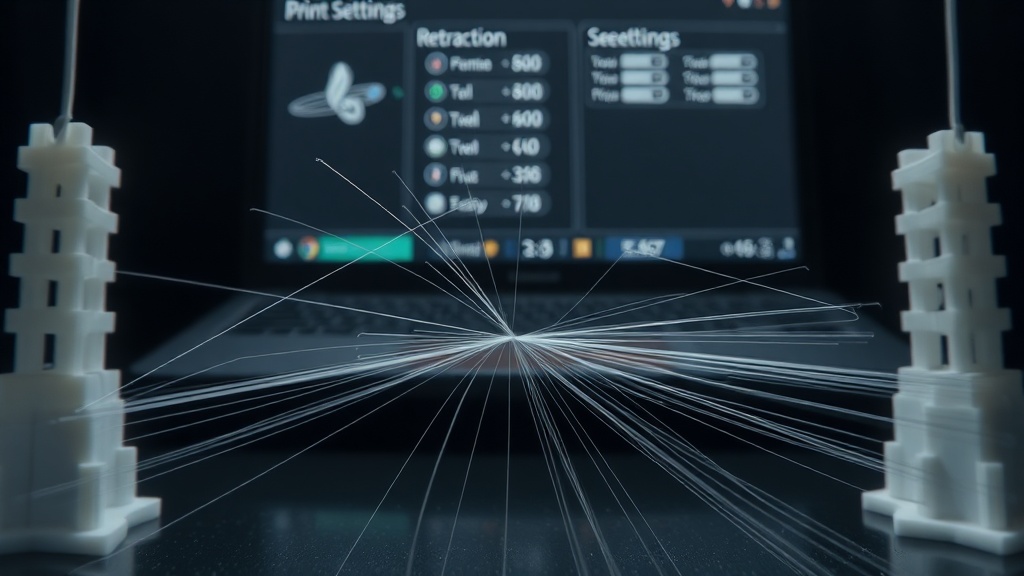

Stringing Problem and Solutions
Stringing occurs when the nozzle moves between two points without extruding and leaves thin plastic threads in its wake. The part ends up covered in whisker-like strands that resemble a cobweb. It is most commonly seen with PETG and moisture-absorbed filaments.
The primary fix is the retraction setting: the nozzle pulls the filament back a few millimetres before travelling across an open gap. Increasing the retraction distance and speed, lowering the print temperature by 5-10°C, and raising the travel speed will largely eliminate stringing.
If the filament is damp, no setting adjustment will be enough — dry it first. Any remaining fine threads can be cleaned up in seconds with a heat gun. In our professional prints we solve this problem at the source by using material-specific profiles.


 Türkçe
 العربية
 Русский
 فارسی
فارسی Deutsch