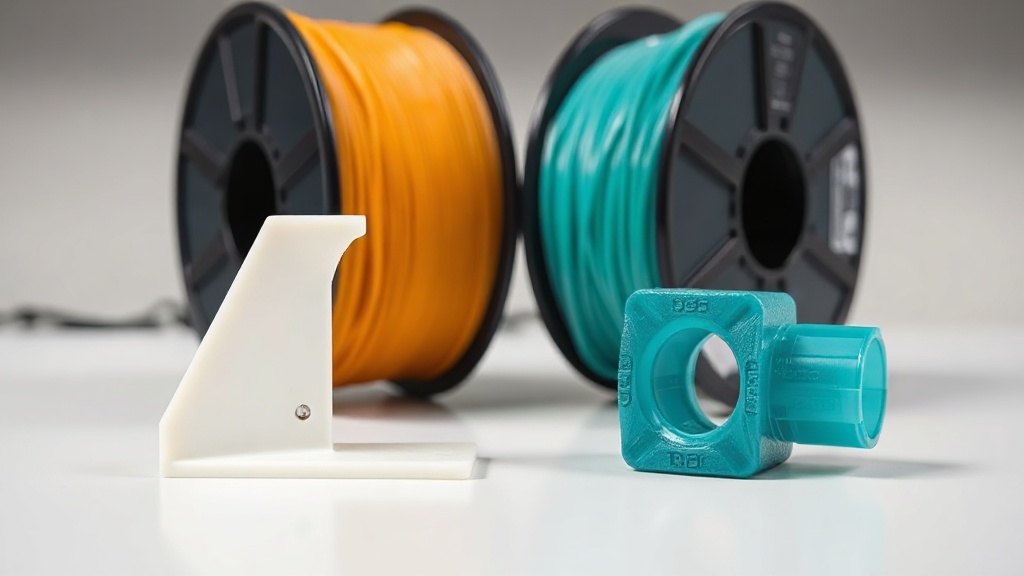

PLA or PETG? Which One Should You Choose for Each Part
Before sending a part to print, the first question that trips people up is almost always the same: PLA or PETG? In fact, the difference between PLA and PETG becomes quite clear once you consider where and under what conditions the part will be used. Both are the most commonly used, cost-effective materials in FDM printing — but their strengths and weaknesses set them apart.
PLA: For Jobs That Demand Detail and Ease
PLA is a material printed at low temperatures, with minimal shrinkage and excellent surface quality. It renders sharp corners and fine details cleanly, and its odor is not unpleasant. On the downside, its resistance to heat and UV light is low — for example, a PLA part left inside a car during summer can soften and deform.
PLA is a good choice for the following:
- Scale models, figurines, and decorative objects
- Prototypes and form explorations
- Display parts that carry no mechanical load
- Educational and presentation models
PETG: When Durability and Flexibility Are Required
Compared to PLA, PETG is tougher, more impact-resistant, and more heat-tolerant. Because it can flex slightly, it bends rather than snapping — which makes it valuable for functional parts. Its resistance to water and chemicals is also good.
Applications where PETG excels
- Parts that will operate outdoors or in high-heat environments
- Fasteners, lids, and enclosures
- Objects that come into contact with liquids
- Mechanical parts subject to repeated loads and light impacts
Summary for a Quick Decision
If visual quality, detail, and ease of printing are your priorities, PLA makes sense; if you need strength, heat tolerance, and outdoor durability, go with PETG. PETG printing requires slightly more careful tuning — it is not as forgiving as PLA when it comes to stringing and bed adhesion. That said, with the right profile it delivers very solid results.
If you’re unsure which material suits your part, simply share its intended use with us. At our workshop in Şile we print with PLA, PETG, and many other materials, and we recommend the best option for your project. You can also upload your file via our quick quote form and get a clear price right away.
In short: the right material means the right part. If in doubt, don’t hesitate to ask — let’s decide together.



 Türkçe
 العربية
 Русский
 فارسی
فارسی Deutsch