
ORNL and A.J. Tuck’s New Hybrid Process: How a 3D Printed Mandrel Shortens Nuclear Component Manufacturing
Producing the large, leak-tight metal components used in advanced nuclear reactors depends not only on the design of the final part, but also on the intermediate steps that prepare that part for manufacturing. Oak Ridge National Laboratory (ORNL) and A.J. Tuck Company have developed a new hybrid manufacturing process aimed at shortening one of those intermediate steps. The method, produced by using a 3D printed polymer mandrel, electroforming, and hot isostatic pressing together, offers an alternative that could reduce dependence on traditional forging and assembly capacity.
The development was reported in 3D Printing Industry’s August 29, 2026 article. According to ORNL’s statement, the partnership was highlighted during the Materials and Manufacturing Innovation Days event held on August 19–20 at the ORNL Manufacturing Demonstration Facility. This date and source matter because they help distinguish research findings that have not yet reached commercialization from current product launches.
Why is the mandrel 3D printed?
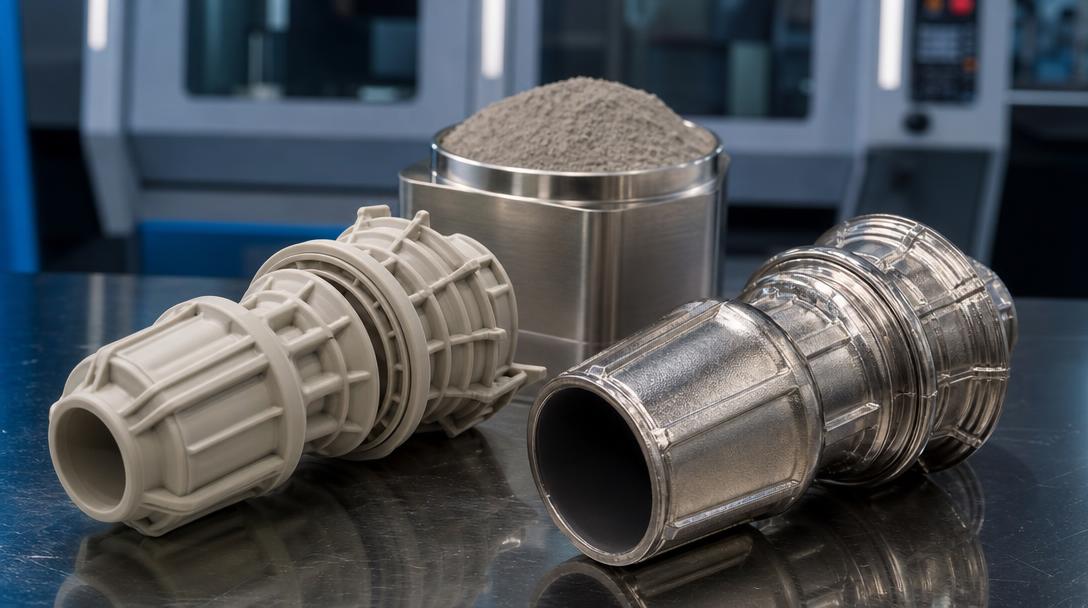
In the process, a polymer mandrel carrying the geometry of the final part is prepared first. This temporary form is then placed in an electrolyte bath, where a nickel shell about 2–3 millimeters thick is formed around it. The polymer core is then dissolved with acid, leaving behind a hollow metal shell. After this shell is filled with metal powder and sealed tightly, hot isostatic pressing, or HIP, is applied. Under heat and pressure, the powder turns into a dense, solid component.
The key idea here is that 3D printing is used not to produce the final metal part directly, but to prepare the temporary mold for manufacturing quickly. This approach can make design changes easier in complex geometries; it also keeps the shape changes caused by high temperatures in metal printing away from the mandrel stage. Being able to integrate connection points into the design of the part also has the potential to reduce additional processes such as tube welding later on.
What do the first results show?
In the first stage, ORNL and A.J. Tuck produced five sealed HIP vessels, each 15.2 centimeters tall and 10.2 centimeters in diameter. Using one of these vessels, they created a solid nickel component weighing 6.7 kilograms. In the next stage, the team plans to work on a more complex geometry, such as an impeller used in pumps and turbines or a valve associated with nuclear energy systems.
These results do not mean the method has already made nuclear components ready for immediate mass production. Leak-tightness, material purity, repeatability, and validation requirements for high-responsibility applications still need to be examined separately. However, the fact that manufacturing scale depends not only on the size of the part but also on the required metal shell thickness is a promising point, since it could allow multiple parts to be processed in the same electroforming step.
What this means in practice for the Ucuz3D reader
This news does not mean you can print nuclear parts with your desktop FDM printer. The real lesson is that 3D printing is not limited to the role of being only “the machine that prints the final product” in the manufacturing chain. When used as a mold, fixture, or temporary carrier, a polymer mandrel can simplify expensive and time-consuming production steps. The same way of thinking can also be valuable in prototypes, fixtures, and low-volume custom parts, where quickly validating the right geometry may make a real difference.
If your project needs such a fixture or prototype, you can review the 3d printing service options. To choose the material based on technical requirements, it is useful to check the engineering materials 3D printing page, while for general production it helps to compare the our printing materials list. Seeing the price per gram logic for the part you need and getting an instant quote with your file can also make the first feasibility step easier.



 Türkçe
 العربية
 Русский
 فارسی
فارسی Deutsch