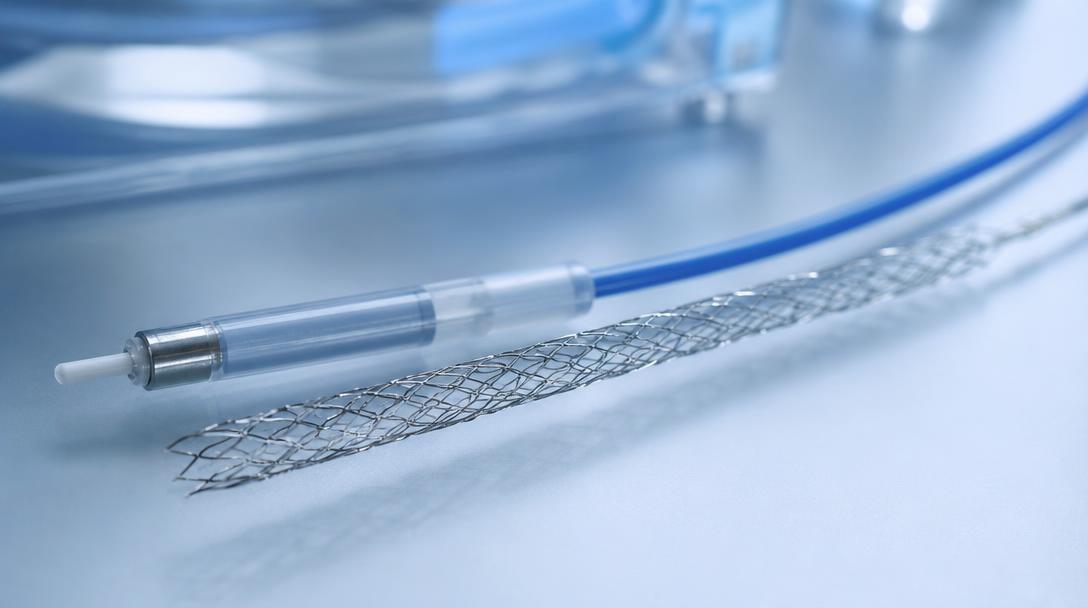

IMDEA and UPM 3D Print Braided Nitinol Structures Inside Catheters in One Step
Nitinol is a special alloy used in catheter-delivered medical devices thanks to its flexibility and shape memory. A team led by IMDEA Materials Institute and Universidad Politécnica de Madrid (UPM) has developed a method for 3D printing braided nitinol geometries in a single manufacturing step. According to a VoxelMatters report dated 19 October 2026, researchers from MIT and the University of Galway also took part in the study.
Producing braided geometries in a single step
In devices advanced through a catheter, a braided structure meets the need to travel in a compact form and then expand or change shape at the target site. Traditional manufacturing may require separate steps to weave and shape fine metal wires. The study’s key aim is to create this complex geometry in a single additive manufacturing step.
This approach could reduce assembly and shaping steps in the production chain. However, being able to print a structure in one go does not, by itself, mean it is ready for clinical use. Factors such as the material’s resistance to repeated deformation, dimensional consistency, surface properties and biocompatibility still need to be assessed separately. The announcement covered in the report does not mean the technique has received clinical approval or entered routine medical use.
Why is this interesting for catheter devices?
Braided nitinol structures are an important class of geometries in the design of stents and similar transcatheter devices used in vascular procedures. Greater design freedom in the manufacturing method could make it easier for researchers to explore shapes that would be difficult to produce using traditional wire braiding. This could be a meaningful advance, particularly for prototyping and research into new geometries.
On the other hand, directly manufacturing a complex structure does not eliminate the need for quality control. The integrity of fine struts, consistency at connection points and the part’s intended flexibility must all be measured. For medical devices, validation, sterilisation and regulatory processes are just as decisive as manufacturability. It is therefore more accurate to view the study as a research step in manufacturing methods than as an announcement of a ready-to-use product.
How it differs from FDM services
This research is in the field of metal alloys and medical device manufacturing; it is not the same method as the FDM filament printing offered by Ucuz3D. The broader lesson for FDM users is that a part’s function determines the manufacturing technology: a flexible, fine-braided medical structure and a plastic prototype, housing or fixture cannot be made using the same material and process.
For prototypes or auxiliary fixtures that can be made with FDM, you can explore our 3D printing service and compare material options on our printing with engineering materials page. You can check an estimated cost for your part using our 3D printing price calculator; you can also use the same calculator to understand how pricing per gram works.
When working on a new geometry, print orientation, the direction in which the layers bear loads and the need for supports should all be considered alongside the design. For this reason, our guide to how print orientation affects part strength offers a useful starting point when evaluating plastic prototypes.



 Türkçe
 العربية
 Русский
 فارسی
 Deutsch