
Škoda’s 3D-Printed Car Accessories: Small Solutions You Can Make at Home
3D-printed car accessories can offer low-volume, model-specific solutions to small but frustrating problems inside a car. With a new design collection shared on Printables on October 20, 2026, Škoda Auto has brought this approach into everyday vehicle use: drivers can download the free files and make selected accessories to suit their needs.
What’s in the Škoda collection?
According to TCT Magazine, the collection consists of 10 designs, including storage boxes, cable organisers and cup holders. The files are available to download from Škoda’s library on Printables. The automaker’s innovation team, engineers and designers prepared the designs with both current models and some discontinued models in mind.
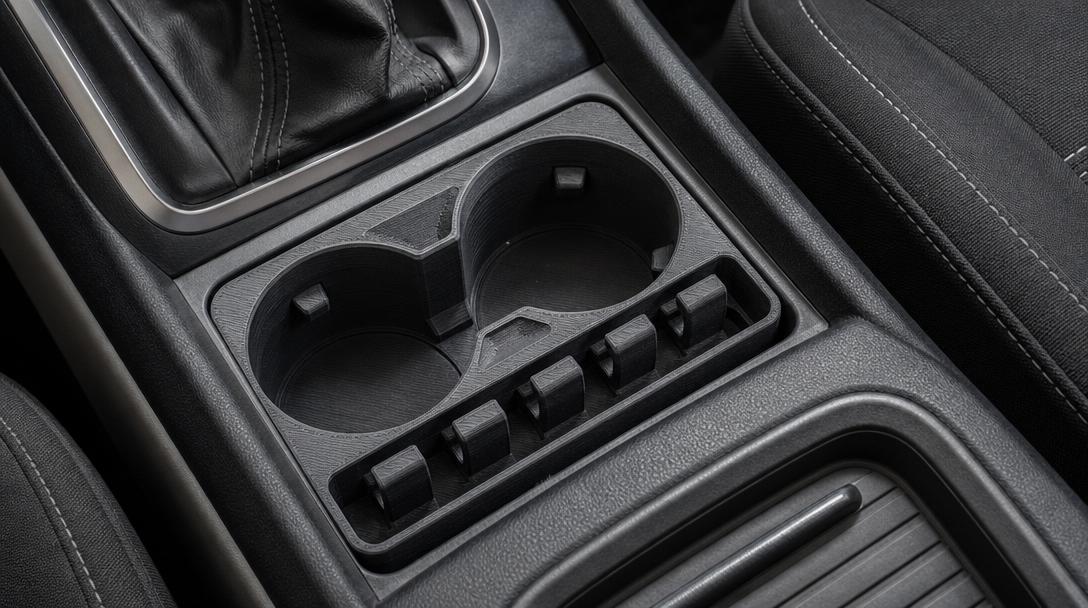
Examples for the Epiq and Peaq include cup-holder covers, a large box insert tray, custom compartments and holders, and an under-console organiser. The cup holder that attaches to the Peaq’s folding table is designed to hold cups of different sizes. This variety shows that 3D printing is not just for prototypes or visual models; it can also produce small parts tailored to the dimensions and needs of a specific vehicle interior.
What does on-demand production change?
With traditional manufacturing, designing an accessory is only part of the process: tooling, inventory and distribution also need to be planned. For a small part that only a few people may want and that must fit a specific model, these preparations can make it difficult to offer the product. Sharing a digital file makes it possible to print the part where and when it is needed, and can also reduce the manufacturer’s need to hold physical stock in advance for every variation.
This model does not mean that every part is suitable for everyone. The design must match the attachment points inside the vehicle, be printed in the correct orientation and be tested in real use. Safety is especially important for load-bearing accessories such as cup holders: they must not obstruct the driver’s view, airbag deployment zones, access to controls or passenger safety while driving. Do not assume a design will fit a different model without checking the vehicle compatibility and usage notes provided with the files.
Practical considerations for FDM printing
The main consumer benefit of this example is the idea of turning a digital file into a physical product for a small, personalised part. In FDM printing, a part’s dimensions, walls, print orientation and material choice affect how well it fits and how it performs in use. Since a car cabin can heat up in direct sunlight, material selection should take into account not just appearance but also the temperatures and loads the part will face. It would not be accurate to say that one material is suitable for every in-car application.
If you are designing a similar part yourself or replacing an existing accessory, first check the dimensions and contact surfaces, then test the fit with a small prototype print. If the part requires custom dimensions or modelling, you can explore production options through our 3D printing service. Upload your file to get an instant quote for online 3D printing, and review the material options using the information on our affordable 3D printing prices page.
When reviewing our general printing materials for parts with specific usage conditions, such as car accessories, consider temperature, rigidity and impact requirements together. Vehicle compatibility and safe use must also be verified separately; with a suitable part and careful assessment, 3D printing can make it easier to access small solutions that may not be available in stock.



 Türkçe
 العربية
 Русский
 فارسی
 Deutsch